Key takeaways
- Crypto arbitrage means buying a crypto asset where it is cheaper and selling it where it is more expensive. South Africa has historically had a local price premium over offshore markets.
- The economics have changed. The South African arbitrage premium was reported at around 1% in January 2026 and slightly below 1% in early June 2026, before costs.
- The rules matter as much as the spread. The Single Discretionary Allowance is now R2 million, while a proposed new cross-border crypto framework remains in draft.
What is crypto arbitrage?
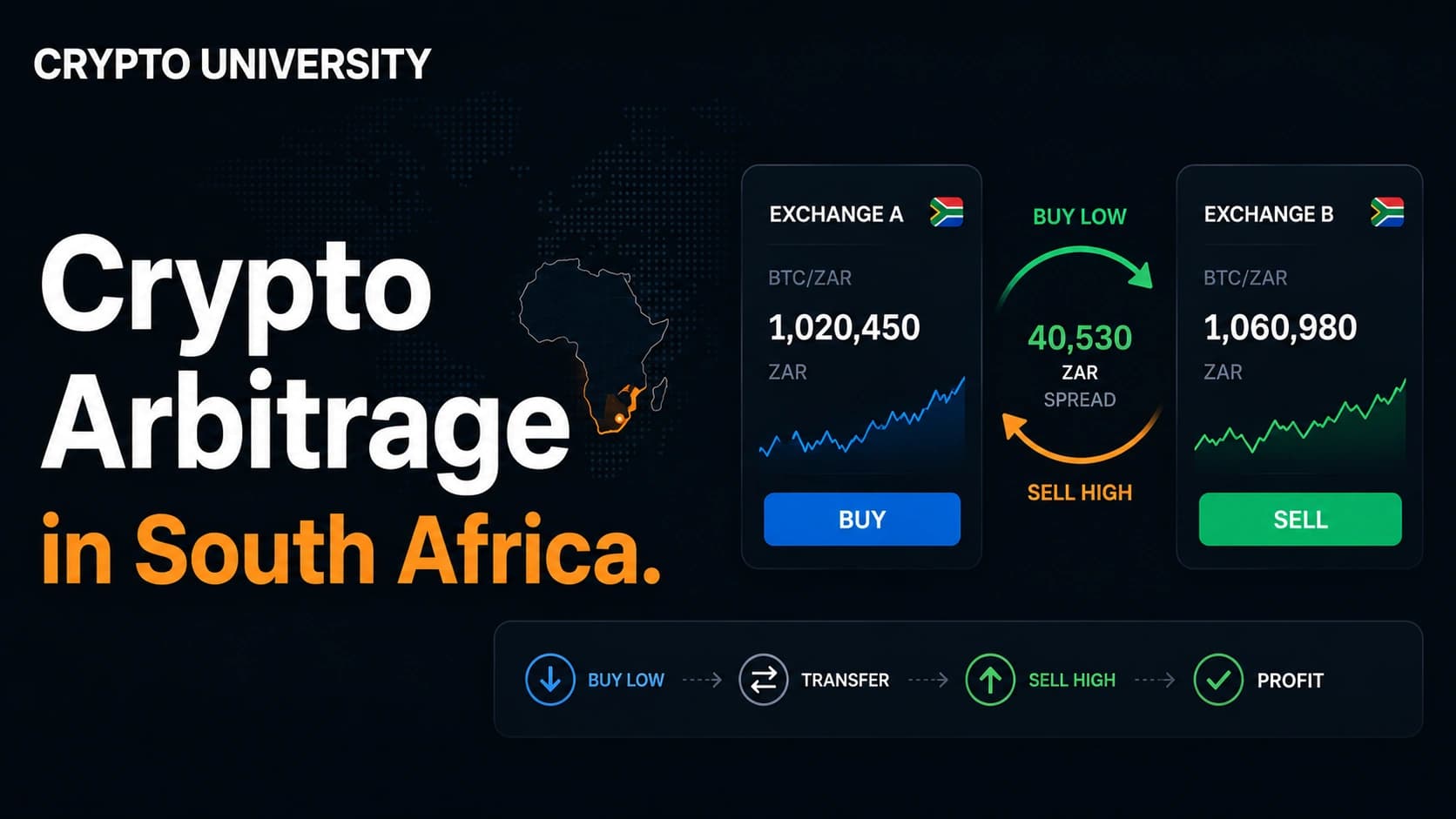
Crypto arbitrage is an attempt to profit from a price difference for the same or a closely related crypto asset across two markets.
For example, Bitcoin might have an offshore price equivalent to R1,000,000 while a South African exchange quotes R1,020,000. The apparent spread is 2%. A trader may try to buy offshore, transfer the asset, and sell locally before the price gap closes.
The quoted spread is not the same as profit. Fees, slippage, tax, and market movement can reduce or eliminate it.
Why did South Africa have a crypto premium?
South Africa has capital flow controls that regulate how residents move money offshore. When demand for offshore assets is strong, this friction can cause crypto to trade at a higher rand price locally than its converted international price.
By 2026, more participants, deeper exchange liquidity, faster settlement, and wider stablecoin use had narrowed the premium. The SARB's June 2026 Financial Stability Review said on-chain USDT activity across Luno, VALR, and AltCoinTrader reached almost R27 billion in the year to 30 April 2026.
How South African crypto arbitrage works
A traditional arbitrage cycle is usually described like this:
| Step | What happens |
|---|---|
| 1 | Rand is converted and moved offshore through an approved banking route |
| 2 | Crypto is purchased on an offshore platform |
| 3 | The crypto is transferred to a South African platform |
| 4 | The crypto is sold for rand |
| 5 | Costs and taxes are deducted from the gross spread |
Local crypto trading and cross-border capital movement are not the same thing. Cross-border value transfers can trigger exchange control rules.
Is crypto arbitrage legal in South Africa?
This needs care.
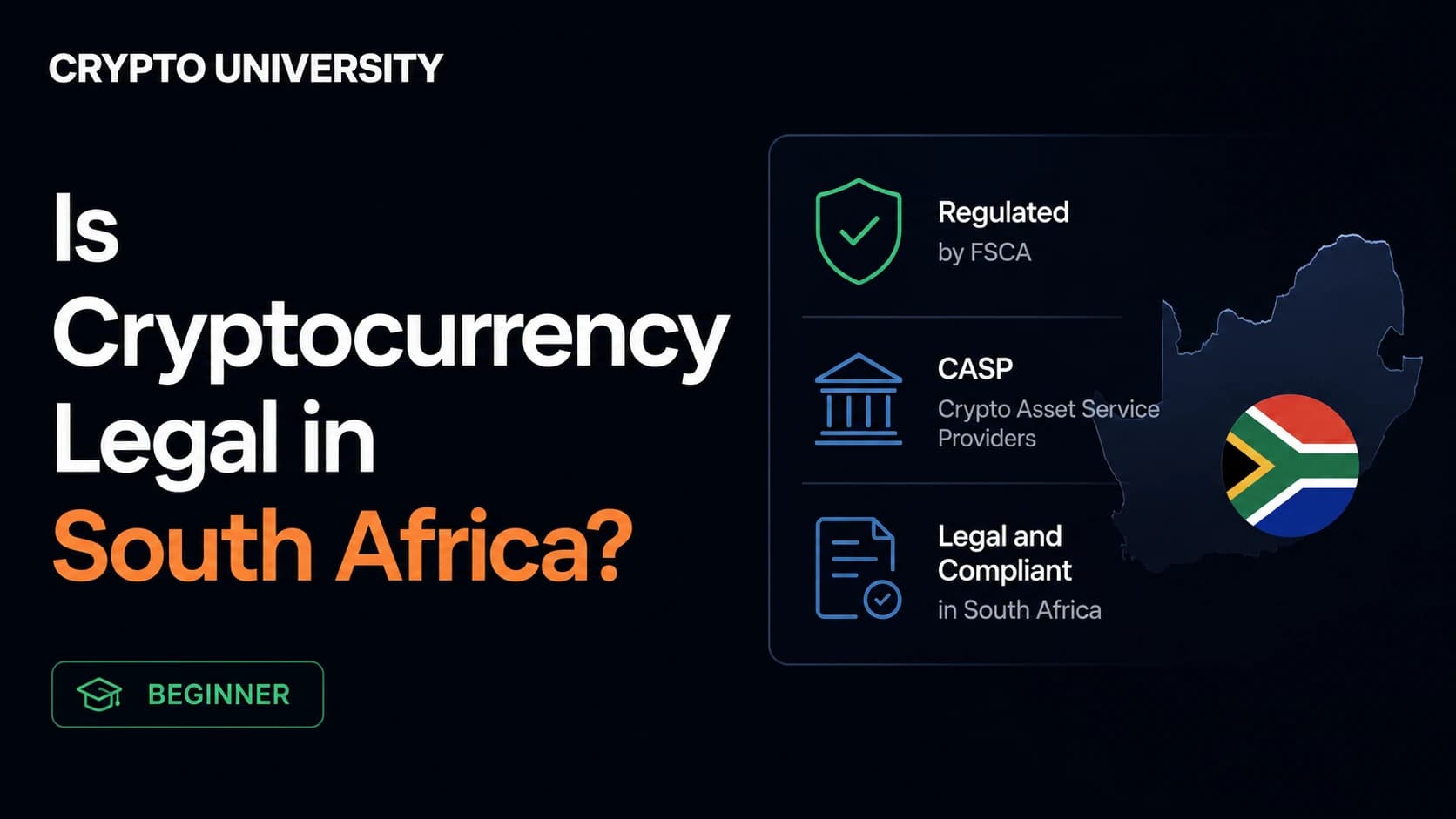
Buying and selling crypto locally is not prohibited. However, that does not create blanket permission to move capital offshore or back into South Africa through crypto.
Current SARB guidance says its existing Currency and Exchanges Manuals do not allow a cross-border foreign exchange transfer for the explicit purpose of purchasing crypto assets. The same guidance says individuals may purchase crypto assets from abroad using personal allowances, subject to the applicable rules and an Authorised Dealer. It also says people may not use another person's allowance through a loan or similar arrangement, and South African cards may not fund international trading accounts, including crypto accounts.
The safest description is: crypto arbitrage can involve lawful transactions, but its cross-border structure must comply with South African exchange control rules.
South Africa's 2026 offshore allowances
The Single Discretionary Allowance, or SDA, increased from R1 million to R2 million per calendar year for resident individuals aged 18 and older, effective 8 April 2026.
The SDA can be used for permitted purposes without requiring a SARS Tax Compliance Status PIN for the allowance itself.
Qualifying tax-compliant individuals may also use a Foreign Capital Allowance of up to R10 million per calendar year, generally with SARS Approval for International Transfer.
| Allowance | 2026 limit | Main requirement |
|---|---|---|
| Single Discretionary Allowance | R2 million | No TCS PIN for the allowance itself |
| Foreign Capital Allowance | R10 million | SARS approval and tax compliance |
| Above normal limits | Case by case | Additional approval may be required |
These limits are not automatic permission for every crypto transaction. The route and reporting still matter.
Why the arbitrage spread has fallen
Moneyweb reported the South African crypto premium at around 1% before costs in January 2026. In early June, it was reported to be slightly below 1%, although brief moves above 1% still occurred.
The decline reflects more competition, deeper local liquidity, faster settlement, and wider stablecoin use. Arbitrage also closes its own opportunity: buying in the cheaper market and selling in the more expensive market pushes prices closer together.
The costs beginners often underestimate
A 1% premium on R1 million looks like R10,000 in gross value. That is before costs.
| Cost or risk | Why it matters |
|---|---|
| FX spread | The bank's exchange rate reduces the apparent offshore discount |
| Trading fees | Fees apply when entering and exiting the trade |
| Network fees | Moving crypto between platforms costs money |
| Slippage | Orders may execute at worse prices than expected |
| Settlement delay | The premium may close before the local sale |
| Tax | Profitable trades can create taxable income |
| Compliance cost | Documentation and professional advice can add expense |
At a narrow spread, one delay can turn an apparent profit into a loss.
How is crypto arbitrage taxed?
SARS applies normal income tax rules to crypto assets.
SARS states that frequent or business-like crypto trading is generally taxable as ordinary income. For the 2027 tax year, the highest individual marginal rate is 45%. Genuine long-term investment gains may instead be capital in nature, with a maximum effective individual CGT rate of 18%.
Because arbitrage is normally systematic and focused on short-term profit, it may have a strong revenue character. The facts still determine the final treatment.
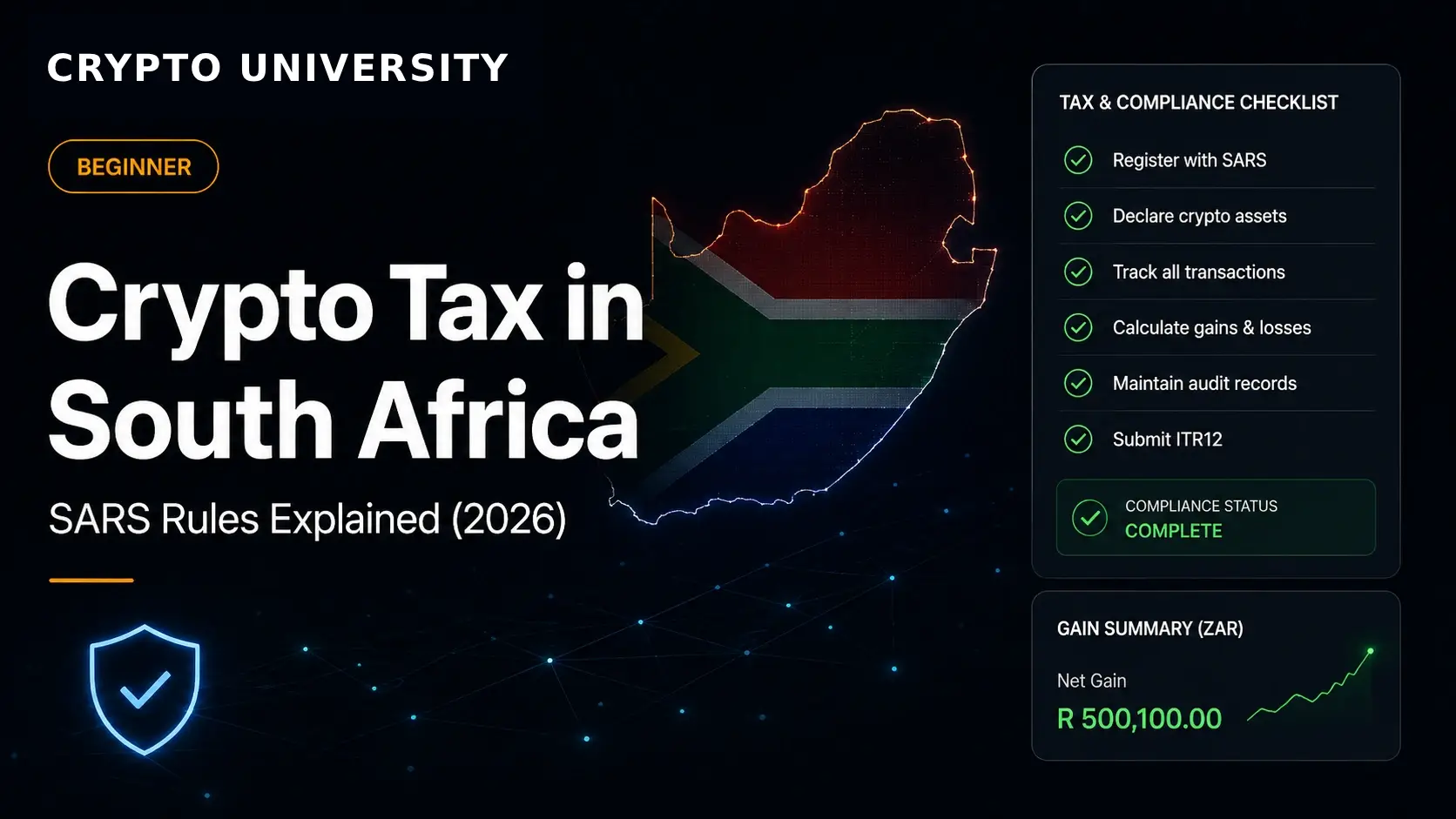
South Africa also implemented the Crypto-Asset Reporting Framework, or CARF, from 1 March 2026. Reporting providers must collect specified crypto transaction information for SARS. CARF increases transparency but does not create a new crypto tax.
What the 2026 draft crypto rules could change
National Treasury published draft Capital Flow Management Regulations on 17 April 2026. Treasury and the SARB then released a draft Crypto Asset Manual for cross-border activities on 3 August 2026.
The framework is not final.
Under the draft approach:
- Transfers from a domestic Authorised CASP to an offshore CASP or non-custodial wallet would be treated as outward capital flows.
- Individuals could externalise crypto through an Authorised CASP within the SDA or Foreign Capital Allowance framework.
- Transfers from an offshore CASP to a domestic Authorised CASP could be reported as inward capital flows.
- Transfers from a non-custodial wallet into a domestic Authorised CASP would be non-permissible under the draft.
- South African entities would not use the same proposed externalisation route as individuals.
- An Authorised CASP would need minimum unimpaired capital equal to the higher of 15% of average positive annual gross income over the previous three years or R5 million.
The public comment deadline for the draft Crypto Asset Manual is 30 September 2026. The proposals may change.
Is crypto arbitrage still worth it?
For most beginners, crypto arbitrage should not be viewed as easy income.
The spread has narrowed significantly. At around 1% before costs, fees, delays, tax, and price changes can consume much of the expected margin.
Cross-border crypto is also an explicit focus of National Treasury, the SARB, and SARS.
Before acting, beginners should verify whether the quoted spread is net of fees, whether the funding route is permitted, how long transfers take, how tax will be recorded, and whether the rules being relied on are actually in force rather than only proposed.
For local exchange research, readers may encounter platforms such as VALR. This is an affiliate link. Platform access does not remove the need to verify licensing, fees, tax treatment, and exchange control requirements yourself.
Frequently asked questions
What is crypto arbitrage in South Africa?
It is the attempt to profit from a difference between a crypto asset's offshore price and its South African market price.
What is the crypto arbitrage spread in 2026?
Industry reporting placed it around 1% in January 2026 and slightly below 1% in early June 2026, before costs. It changes continuously and is not guaranteed.
How much is the Single Discretionary Allowance?
It is R2 million per calendar year for qualifying resident adults, effective from 8 April 2026.
Can I use another person's allowance?
SARB guidance says an individual may not use another person's SDA or Foreign Capital Allowance through a loan or similar arrangement designed to circumvent the rules.
Can I fund an offshore crypto account with a South African bank card?
SARB rules state that South African credit, debit, and virtual cards may not be used to fund international trading accounts, including crypto trading accounts.
Are the August 2026 crypto cross-border rules already final?
No. The Crypto Asset Manual published on 3 August 2026 is a draft and remains subject to change.
Related terms
- Arbitrage: Capturing a price difference across markets.
- Single Discretionary Allowance: An annual offshore allowance for qualifying residents.
- Foreign Capital Allowance: An additional offshore investment allowance for tax-compliant individuals.
- Stablecoin: A crypto asset designed to track another asset, commonly the US dollar.
- Capital flow management: Rules governing and monitoring movement of capital across borders.
Sources
- South African Reserve Bank, Exchange Control Circular No. 6/2026, 8 April 2026: https://www.resbank.co.za/content/dam/sarb/what-we-do/financial-surveillance/financial-surveillance-documents/2026/6-2026.pdf
- South African Reserve Bank, Financial Surveillance Frequently Asked Questions, Crypto assets: https://www.resbank.co.za/en/home/what-we-do/financial-surveillance/FinSurvFAQ
- South African Reserve Bank and National Treasury, Draft Crypto Asset Manual for cross-border activities, 3 August 2026: https://www.resbank.co.za/en/home/publications/publication-detail-pages/media-releases/2026/crypto-assets
- South African Reserve Bank, Draft Crypto Asset Manual PDF: https://www.resbank.co.za/content/dam/sarb/publications/media-releases/2026/draft-crypto-manual.pdf
- South African Reserve Bank, First Edition 2026 Financial Stability Review: https://www.resbank.co.za/content/dam/sarb/publications/reviews/finstab-review/2026/first-edition/first-fsr-june.pdf
- South African Revenue Service, Crypto Assets and Tax: https://www.sars.gov.za/individuals/crypto-assets-tax/
- South African Revenue Service, Crypto-Asset Reporting Framework: https://www.sars.gov.za/businesses-and-employers/third-party-data/crypto-asset-reporting-framework-carf/
- South African Revenue Service, Rates of Tax for Individuals: https://www.sars.gov.za/tax-rates/income-tax/rates-of-tax-for-individuals/
- South African Revenue Service, Capital Gains Tax rates: https://www.sars.gov.za/tax-rates/income-tax/capital-gains-tax-cgt/
- Moneyweb, "What's happened to the crypto arbitrage spread?", 26 January 2026: https://www.moneyweb.co.za/moneyweb-crypto/whats-happened-to-the-crypto-arbitrage-spread/
- Moneyweb, "Crypto arbitrage premium hits 'new normal' below 1%", 2 June 2026: https://www.moneyweb.co.za/moneyweb-crypto/crypto-arbitrage-premium-hits-new-normal-below-1/
Disclaimer
This article is for general education only. It is not financial, tax, legal, or exchange control advice. South Africa's cross-border crypto framework is changing, and parts of the 2026 framework discussed above remain in draft. Verify the current rules with an Authorised Dealer and appropriately qualified professional before undertaking cross-border crypto transactions.
Continue with Trading
Use the South African hub to compare current pathways, supporting evidence and next steps.
OPEN TRADING