
Key takeaways
- Buying Bitcoin in South Africa is legal when you use a licensed platform, complete FICA, and deposit rands from an account in your own name.
- Local rand on-ramps such as Luno and VALR are usually simpler for first-time buyers than global platforms that rely on cards or peer-to-peer trades.
- Instant Buy is fast but often more expensive than an exchange order. Compare the all-in rand cost before you confirm.
Buying Bitcoin in South Africa is straightforward if you treat it as a regulated financial purchase, not a shortcut. You deposit rands, complete identity checks required by law, buy BTC/ZAR, then decide whether the coins stay on the exchange or move to a wallet you control.
You do not need a large lump sum. Many local platforms let you start with a few hundred rand, and some purchase screens go lower. Fees, bank rules, and tax records matter more than the first tap of the Buy button.
Is buying Bitcoin legal in South Africa?
Yes. Bitcoin is not South African legal tender. The rand remains the official currency. Crypto assets are treated as financial products under the Financial Advisory and Intermediary Services Act after the FSCA’s 2022 declaration. Firms that give advice or intermediary services in crypto generally need a Crypto Asset Service Provider (CASP) licence.
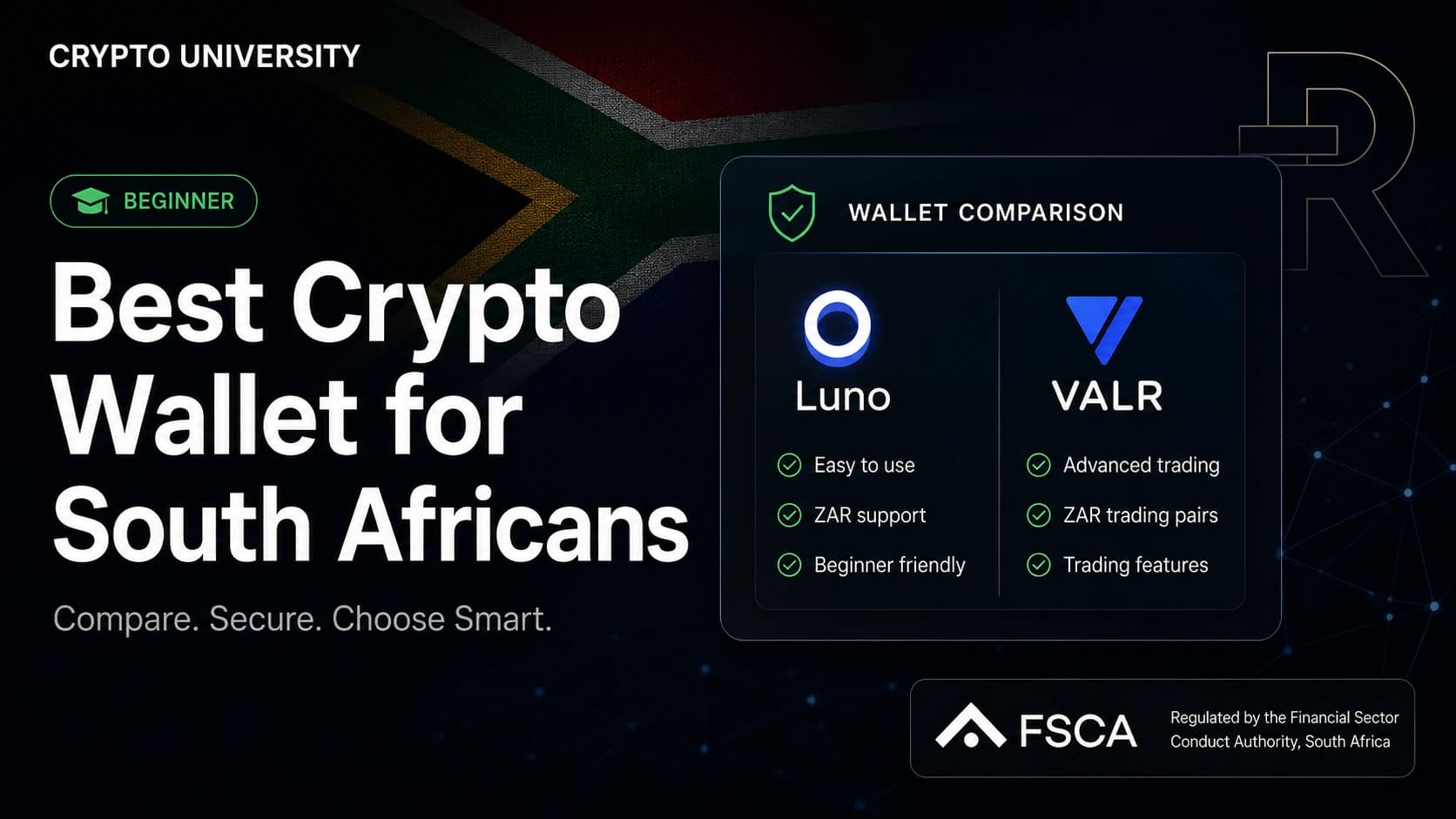
That does not make every app safe. It means you can check a local platform on the FSCA register before you send money. Luno (Pty) Ltd and VALR (Pty) Ltd appear on published FSCA CASP lists, alongside other local operators such as AltCoinTrader. Global exchanges may still be used by South Africans, but they often lack a local FSCA CASP licence and a local rand rail.
Exchange-control treatment of crypto is still evolving. In 2026 National Treasury and the South African Reserve Bank published draft rules on cross-border crypto activity. Those drafts are not the same thing as settled everyday buying on a local exchange. Check official SARB and Treasury updates if you plan to move coins offshore or into self-custody at scale.
What you need before you start
Have these ready:
- South African smart ID, green ID book, or passport
- Proof of address less than three months old, such as a utility bill or bank statement
- A working phone number and email
- A bank account in your own name
- A selfie or liveness check for FICA
This is not optional extra paperwork. Local exchanges are accountable institutions under the Financial Intelligence Centre Act. They must verify who you are before they accept deposits and let you trade.
Also turn on two-factor authentication as soon as the account exists. Do this before you deposit.
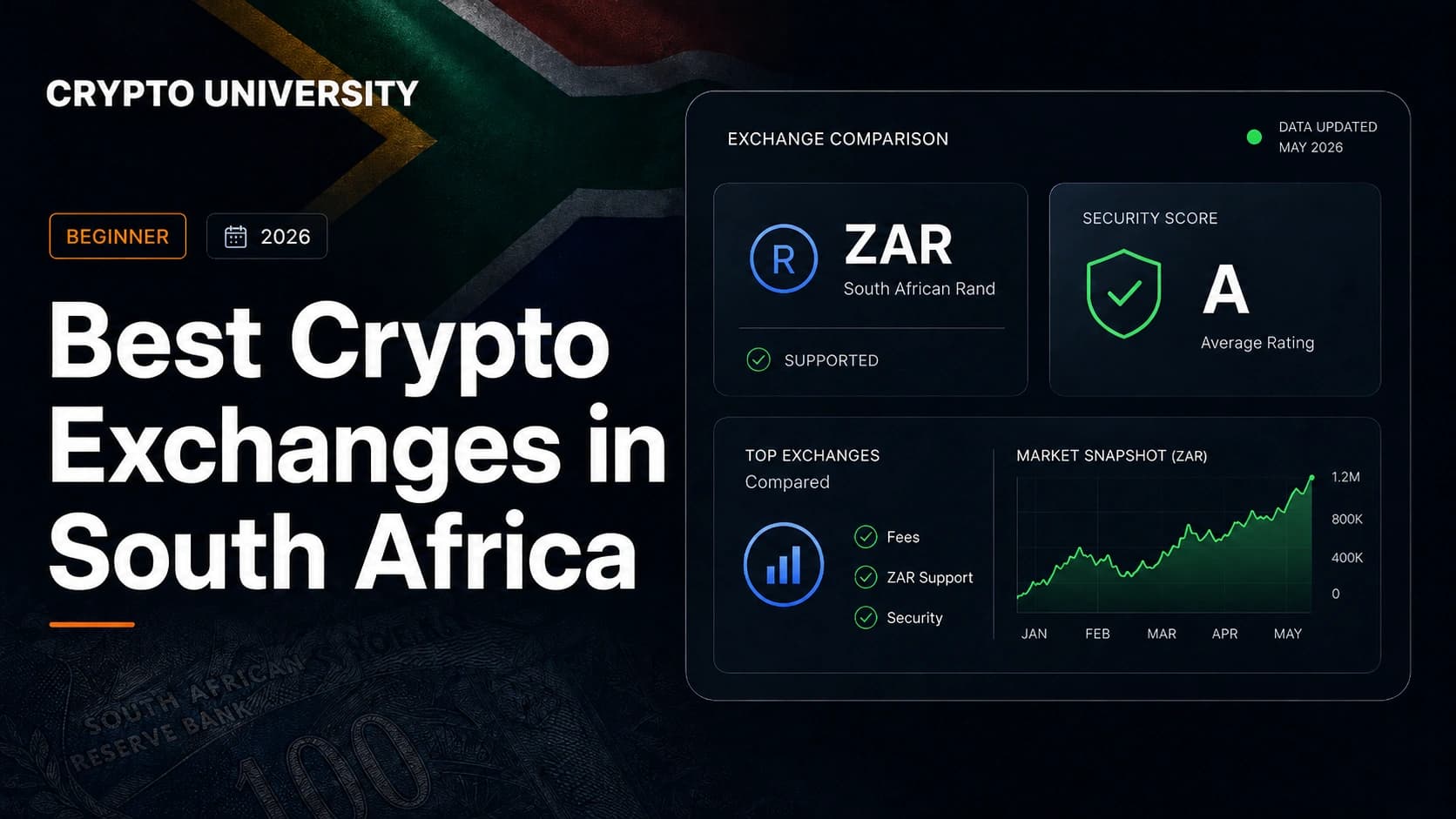
Choose a platform that takes ZAR
For most first-time buyers, a locally licensed exchange with a BTC/ZAR market is the cleanest route. You send rands by EFT, PayShap, instant EFT, or another local payment method, then buy Bitcoin against the rand.
| Platform | Best starting use | Local licence (widely reported) | Typical ZAR funding | Simple buy cost (official schedules) | Exchange-style cost (entry tier, published) |
|---|---|---|---|---|---|
| Luno | Beginners who want a simple app | FSCA CASP, FSP 53314 | Free EFT; instant deposit 1.4%; Capitec Pay and card options | 2% instant buy/sell from the portfolio screen; card route listed at 3.9% | Lower than Instant Buy if you use the Exchange order book |
| VALR | Buyers who want a ZAR order book and lower all-in cost | FSCA CASP, FSP 53308 | Free EFT, no minimum; card 3.9% | Simple Buy/Sell 1.6% | BTC/ZAR entry tier around 0.180% maker / 0.350% taker |
| AltCoinTrader | Users who want another licensed local venue | FSCA CASP, FSP 53614 | EFT and other local methods | Higher advertised taker fees than Luno or VALR on many comparison tables | Check the live fee page before buying |
Figures change. Always read the quote on screen. Instant buttons look easy and often hide the largest cost.
A local rand on-ramp is usually cheaper and simpler than funding an offshore platform with a card or a peer-to-peer desk. Offshore venues can also create extra record-keeping and cross-border questions.
Here is what beginners should check before signing up:
- The company name and FSP number on the FSCA register
- Whether the platform accepts ZAR from your bank
- Deposit fee, trading fee, and Bitcoin withdrawal fee
- Whether withdrawals go only to a bank account in your name
- How long FICA usually takes
Open the account and complete FICA
The process is similar across local exchanges:
- Register with an email and a strong password.
- Enable two-factor authentication.
- Upload your ID exactly as printed on the document.
- Upload proof of address.
- Complete the selfie or liveness check.
- Wait for approval before you deposit.
Verification often completes within minutes to one business day. Blurry photos, mismatched names, and outdated proof of address are the usual delays.
Your bank account name should match the exchange profile. Platforms and banks reject or freeze payments when the names do not match.
Luno also uses verification levels. Lower levels have lifetime or monthly rand limits. Full verification removes those caps. Check the current limits in the app before you send a large EFT.
Deposit rands
EFT is the standard low-cost method. The exchange gives you beneficiary details and a unique reference. Use that reference exactly. A missing reference can leave rands sitting unallocated.
Typical local options:
| Method | Speed | Usual cost pattern | Beginner note |
|---|---|---|---|
| Ordinary EFT | Minutes to one or two business days, depending on the bank | Free on Luno and VALR; your bank may still charge its own payment fee | Best default for most first buys |
| PayShap | Instant between participating banks | Bank fee may apply; per-transaction caps can be low | Useful for small top-ups, not always for large deposits |
| Instant EFT / pay-by-bank | Minutes | Often a percentage fee, such as Luno’s 1.4% instant deposit | Pay for speed only if you need it |
| Capitec Pay | Minutes, where supported | Luno lists 1.25% under R1,000 or R9 above R1,000, with a R100,000 cap | Relevant after Capitec restricted ordinary EFT to many crypto wallets |
| Card | Instant when available | Often around 3.9% | Usually the most expensive on-ramp |
Capitec customers should not assume ordinary EFT still works. In October 2024 Capitec restricted EFT and immediate payments to crypto wallets. Capitec Pay remains a common remaining route on some platforms, including Luno. Confirm the method inside the app before you try a large transfer.
Send a small test deposit first. Confirm it reflects. Then send the amount you actually intend to use.
Buy BTC against ZAR
Once rands clear:
- Open the Bitcoin market, usually labelled BTC/ZAR.
- Decide between Instant Buy and an exchange order.
- Review the quote: price, fee, and the BTC amount you will receive.
- Confirm only after the all-in rand cost makes sense.
Instant Buy fills immediately at the quoted price. On Luno, instant buying or selling from the portfolio screen is listed at 2%. On VALR, Simple Buy/Sell is listed at 1.6%. Those percentages add up on repeat purchases.
A limit order on the exchange lets you set the rand price you are willing to pay. It can save money if you can wait. It can also sit unfilled if the market moves away from your price.
A market or taker order buys immediately from the order book and usually costs more than a maker order, but still far less than many Instant Buy buttons.
Compare three numbers every time:
- Spread or markup on the quoted price
- Trading or instant-buy fee
- Deposit fee you already paid
That total is the real purchase price in rands.
Decide where the Bitcoin will live
Leaving a small amount on a licensed exchange is convenient if you may sell back to ZAR soon. It is still a custodial arrangement. The platform holds the coins.
For longer savings, many users withdraw to a wallet they control after a test transaction. Do this carefully:
- Create or open the receiving wallet.
- Copy the Bitcoin address and check the network is Bitcoin, not another coin.
- Send a small test amount first.
- Confirm it arrived.
- Only then send the rest.
Withdrawals to self-custody can trigger extra compliance questions under Travel Rule rules. The first withdrawal is often slower than later ones. Network fees also vary with Bitcoin congestion. The fee shown on the withdrawal screen is the one that matters.
Do not send Bitcoin to an exchange deposit address for a different asset. That mistake is usually permanent.
Bank and payment quirks to expect
South African banks do not all treat crypto deposits the same way.
- Standard Bank users often add Luno as a known beneficiary and send EFT.
- FNB users commonly add the exchange account details manually and must paste the reference correctly.
- Capitec users should look for Capitec Pay or another supported method rather than assuming EFT still works.
- Name mismatches between the bank account and the FICA profile are a frequent cause of delayed or reversed payments.
If a deposit does not arrive, do not send a second payment immediately. Check the reference, the beneficiary details, and the exchange support queue first.
Tax: buying is not the same as selling
SARS applies normal income tax rules to crypto assets. Buying Bitcoin with rands is generally not the event that creates tax. Tax questions arise when you dispose of the asset: sell it for rands, swap it for another crypto, spend it, or gift it.
Whether a later gain is capital or revenue depends on facts such as intention and trading pattern, not on a label you choose in an app. Capital treatment can involve the annual capital gains exclusion and a 40% inclusion rate for individuals. Frequent trading can be taxed in full as income. That is information, not a personal tax ruling.
Keep records from day one:
- Date and time of each buy
- Rand amount paid, including fees
- Quantity of Bitcoin received
- Exchange statements and bank proofs
SARS places the onus on the taxpayer to declare taxable crypto amounts. Licensed platforms may also report data under evolving international reporting rules. Assume your purchase history can be reconstructed later.
This article is not tax advice. If the amounts are material, speak to a qualified South African tax practitioner.
Risks beginners should weigh
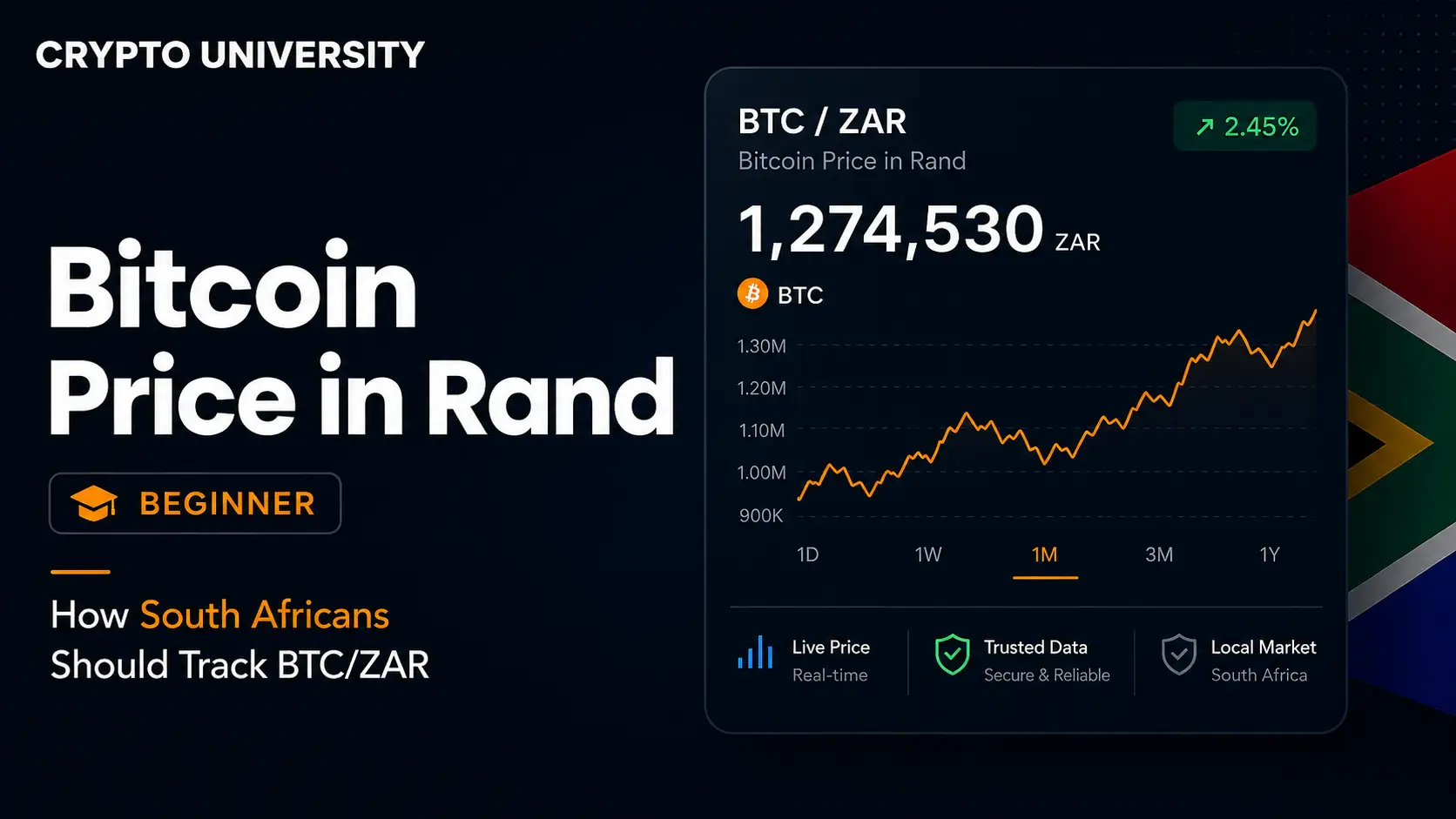
- Bitcoin’s rand price moves. You can receive fewer rands than you paid if you sell later.
- An exchange can freeze withdrawals during compliance reviews.
- Coins left on an exchange are exposed to platform operational risk.
- Coins in a wallet you control are exposed to seed-phrase mistakes, device theft, and sending errors.
- Unlicensed websites, Telegram brokers, and “guaranteed return” desks are a common loss path.
- Draft cross-border rules can change how offshore transfers and some self-custody withdrawals are treated.
Here is how to verify before acting: confirm the FSCA listing, test a small deposit, read the live fee quote, and keep the records SARS may later ask for.
Practical first-buy checklist
- Verify the exchange on the FSCA register.
- Complete FICA with matching names.
- Turn on 2FA.
- Deposit a small ZAR test amount.
- Buy a small amount of BTC and screenshot the receipt.
- If you plan to self-custody, withdraw a test amount first.
- Export the transaction history and store it with your tax files.
FAQ
Can I buy Bitcoin with a South African bank card?
Sometimes. Card rails exist on local platforms, but the fee is often around 3.9% and some banks block crypto card payments. EFT is usually cheaper.
Is there a minimum?
It depends on the platform and method. VALR lists no minimum on ZAR EFT. Luno’s card buy screen lists a R15 minimum. Many users start between R50 and a few hundred rand. Check the live screen.
Does buying Bitcoin trigger tax?
Buying with rands is not the usual taxable event. Tax is considered when you dispose of the asset. Keep records of your cost in rands.
Which exchange is “best”?
There is no single best venue. Luno is simpler for many first buys. VALR is often cheaper if you use the order book instead of Simple Buy. Confirm licence status and fees yourself.
Can I keep the Bitcoin on the exchange?
Yes, for convenience. For savings, learn how withdrawals and self-custody work before the amount becomes hard to replace.
Can I buy Bitcoin if I bank with Capitec?
Often yes, but not always by ordinary EFT. Look for Capitec Pay or another method the exchange still supports.
Do I need to report the purchase to SARB just to buy on Luno or VALR?
Ordinary local purchases on a licensed South African platform are a different question from cross-border transfers. Watch official SARB guidance if you later send crypto offshore.
How do I check that a platform is licensed?
Search the company name or FSP number on the FSCA’s public FSP / CASP register. Match the legal entity, not only the app brand.
Sources
- FSCA and published CASP/FSP lists for Luno (FSP 53314), VALR (FSP 53308), and AltCoinTrader (FSP 53614)
- Luno Help Centre: fees and limits in South Africa
- VALR Help Centre: charges and fee schedule
- SARS: Crypto Assets & Tax
- SARB / National Treasury draft Crypto Assets Manual coverage for cross-border activity (2026 drafts)
- Bank-specific payment notes from publicly reported Capitec, Standard Bank, and FNB funding routes
Disclaimer: This content is for educational and informational purposes only and is not financial, investment, legal, or tax advice. Nothing here is a recommendation to buy or sell any asset or use any platform. Do your own research and manage your risk. Fees, bank rules, and draft exchange-control proposals change. Treat every figure above as a starting map, then confirm the live quote and official page before you send rands.
Official source links
Continue with Buy Crypto
Use the South African hub to compare current pathways, supporting evidence and next steps.
OPEN BUY CRYPTO