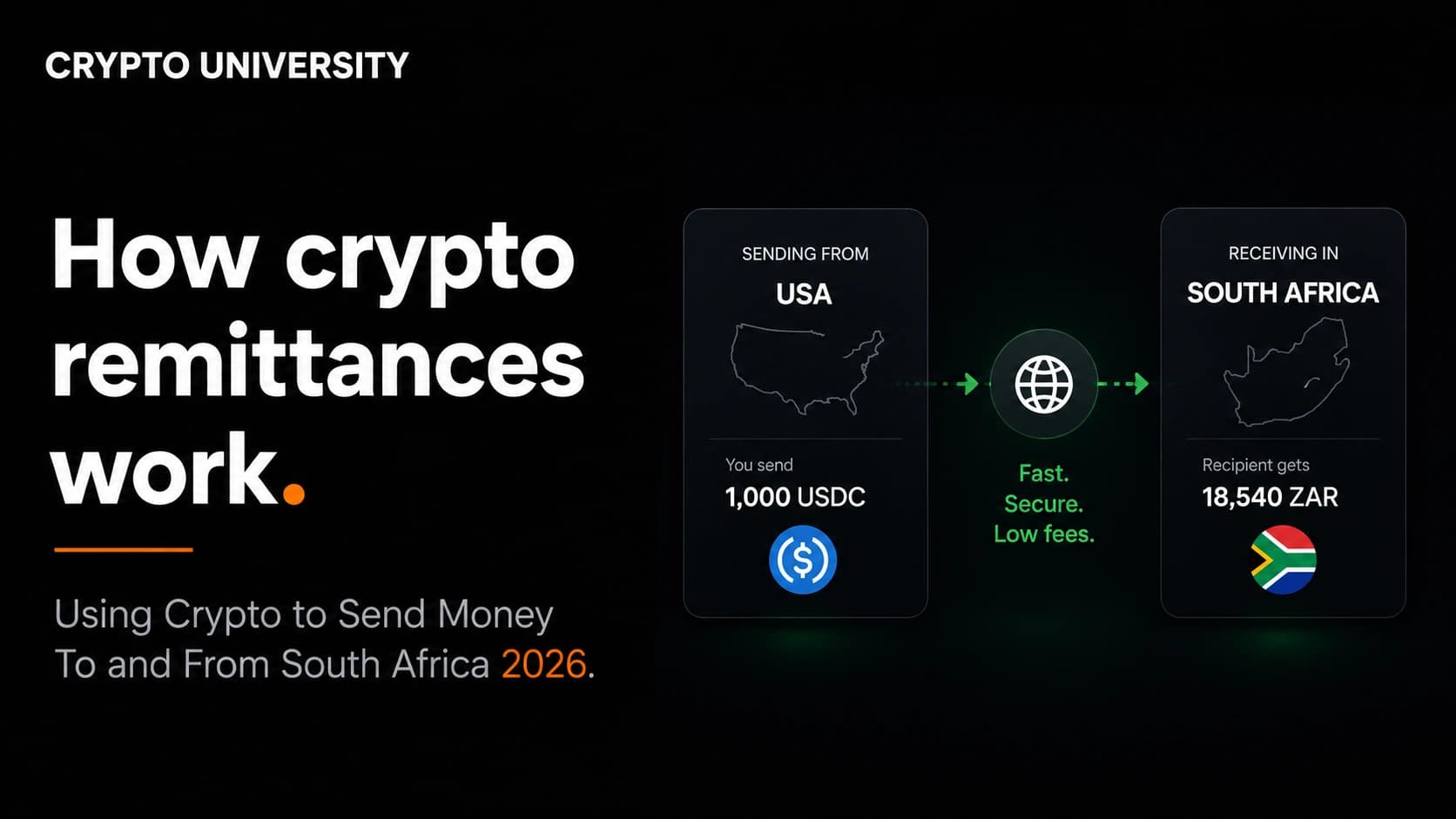
Crypto can make cross-border money movement faster, but South African users need to understand an important distinction: a transaction can be technically possible while still being restricted by exchange control rules.
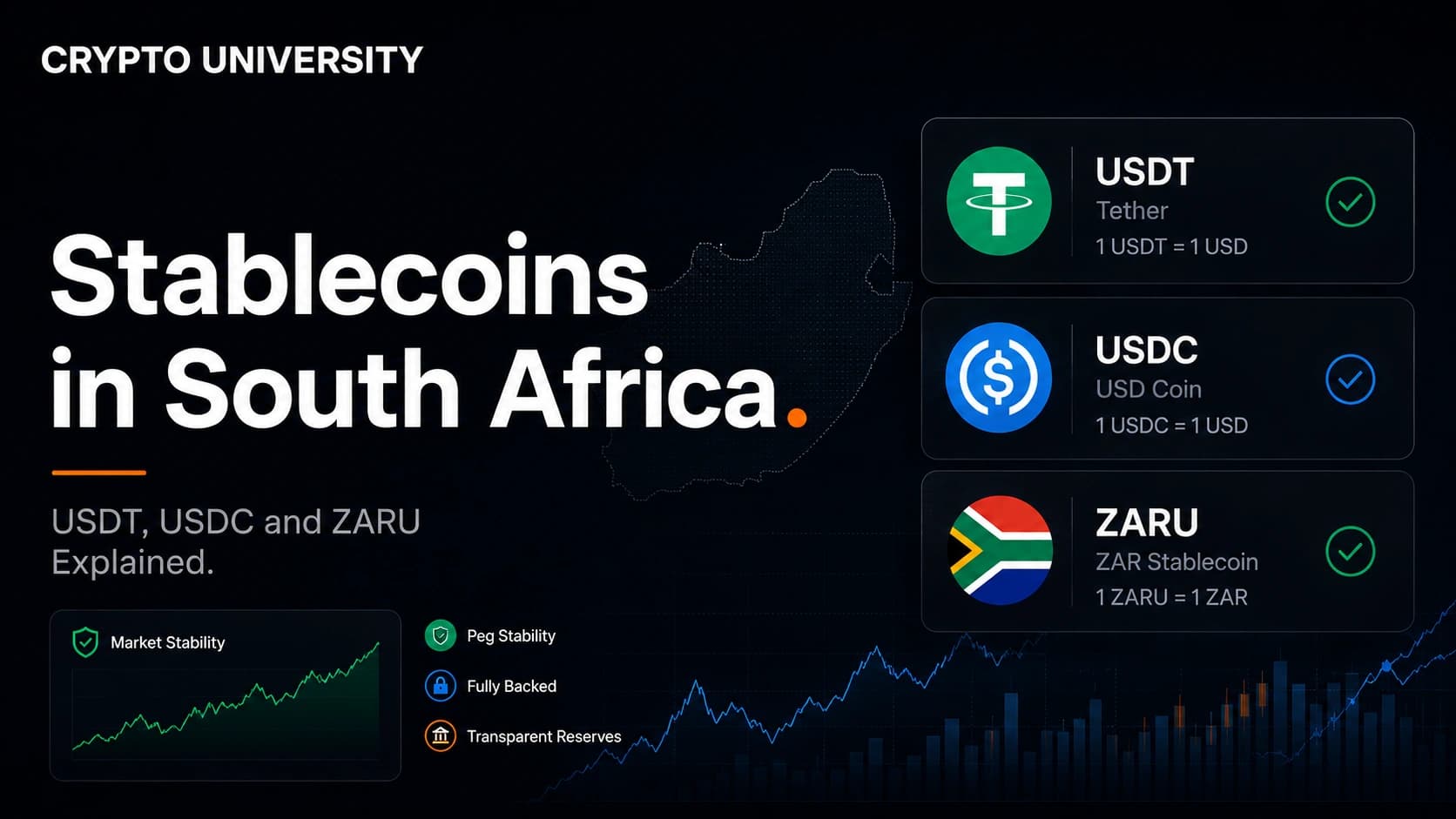
Stablecoins such as USDT and USDC are often used for remittances because they are designed to track the value of a traditional currency, usually the US dollar. They can move between compatible wallets quickly, but the blockchain transfer is only one part of the total payment.
Crypto University helps beginners understand crypto before they risk money.
Key takeaways
- Stablecoins can make settlement faster, but they are not automatically cheaper. Compare trading fees, spreads, network fees, withdrawal fees and exchange-rate margins.
- Current South African exchange-control rules restrict using crypto to externalise capital. A resident should not assume that buying crypto locally and sending it offshore is permitted simply because an allowance exists.
- New rules are being proposed. The August 2026 draft Crypto Asset Manual would allow authorised providers to use crypto in the background for certain remittances, but the framework is not yet final.
Why remittances can be expensive
International transfers may involve banks, money-transfer operators and foreign-exchange conversions. Each layer can add cost.
World Bank data for the South Africa to Zimbabwe corridor in the third quarter of 2025 showed a wide range of prices, from around 5 percent for some services to much higher costs for some bank routes. The real price includes both fees and exchange-rate margins.
How a crypto remittance works
A typical stablecoin remittance looks like this:
- The sender deposits local currency on an exchange.
- The sender buys a stablecoin such as USDT or USDC.
- The stablecoin is sent over a blockchain.
- The recipient receives it in a wallet or exchange account.
- The recipient sells it for local currency.
- The recipient withdraws the money.
| Stage | What happens | Possible cost |
|---|---|---|
| On-ramp | Local currency is converted into crypto | Trading fee and spread |
| Transfer | Stablecoin moves on-chain | Network fee |
| Off-ramp | Recipient sells the stablecoin | Trading fee and spread |
| Payout | Local currency is withdrawn | Withdrawal fee |
| FX | Currency is converted | Exchange-rate margin |
Are crypto remittances cheaper?
Sometimes. Not always.
A low network fee can make the blockchain transfer cheap while the entrance and exit remain expensive.
The IMF said in August 2026 that forthcoming research found the cost of sending USD 200 through stablecoin routes could range from about negative 2 percent to 8 percent depending on the corridor. Negative measured costs can reflect a local stablecoin premium, not a literally free transfer.
Before choosing a route, compare:
- deposit or funding costs
- trading fees
- stablecoin spread
- network fee
- recipient trading fee
- withdrawal fee
- exchange-rate margin
- any local stablecoin premium or discount
The best comparison is simple: how much local currency does the recipient actually receive?
The South African rule beginners should know
As of September 2026, South African residents should not assume that the Single Discretionary Allowance or Foreign Capital Allowance automatically allows them to buy crypto locally and send it offshore.
The South African Reserve Bank states that exchange-control rules prohibit exporting capital or the right to capital without permission. Its current guidance specifically includes buying crypto assets in South Africa and using them to externalise value.
SARS also notes on its crypto tax page that, until the regulatory framework is fully established, transferring funds abroad through crypto is illegal according to SARB.
What about the R2 million allowance?
South Africa's 2026 Budget increased the Single Discretionary Allowance from R1 million to R2 million per calendar year for qualifying adult residents. A separate Foreign Capital Allowance of up to R10 million per calendar year is also available subject to the relevant requirements.
These allowances do not make every transfer method legal. The route must still comply with exchange-control and reporting rules.
What the August 2026 draft could change
National Treasury and the SARB published a draft Crypto Asset Manual for cross-border activities on 3 August 2026.
For remittances, the proposed Category One Authorised CASP model is especially important.
Under the draft:
- the customer would pay the South African provider in rand
- the customer would never own or take possession of the crypto used for settlement
- the provider could settle with a foreign payout partner using crypto
- certain remittances would be limited to R5,000 per transaction per day
- the proposed overall limit would be R25,000 per applicant per calendar month
This would let crypto operate in the background as settlement infrastructure, rather than requiring the customer to buy and send USDT directly.
Current rules vs draft proposal
| Current position | Draft proposal |
|---|---|
| Existing exchange-control rules still apply | A crypto-specific cross-border framework is proposed |
| Residents cannot simply use crypto to externalise capital without permission | Authorised CASPs could handle specified cross-border crypto transactions |
| Crypto is not generally an authorised retail remittance rail | Category One providers could use crypto for back-end settlement |
| Current rules apply today | Draft terms may change before adoption |
The draft remained open for public comment until 30 September 2026, so it should not be treated as final law.
Licensing, the Travel Rule and SARS reporting
South Africa already regulates crypto businesses through several frameworks.
FSCA licensing
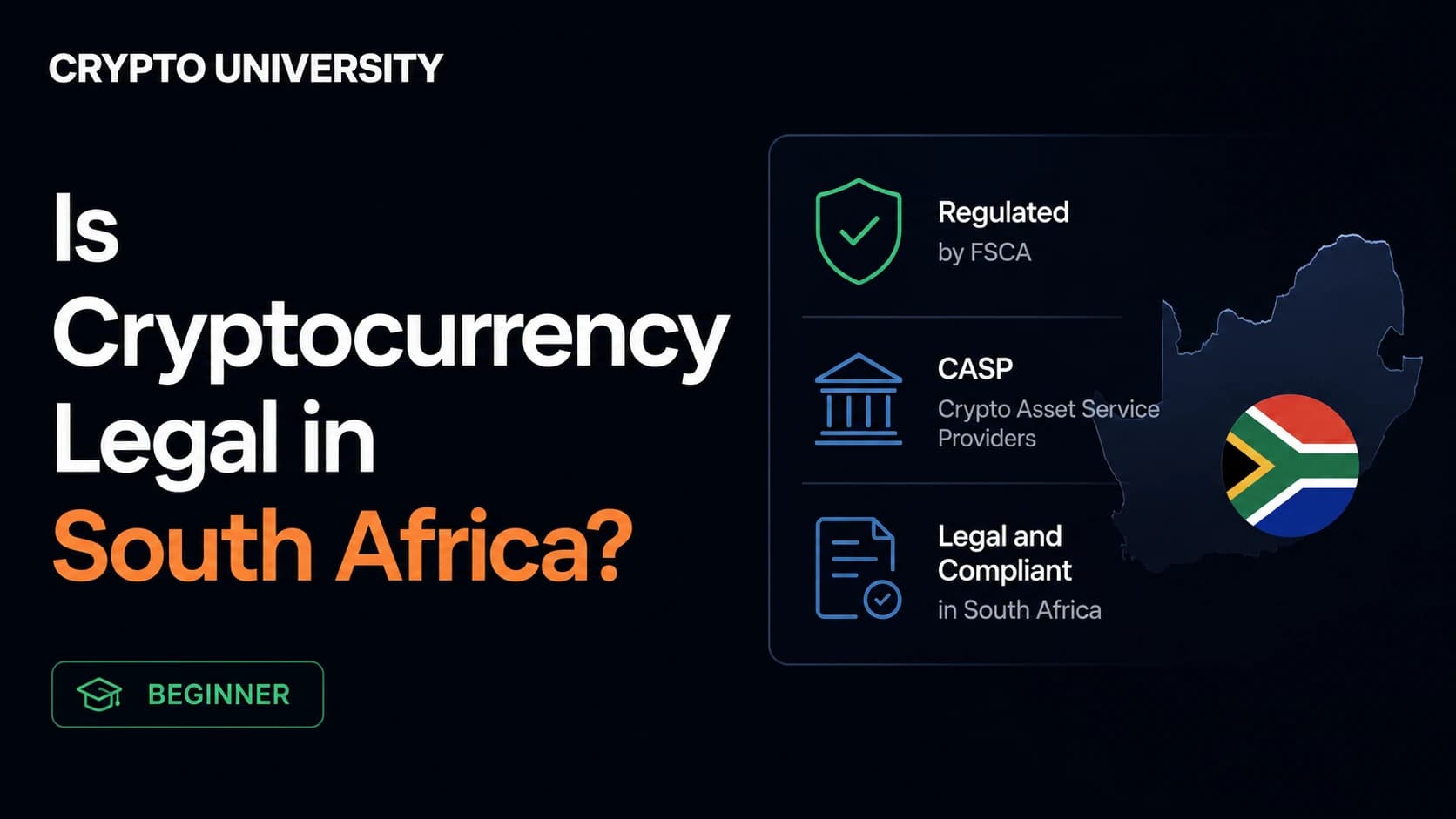
Crypto Asset Service Providers providing regulated financial services must be appropriately licensed by the Financial Sector Conduct Authority. Verify a platform's current status through the FSCA.
Luno appears on the FSCA's authorised CASP list, while VALR states that it holds Category I and II CASP licences. For ordinary, permitted crypto activity, users can review Luno or VALR. Licensing does not override exchange-control restrictions.
Travel Rule
The Financial Intelligence Centre's Directive 9 took effect on 30 April 2025. It applies the FATF Travel Rule to qualifying crypto transfers handled by accountable institutions.
This means regulated providers may need information about the sender and recipient before processing a transfer.
CARF reporting
South Africa implemented the Crypto-Asset Reporting Framework from 1 March 2026.
Reporting Crypto Asset Service Providers must collect and report specified user and transaction information to SARS. CARF improves tax transparency. It does not create a new crypto tax.
Tax considerations
Crypto is treated as an asset for South African tax purposes.
A disposal can occur when crypto is sold, exchanged or donated. Donations tax may also be relevant. For the 2027 tax year, the first R150,000 of property donated by a natural person during the tax year is generally exempt, subject to detailed rules.
The tax outcome depends on the purpose of the transfer. Keep records of the date, amount, rand value, recipient, purpose and transaction details.
Practical checklist
Before sending money across a border, ask:
- Is this transfer allowed under South African exchange-control rules?
- Am I using an authorised provider and authorised route?
- What will the recipient receive after every fee and conversion?
- Can the recipient legally and reliably cash out?
- Does the receiving platform support the exact token and network?
- What Travel Rule information will be required?
- What tax and compliance records should I keep?
Avoid informal WhatsApp or Telegram operators offering unusually good exchange rates without clear licensing or legal recourse. Also do not use someone else's foreign-exchange allowance. SARB warns that this can be treated as an attempt to circumvent exchange controls.
Frequently asked questions
Can I use crypto to send money out of South Africa?
Crypto can move technically, but current SARB guidance says residents may not simply buy crypto locally and use it to externalise capital without permission. The proposed 2026 framework may create authorised routes, but it is still a draft.
Is USDT or USDC better for remittances?
Neither is automatically better. Compare liquidity, supported networks, fees, issuer risk and whether the receiving platform supports the exact token and network.
Are stablecoin transfers instant?
The blockchain transfer can be fast, but deposits, compliance checks, trading and withdrawals can make the complete remittance take longer.
Does using a licensed exchange make a cross-border transfer legal?
No. Provider licensing and exchange-control permission are separate issues.
Will South Africa ban crypto remittances?
The August 2026 draft proposes an authorised framework for certain crypto-based remittances rather than a blanket ban. The final rules may still change.
Related terms
- Stablecoin: A crypto asset designed to track another asset, commonly the US dollar.
- Crypto Asset Service Provider (CASP): A business providing specified crypto services such as exchange, transfer or custody.
- On-ramp: A service that converts traditional currency into crypto.
- Off-ramp: A service that converts crypto back into traditional currency.
- Travel Rule: A requirement for certain sender and recipient information to accompany qualifying transfers between regulated providers.
Sources
- South African Reserve Bank, Financial Surveillance FAQs: https://www.resbank.co.za/en/home/quick-links/frequently-asked-questions
- South African Reserve Bank and National Treasury, Draft Crypto Assets Manual, 3 August 2026: https://www.resbank.co.za/content/dam/sarb/publications/media-releases/2026/draft-crypto-manual.pdf
- SARB and National Treasury, Joint statement on the Draft Crypto Assets Manual: https://www.resbank.co.za/en/home/publications/publication-detail-pages/media-releases/2026/crypto-assets
- National Treasury, 2026 Budget Review: https://www.treasury.gov.za/documents/national%20budget/2026/review/FullBR.pdf
- Financial Intelligence Centre, Directive 9: https://www.fic.gov.za/
- South African Revenue Service, Crypto Assets and Tax: https://www.sars.gov.za/individuals/crypto-assets-tax/
- South African Revenue Service, Crypto-Asset Reporting Framework: https://www.sars.gov.za/businesses-and-employers/third-party-data/crypto-asset-reporting-framework-carf/
- South African Revenue Service, Donations Tax: https://www.sars.gov.za/tax-rates/other-taxes/
- Financial Sector Conduct Authority, CASP information: https://www.fsca.co.za/
- World Bank, Remittance Prices Worldwide, South Africa to Zimbabwe: https://remittanceprices.worldbank.org/corridor/South-Africa/Zimbabwe
- International Monetary Fund, Stablecoins: Promise, Risks, and Policy Choices for Emerging Markets, 7 August 2026: https://www.imf.org/en/news/articles/2026/08/07/sp080726-stablecoins-emerging-markets-dan-katz
Editorial note
This article is general educational information, not financial, tax or legal advice. South Africa's cross-border crypto framework is changing. Check current SARB, National Treasury, FSCA, FIC and SARS guidance before acting.
More Reading
- How to Cash Out Crypto in South Africa in 2026 (Step-by-Step Guide): /cash-out
- Crypto exchange comparison in South Africa: /exchanges
- Find the best way to withdraw crypto into your local currency: in /cash-out
Continue with Cash Out and Remittances
Use the South African hub to compare current pathways, supporting evidence and next steps.
OPEN CASH OUT AND REMITTANCES