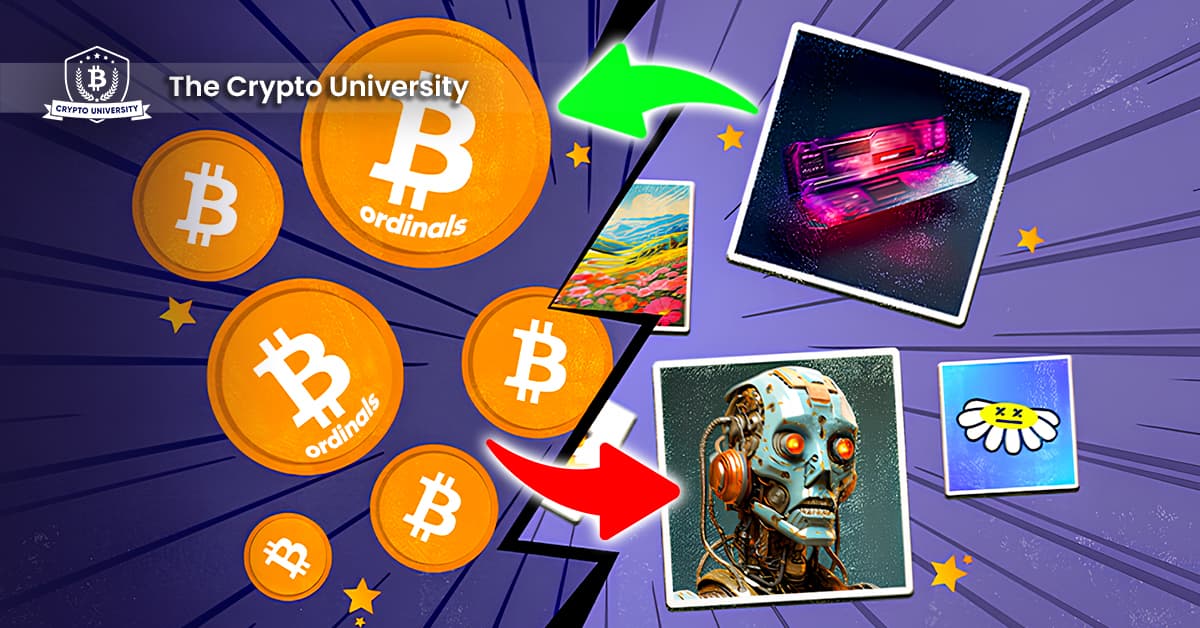
A recent coin base report shows NFT activities shifting to Bitcoin ordinals. The Bitcoin ordinals have recently seen a surge in interest, adaptability and market capitalization.
Given the current social media buzz, gaining a comprehensive understanding of this phenomenon is essential. Dive into this article to unravel the intricacies of Bitcoin ordinals, their impact on the Bitcoin network, the significance of the BRC-20 standard, and the diverse use cases and adaptability that shape this evolving landscape.
Bitcoin ordinals
Bitcoin's game-changing move this year was the introduction of Ordinals – a brainchild of Bitcoin developer Casey Rodarmor. These Ordinals, akin to Bitcoin NFTs, allow users to directly inscribe text, images, or videos directly onto the Bitcoin blockchain, sparking a blend of excitement, skepticism, and curiosity in the crypto community.
Check out this video on the ultimate guide to Bitcoin ordinals to get an in depth veiw
It's impact on the Bitcoin network
Irrespective of divided opinions, Ordinals have stormed the crypto scene. In April 2023 alone, the daily record for inscriptions was surpassed four times, reaching over 223,000 on April 29. With 13.6 million inscriptions and 1,779 BTC in fees, Ordinals are rewriting the crypto narrative.
So, what are Ordinals? In essence, they're a protocol letting users inscribe diverse data on Bitcoin's blockchain, made possible by the 2017 SegWit and 2021 Taproot upgrades. This method enables tracking and transferring of individual satoshis, providing a unique way to assign value without official blockchain records.
Initially controversial, Ordinals add utility beyond Bitcoin's role as a digital currency. Advocates argue they could attract more miners and developers, enhancing the network's security and functionality. Introducing Ordinals could drive up transaction fees, crucial for securing the network and boosting commercial profitability.
BRC-20
Immersing into the BRC-20 standard, a post-Ordinal era development. Inspired by Ethereum's ERC-20, this experimental token protocol enables minting and transfer of fungible tokens directly on the Bitcoin network through Ordinal inscriptions. Though less functional than ERC-20 tokens, BRC-20 tokens are a testament to the ever-evolving digital asset industry where some experts to ERC-20 network as a testnet for the real deal.
To get an in depth veiw of BRC-20 tokens, you can check out this video
Yet, caution prevails. BRC-20 tokens are in early experimental stages, lacking the track record of their Ethereum counterparts. The long-term fate of both Ordinals and BRC-20 tokens remains uncertain, emphasizing the dynamism of the digital asset industry.
Conclusion
In a nutshell, the advent of Ordinals and the exploration of BRC-20 tokens showcase Bitcoin's dynamic evolution. These innovations, from inscribing content to experimenting with token protocols, highlight the industry's ongoing quest for progress. Bitcoin, once perceived as static, is proving its adaptability, promising intriguing possibilities in the ever-evolving world of digital assets.