
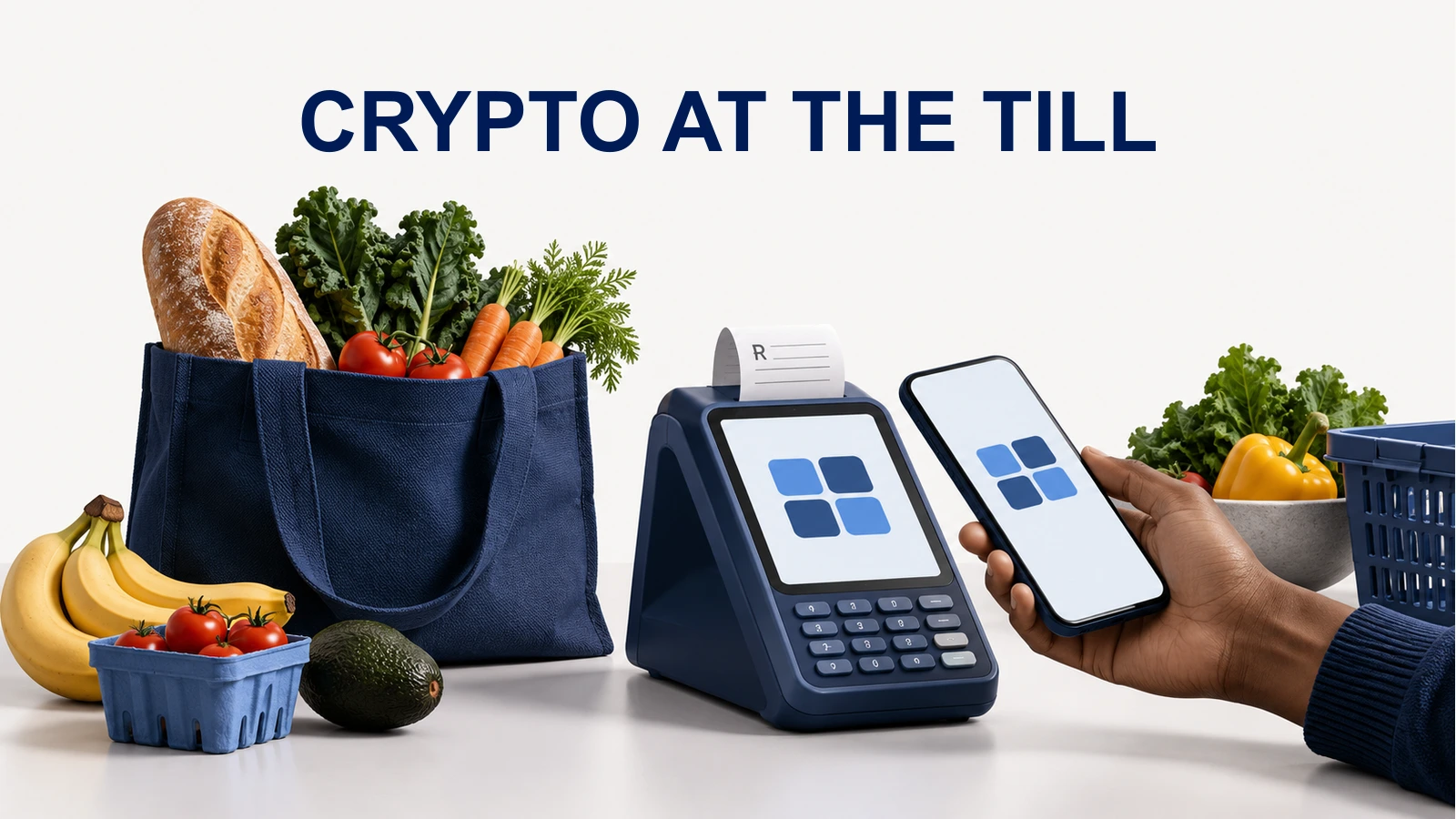
At Pick n Pay, use the supported QR payment route in your chosen app, check the rand bill and crypto debit, and wait for the till to confirm payment. Do not send a normal blockchain transfer to a code just because it appears on a checkout screen.
VALR publishes a specific Pick n Pay workflow requiring a fully verified account, its current mobile app and a Bitcoin balance. MoneyBadger also documents compatible exchange and Lightning-wallet routes. App eligibility, available balances and the exact QR format still matter.
Prepare before joining the queue
Open your app while you have reliable connectivity. Confirm that the payment function is available, your account is verified and the usable balance is in the correct account. A trading position or balance committed to an order may not be available for shopping.
Keep a conventional backup payment method. A flat battery, expired quote or provider interruption should not force a hurried transfer or unnecessary purchase of another asset at the till. The spending hub explains the broader choices.
VALR's general payment guide now describes ZAR and supported crypto, while its Pick n Pay-specific page still describes Bitcoin initially. Do not promise every balance at every checkout from these differently scoped pages. Use the options actually offered for the merchant. This guide does not extend the general balance list to the Pick n Pay-specific flow.
Follow the documented VALR checkout sequence
After the cashier scans the goods, request QR payment. In VALR, open Pay and the QR scanner, then scan the code presented at the till. Check the merchant, rand amount and debit asset before confirming. VALR's specific guide then instructs the user to authorise the payment and wait for its completion notification.
Also ask the cashier to confirm the sale completed. An app notification and a merchant receipt answer related but different questions. Retain both references if the two sides disagree.
For another supported wallet, follow that wallet's payment instructions. MoneyBadger distinguishes wallets that read the store code directly from those needing its companion app to interpret it. An ordinary Bitcoin on-chain send function is not interchangeable with Lightning or an integrated exchange payment.
Keep a compact checkout record
This is a blank checklist, not a fabricated receipt or a claim that CU tested a purchase.
| Before authorising | After authorising |
|---|---|
| Store and till reference | Merchant receipt number |
| Rand basket total | Confirmed rand amount |
| Debit asset and quantity | Actual asset quantity debited |
| Quoted rate and expiry | App payment reference and timestamp |
| Any separately displayed fee | Completion, pending or failed state |
If the quote expires, request a fresh quote and review it again. Do not approve a new amount from memory. For a hypothetical R600 basket, a debit worth R606 at your comparison price represents R6, or 1%, of additional cost. That figure is a model, not a current provider tariff. A zero itemised fee does not prove that conversion is costless.
Handle uncertainty before paying again
If the app shows a debit but the till does not confirm, record the payment reference and ask the store to check. Contact the payment provider through official support. Do not repeatedly authorise fresh attempts while the original status is unclear.
A cashier cannot repair a network mismatch by asking for your seed phrase. No legitimate shopping support process needs that information. Avoid posting an unredacted receipt, wallet balance or account identifier publicly while seeking help.
Refunds and tax records
Start a product refund with the merchant and retain the original sale reference. MoneyBadger describes refunds based on the rand value, converted at the refund-day rate, so the returned token quantity can differ from the original debit. Confirm the actual route with the merchant and wallet provider instead of assuming an on-chain reversal.
Spending crypto can require disposal records. Keep the rand purchase amount alongside the acquisition history of the asset spent and any later refund. SARS applies ordinary tax rules to crypto transactions; whether a gain is revenue or capital depends on the facts. Use the SARS guide for context and the cash-out hub if paying with banked rands is more practical for your circumstances.
Sources and verification
Primary sources checked on 20 September 2026. Prices, availability and processing arrangements can change.