Mastering DeFi Yield Aggregators and Auto-Compounding Vaults: Maximizing Returns in 2026
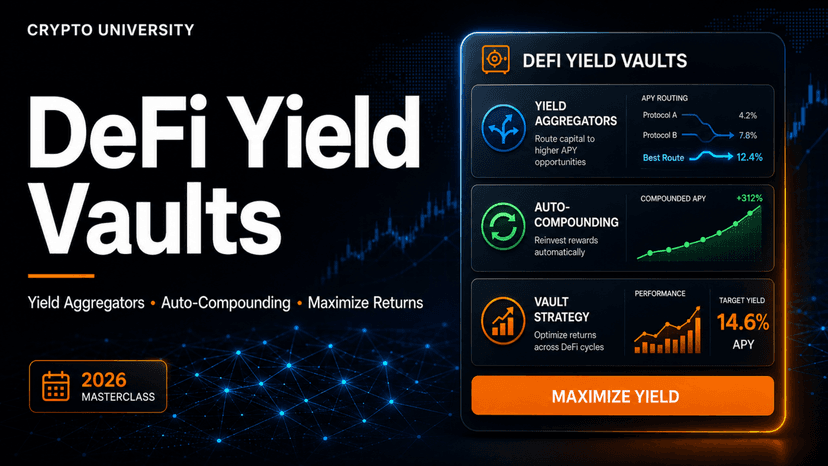
The early days of decentralized finance (DeFi) required investors to manually claim yield, swap rewards, and reinvest them into liquidity pools—a tedious, gas-intensive process that often erased profits through network fees. By 2026, the DeFi landscape has been revolutionized by Yield Aggregators and Auto-Compounding Vaults. These sophisticated smart contracts act as automated portfolio managers, continuously harvesting rewards, optimizing trading routes, and reinvesting capital to maximize the power of compound interest, all while minimizing gas costs through Layer 2 (L2) batching and intent-based routing.
For sophisticated retail investors, family offices, and yield-focused desks, yield aggregators are the cornerstone of a passive, capital-efficient crypto portfolio. However, the promise of "set-and-forget" high APYs often masks complex underlying strategies, hidden impermanent loss, and compounding smart contract risks.
This comprehensive guide breaks down the mechanics of modern yield aggregation, the top-tier platforms and tools for deploying capital safely in 2026, and the strict analytical frameworks required to distinguish sustainable, real yield from unsustainable, inflationary token emissions.
The 3 Pillars of Modern Yield Aggregation in 2026
To effectively utilize auto-compounding vaults, you must understand the mechanics that drive their returns and the risks they encapsulate.
Automated Harvesting and Gas Optimization: The core function of an aggregator is to automatically sell earned reward tokens and compound them back into the principal asset. In 2026, advanced aggregators utilize L2 rollups (like Arbitrum, Base, or zkSync) and intent-based solvers to batch these transactions. This reduces the gas cost of compounding from dollars to fractions of a cent, allowing vaults to compound hourly or even minutely without destroying net yield.
Dynamic Strategy Routing: Top-tier vaults do not rely on a single, static liquidity pool. They dynamically route capital across multiple protocols (e.g., shifting funds between Aave, Compound, and Morpho) based on real-time supply/demand imbalances, ensuring your capital is always deployed where it earns the highest risk-adjusted return.
Risk Tranching (Senior/Junior Vaults): To cater to different risk appetites, modern aggregators offer "tranching." Junior tranches absorb the first losses in exchange for amplified yield, while Senior tranches accept capped yields in exchange for principal protection and priority claims on the vault’s underlying assets. This allows conservative investors to access DeFi yield with defined, institutional-grade risk parameters.
Top Platforms and Tools for Yield Aggregation in 2026
Deploying capital into auto-compounding vaults requires a stack that balances high-yield opportunities with rigorous security and transparent performance tracking.
1. Bybit: Best for Regulated, Simplified Yield Aggregation
For investors who want the benefits of auto-compounding yield without interacting directly with complex, unaudited DeFi smart contracts, Bybit offers a highly secure, regulated alternative through its "Simple Earn" and "Dual Asset" aggregation products.
Core Features: Bybit aggregates liquidity from various internal and external market-making strategies to offer competitive, flexible, or locked APYs on major assets (BTC, ETH, USDT, SOL). The platform handles all the compounding and strategy routing behind the scenes, presenting the user with a single, transparent net APY.
Institutional Security: Funds are protected by Bybit’s robust cold storage architecture and proof-of-reserves audits, completely eliminating the smart contract risk associated with decentralized vaults.
Why Investors Choose It: It provides a seamless, user-friendly gateway to compounded crypto yield, complete with the ability to instantly liquidate positions or use them as cross-margin collateral within the Unified Trading Account.
👉 Access Secure, Auto-Compounding Crypto Yield Products on Bybit (Use referral code: 46164)
2. Ledger: Best for Securing Frequent DeFi Vault Interactions
For DeFi natives who prefer self-custody and want to access the highest yields on decentralized aggregators (like Beefy, Yearn, or native L2 vaults), securing the wallet is paramount. Auto-compounding vaults require token approvals, which are a primary vector for wallet drainers.
Core Features: Ledger hardware wallets ensure that every interaction with a yield aggregator—whether depositing principal, harvesting rewards, or withdrawing funds—requires physical cryptographic approval on the device’s secure screen.
Clear Signing for Smart Contracts: Ledger’s ecosystem actively parses complex vault transactions, displaying human-readable details (e.g., "Deposit 1000 USDC into Vault X") rather than opaque hexadecimal data. This prevents "blind signing" attacks where malicious contracts disguise unlimited token approvals as routine deposits.
Why Investors Choose It: It provides the ultimate physical circuit breaker. Even if you accidentally navigate to a phishing site mimicking a popular yield aggregator, your funds cannot be drained without your explicit, physical consent on the Ledger device.
👉 Secure Your DeFi Yield Aggregator Operations with a Ledger Hardware Wallet
3. TradingView: Best for Tracking Real APY vs. Advertised APY
Not all displayed APYs are created equal. Many vaults advertise inflated yields based on short-term token emissions that are mathematically unsustainable. TradingView is the essential tool for cutting through the marketing noise.
Core Features: Advanced investors use TradingView to chart the historical APY of a vault alongside the price action of the underlying reward token. If a vault’s APY is spiking solely because the reward token’s price is pumping, the yield is highly vulnerable to a death spiral.
TVL and Inflow Analysis: By creating custom indicators or using community-built scripts, you can monitor the Total Value Locked (TVL) of a specific vault. A rapidly declining TVL is often a leading indicator of a failing strategy or an impending smart contract exploit, signaling that it is time to withdraw.
Why Investors Choose It: It provides the quantitative, data-driven visibility needed to evaluate the long-term sustainability of a yield strategy before committing capital.
👉 Analyze DeFi Vault APY Sustainability and TVL Trends with TradingView
Step-by-Step: How to Safely Deploy Capital into an Auto-Compounding Vault
Investing in yield aggregators requires a disciplined, security-first workflow. Follow this exact blueprint to avoid costly mistakes:
Step 1: Dissect the Underlying Strategy
Do not invest based on the headline APY alone. Read the vault’s documentation to understand how the yield is generated. Is it from sustainable trading fees (real yield), or is it from inflationary emissions of a governance token (ponzi-nomics)? Prefer vaults that generate yield from verifiable, external revenue sources.
Step 2: Vet the Smart Contract Audits and TVL
Only deploy capital into vaults that have undergone multiple, rigorous audits by top-tier security firms (e.g., CertiK, Trail of Bits, OpenZeppelin). Additionally, check the vault’s TVL. A vault with less than $1 million in TVL is highly susceptible to manipulation, low liquidity, and sudden strategy failure.
Step 3: Execute the Deposit via Hardware Wallet
Navigate to the official vault interface (always verify the URL via a trusted bookmark). Connect your Ledger hardware wallet. When prompted to approve the token spend limit, approve only the exact amount you are depositing, never "unlimited." Verify the transaction details on the Ledger’s physical screen before signing.
Step 4: Monitor Compounding Frequency and Net Yield
After depositing, monitor the vault’s performance. Ensure that the compounding frequency is optimized. If a vault is compounding every 10 minutes on a high-gas network, the gas fees may be consuming 50% of the gross yield. Modern aggregators should dynamically adjust compounding frequency based on network gas prices.
Risk Management: The Hidden Dangers of Yield Aggregation
Auto-compounding vaults are powerful, but they layer multiple risks on top of one another. You must actively manage these pitfalls:
Smart Contract Layering Risk: A yield aggregator is a smart contract that interacts with other smart contracts (e.g., a DEX and a lending protocol). A vulnerability in any of these interconnected protocols can result in a total loss of funds. Mitigation: Diversify your capital across multiple, uncorrelated vaults and protocols. Never allocate more than 5-10% of your net worth to a single DeFi strategy.
Impermanent Loss (in LP Vaults): If you deposit into a vault that provides liquidity to a volatile pair (e.g., ETH/USDC), you are still exposed to impermanent loss. The auto-compounding of fees may not be enough to offset the divergence loss if the asset experiences a massive price swing. Mitigation: Stick to single-asset vaults or highly correlated pairs (e.g., stETH/ETH) if you want to minimize IL.
Reward Token Depegging or Collapse: If the vault pays yield in a highly volatile governance token, a crash in that token’s price will instantly obliterate the advertised APY. Mitigation: Prioritize vaults that compound yield back into stablecoins or blue-chip assets (BTC, ETH), rather than speculative altcoins.
Tax Complexity: Every time an auto-compounding vault harvests rewards and reinvests them, it is a taxable event in most jurisdictions. A vault that compounds daily will generate 365 taxable events per year, per asset. Mitigation: Use automated crypto tax software to track these micro-transactions accurately.
👉 Automate Your Complex Auto-Compounding Tax Tracking with Koinly
Frequently Asked Questions (FAQ)
Q: What is the difference between a single-asset vault and a liquidity pool (LP) vault?
A: A single-asset vault (e.g., a USDC vault) lends your stablecoins to various protocols to earn interest, protecting you from impermanent loss. An LP vault deposits your funds into a decentralized exchange liquidity pool (e.g., ETH/USDC) to earn trading fees, exposing you to impermanent loss if the prices of the two assets diverge significantly.
Q: How are auto-compounding vault rewards taxed?
A: In most major jurisdictions, every time the vault harvests and reinvests your rewards, it is treated as ordinary income based on the fair market value of the tokens at that exact moment. When you eventually withdraw your principal, you will also trigger a capital gains or losses event. Because this can result in hundreds of micro-transactions, using a dedicated tool like Koinly is mandatory for accurate compliance.
Q: Can I withdraw my funds from an auto-compounding vault at any time?
A: Generally, yes. Most modern yield aggregators offer "flexible" or "on-demand" withdrawal. However, some high-yield vaults may have a "lock-up" period or an early withdrawal penalty to ensure the underlying strategy has time to generate yield and to prevent bank-run dynamics. Always check the withdrawal terms before depositing.
Q: Is it safe to approve "unlimited" token spending for a yield aggregator to save on gas fees?
A: No. While unlimited approvals save a few dollars in gas on future deposits, they create a massive security vulnerability. If the aggregator’s smart contract is ever exploited, or if you are tricked into interacting with a phishing site, the attacker will have unrestricted access to drain your entire token balance. Always approve only the exact amount you intend to deposit, a process made easy and secure by using a Ledger hardware wallet.
Risk Warning: Investing in decentralized finance (DeFi) yield aggregators and auto-compounding vaults carries a high level of risk, including smart contract vulnerabilities, impermanent loss, underlying protocol failures, and reward token volatility. You could sustain a partial or total loss of your initial investment.
Not Financial Advice: The information provided in this article is for educational and informational purposes only. It does not constitute financial, investment, legal, or tax advice. Always conduct your own research (DYOR) and consult with a qualified, licensed professional before deploying capital into any decentralized yield strategy.
Affiliate Disclaimer: This article contains affiliate links. If you click on these links and sign up for a service or make a purchase, we may earn a commission at no additional cost to you. We only recommend platforms, tools, and services that we have thoroughly vetted and believe provide genuine value, security, and utility to our readers.
Read More: