
Key Takeaways
Token safety checkers like GoPlus scan smart contracts for known risk patterns before you trade, helping you spot honeypots, hidden minting functions, and dangerous ownership structures.
These tools are free to use and support multiple blockchains, but they cannot catch every scam. A clean scan does not guarantee a token is safe.
Always use token safety checkers as one part of a broader due diligence process, not as a final yes or no answer.
Every week, new tokens launch across Ethereum, BNB Chain, Solana, and dozens of other networks. Most will fail. Some are designed to fail and take investor funds with them. Rug pulls, honeypots, and malicious smart contracts have cost crypto users billions of dollars over the years.
Token safety checkers are free tools built to help ordinary users identify contract-level red flags before they buy. This guide explains how they work, what GoPlus Security actually checks, and how to interpret results responsibly.
What Is a Token Safety Checker?
A token safety checker is an automated tool that reads the code of a smart contract and flags patterns associated with scams, exploits, or insider manipulation. Instead of reading raw contract code yourself, the tool does the analysis and returns a risk report.
These tools do not predict price movements or tell you whether a token will succeed. They identify technical and structural problems in the contract itself, such as:
Functions that allow the developer to steal funds
Tax structures that prevent you from selling
Ownership controls that have not been removed
Unusual token supply distribution
What Is GoPlus Security?
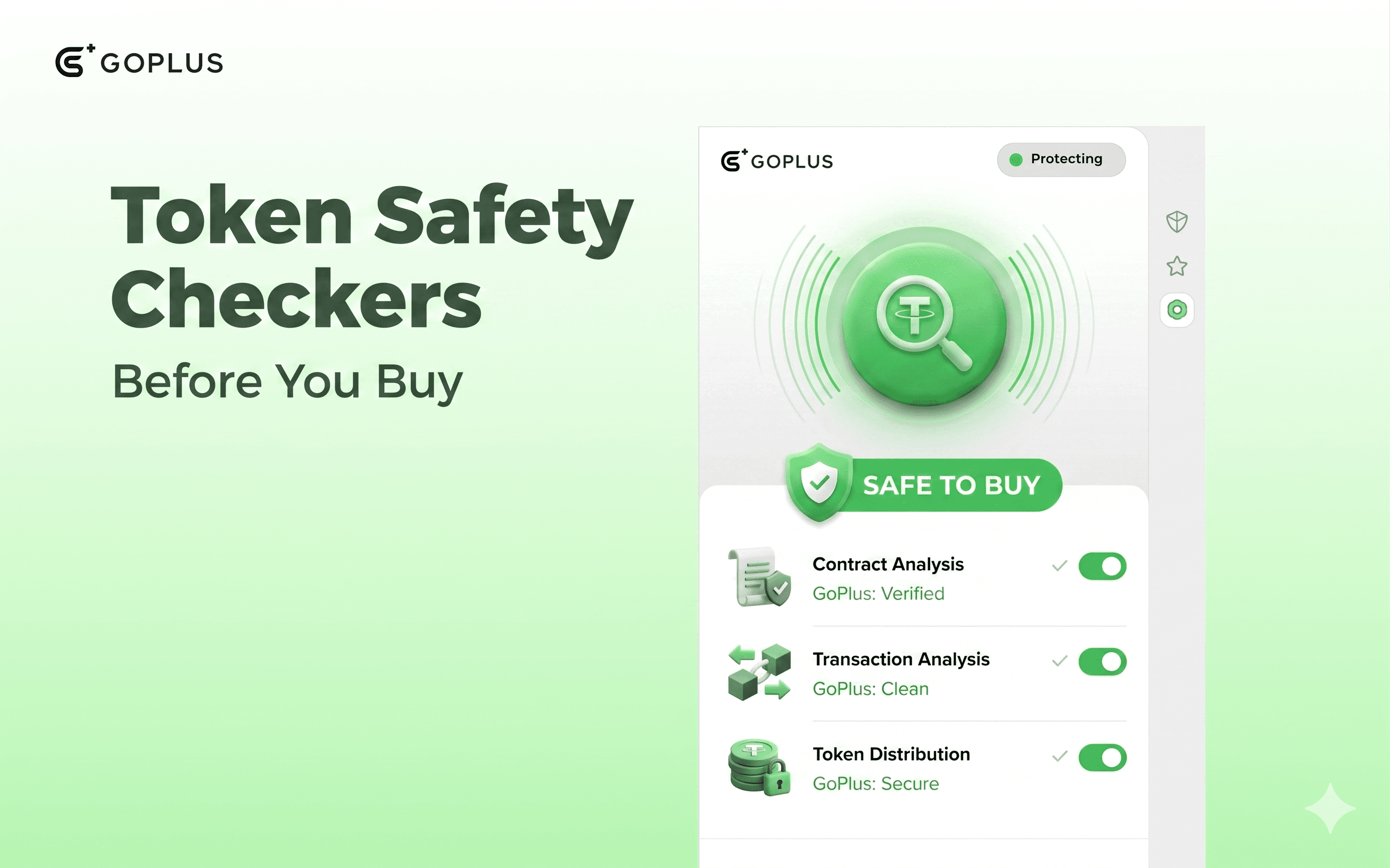
GoPlus Security (gopluslabs.io) is one of the most widely used token security data providers in the industry. It operates an open security API that powers safety checks inside wallets, DEX aggregators, and browser extensions used by millions of people.
GoPlus covers a wide range of blockchains including Ethereum, BNB Chain, Polygon, Arbitrum, Avalanche, Fantom, Solana, and others. You can use it directly through their website by pasting a token contract address.
The platform is free for manual use and returns a structured risk report within seconds.
What Does GoPlus Actually Check?
GoPlus runs a multi-point scan of a token's smart contract. The results are presented as flags, each of which can be marked as safe, warning, or risky.
Check | What It Means |
Honeypot detection | Can you actually sell the token after buying it? |
Buy / sell tax | What percentage is taken on each transaction? |
Mint function | Can the developer create new tokens and dilute supply? |
Ownership renounced | Has control of the contract been given up? |
Blacklist function | Can the developer block specific wallets from selling? |
Proxy contract | Can the contract code be upgraded or replaced? |
Hidden owner | Is there a concealed address still in control? |
Trading cooldown | Are there enforced delays between buy and sell? |
Liquidity locked | Is the trading liquidity secured, and for how long? |
Token distribution | What percentage do the top wallets hold? |
Each of these flags corresponds to a real attack vector that has been used in documented scams. For example, a blacklist function allows a developer to freeze your wallet mid-trade. A mint function allows unlimited new tokens to be created, crashing the value of existing holdings.
How to Use GoPlus Step by Step
Step 1: Find the contract address Go to the token's official website or its listing on a block explorer like Etherscan or BscScan. Copy the contract address, not the token name. Token names can be faked. Contract addresses are unique.
Step 2: Open GoPlus Security Go to gopluslabs.io and navigate to the Token Security section.
Step 3: Select the correct network Choose the blockchain the token lives on. Ethereum contracts look different from BNB Chain or Solana contracts.
Step 4: Paste the contract address and run the scan Results appear within a few seconds.
Step 5: Read every flag, not just the summary Some tools show a green score even when individual flags are worth investigating. Read the detailed breakdown, not just the headline result.
Step 6: Research anything flagged as risky or unknown A single warning flag does not always mean a scam. Some flags appear on legitimate tokens. The goal is informed awareness, not automatic rejection.
How to Read GoPlus Results
GoPlus returns results in a format that looks like a checklist. Here is how to interpret the most important findings:
Honeypot: Yes This is the most serious finding. It means the tool has detected code that would likely prevent you from selling. Treat this as an immediate red flag.
Sell tax above 10% High sell taxes reduce your ability to exit a position profitably. Taxes above 10% are uncommon on legitimate projects and are frequently used to trap holders.
Mint function: Yes + Ownership not renounced If a developer can create new tokens and still controls the contract, supply can be inflated without warning. This combination is high risk.
Ownership renounced: No This alone is not necessarily a problem. Many active development teams retain ownership to be able to fix bugs or upgrade the protocol. Context matters here.
Top 10 holders: more than 50% of supply Heavy concentration in a small number of wallets suggests price manipulation is easy. One large holder selling could collapse the market.
What GoPlus Cannot Tell You
GoPlus is a contract scanner, not an omniscient audit. There are meaningful limits to what it can detect:
It cannot verify whether the team behind a token is trustworthy or anonymous
It cannot detect off-chain manipulation such as fake trading volume or coordinated pump-and-dump schemes
It cannot flag social engineering or misleading marketing
It will not catch scams built into contracts that deliberately pass automated checks
Some sophisticated exploits are designed specifically to evade tools like GoPlus
A clean GoPlus report means the contract code passed a set of automated checks. It does not mean the project is legitimate.
Other Tools to Use Alongside GoPlus
GoPlus is strong for contract-level risk. For a complete picture, use it alongside other resources:
Tool | What It Adds |
Dedicated honeypot simulation on ETH and BSC | |
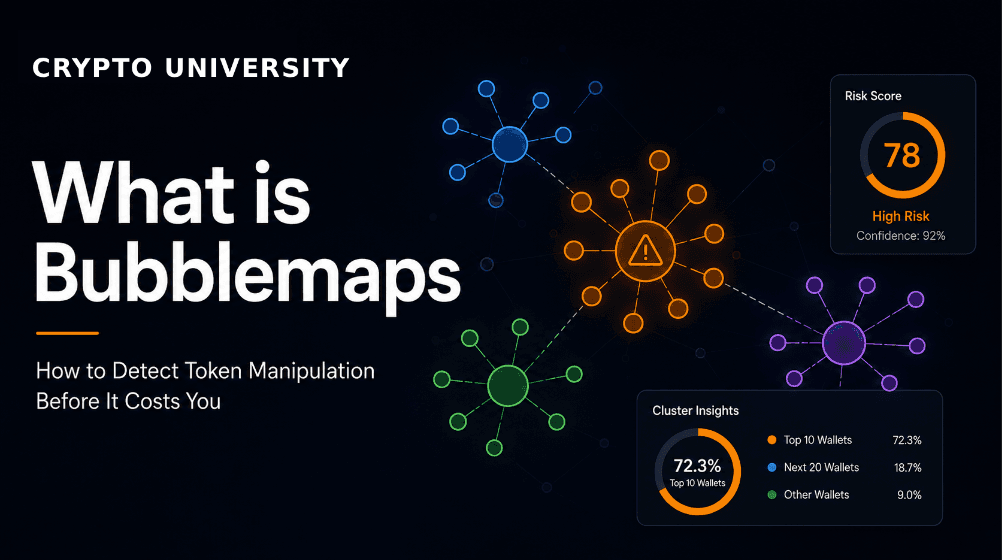
Bubble Maps | Visual map of wallet connections and token distribution |
DEXScreener | Live trading activity and holder trends |
Etherscan or BscScan | Direct contract verification and transaction history |
TokenSniffer | Secondary contract scanner with its own risk scoring |
Using two or three tools gives you overlapping coverage and a more complete risk picture.
Limitations and Responsibility
No tool replaces your own judgment. Token safety checkers are useful filters, not guarantees. Scam developers actively study tools like GoPlus to engineer contracts that pass automated scans while still being designed to extract funds.
The safest approach is to treat a clean scan as a minimum requirement, not a green light.
Before buying any token, combine a GoPlus scan with research into the team, community, development activity, and the basic economics of the project.
FAQ
Is GoPlus Security free to use? Yes. The token security scanner at gopluslabs.io is free for manual use. GoPlus also offers a paid API for developers building applications.
Does GoPlus work on Solana tokens? Yes. GoPlus has added Solana support. However, the checks available on Solana differ somewhat from EVM-compatible chains like Ethereum and BNB Chain.
What does "honeypot" mean in crypto? A honeypot token is one where you can buy but cannot sell. The contract code is written to block or tax sell transactions at an extreme rate, trapping your funds.
Is a token safe if it passes GoPlus? Passing a GoPlus scan means the contract code did not trigger the tool's known risk flags. It does not mean the token is safe to buy or that the project is legitimate.
Can I trust a project that says it passed a GoPlus scan? Teams sometimes share screenshots of clean scans as marketing. Always run the scan yourself using the official contract address from a verified source.
What is the difference between a contract scan and a smart contract audit? A contract scan like GoPlus is automated and takes seconds. A smart contract audit is a manual review by security professionals and is far more thorough, though not infallible.
Disclaimer: This content is for educational and informational purposes only and is not financial advice. Nothing here is a recommendation to buy or sell any asset or use any platform. Do your own research and manage your risk.