What Is Paper Trading?
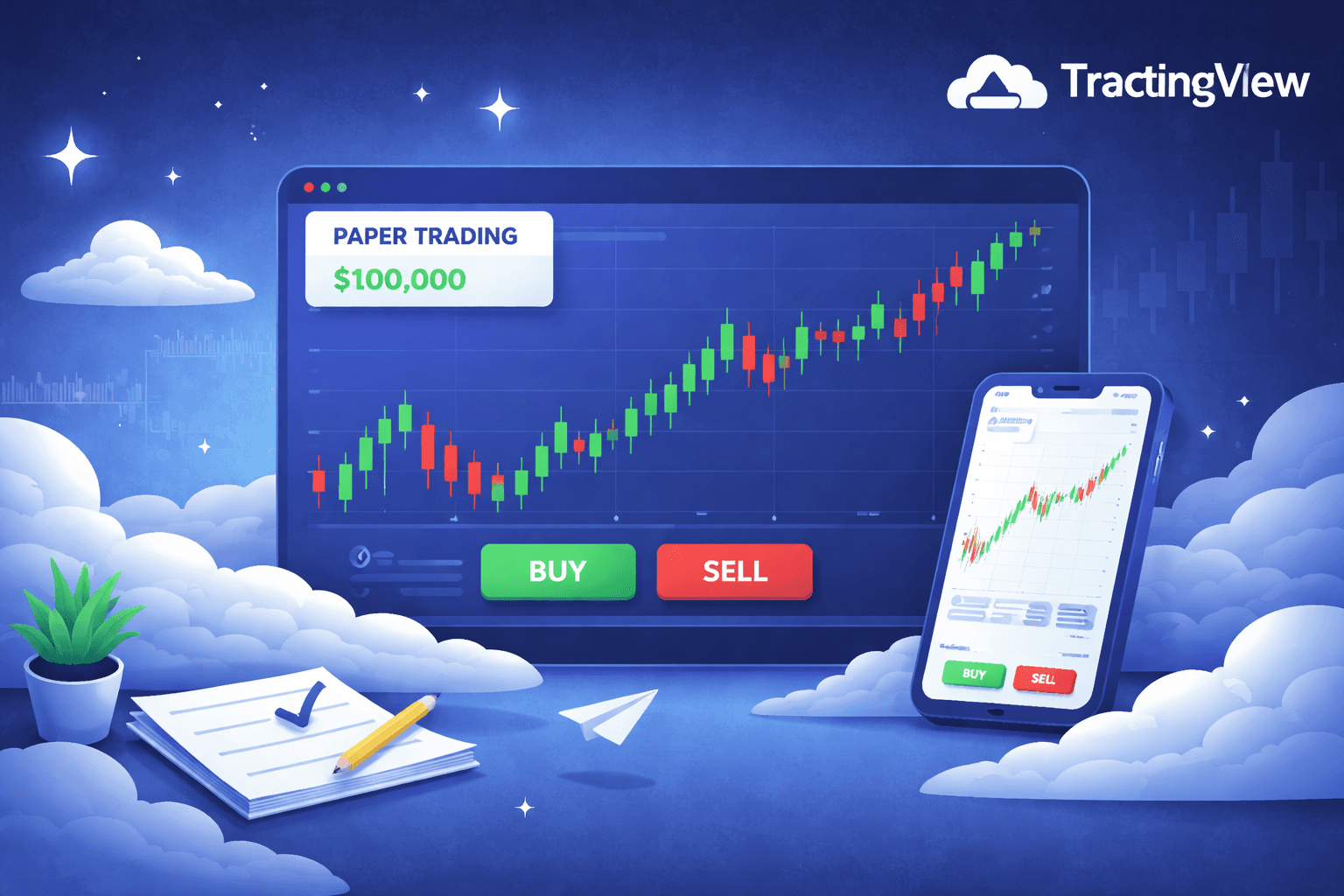
Paper trading lets you buy and sell cryptocurrencies using virtual (fake) money. The platform tracks your profits and losses exactly like a real trade, but your actual money stays 100% safe.
It’s the best way for beginners to learn order types, practice risk management, and control emotions — without any financial pressure.
TradingView Paper Trading (Easiest Option for Beginners)
TradingView is the world’s most popular charting platform and offers one of the simplest paper trading tools.
How to Set It Up (Step-by-Step):
Create a free TradingView account
Open any crypto chart
At the bottom of the screen, click the Trading Panel tab
Choose Paper Trading
Set your starting virtual balance (usually $100,000)
Start placing real market, limit, or stop orders
You can use all indicators, drawing tools, and even replay past market days for extra practice. The virtual portfolio updates in real time.
Binance Demo Trading (Most Realistic Experience)
Binance offers a full demo environment for both spot and futures trading.
How to Start:
Log into your Binance account
Go to Futures or Spot section
Switch to Demo or Testnet mode
Virtual funds load automatically
Trade using the exact same interface as live trading
You can practice advanced orders like OCO, trailing stops, and leveraged futures. The demo even includes realistic liquidity and trading fees.
Coinbase and Other Exchanges
Coinbase Advanced Trade does not have a built-in paper trading mode right now. Most people use TradingView’s simulator together with Coinbase charts instead.
Other exchanges sometimes offer testnets, but for most beginners, TradingView + Binance Demo is more than enough.
What Realistic Practice Looks Like
To get real benefits, you must treat paper trading seriously:
Risk only 1% of your virtual account per trade
Always use stop-losses
Keep a simple trading journal
Complete at least 20–30 simulated trades
You will quickly learn how slippage, fees, and emotions impact your results.
Why Paper Trading Is Better Than Just Watching Charts
Watching charts is passive. Paper trading is active.
When you actually place orders (even virtual ones), you learn timing, position sizing, and the huge difference between “feeling right” and “being right.”
Almost every successful trader spent months practicing in simulators first.
Quick Comparison Table
Platform | Ease of Use | Realism Level | Futures & Leverage | Mobile Support |
TradingView | Very Easy | Very Good | No | Yes |
Binance Demo | Easy | Excellent | Yes | Yes |
Coinbase Advanced | No demo | - | - | - |
FAQ
How long should I paper trade?
Until you can follow your trading rules consistently for at least 30 trades.
Does it include fees and slippage?
Yes — especially on Binance Demo and TradingView. The results are very realistic.
Can I practice futures and leverage?
Yes. Binance Demo fully supports leveraged futures with virtual funds.
Is paper trading available on mobile?
Yes. Both TradingView and Binance mobile apps support demo modes.
Will my progress transfer to real trading?
Your skills and good habits will transfer. Real confidence and discipline come from consistent practice.
Suggested Reading
Disclaimer: This content is for educational and informational purposes only and is not financial advice. Nothing here is a recommendation to buy or sell any asset or use any platform. Do your own research and manage your risk.