
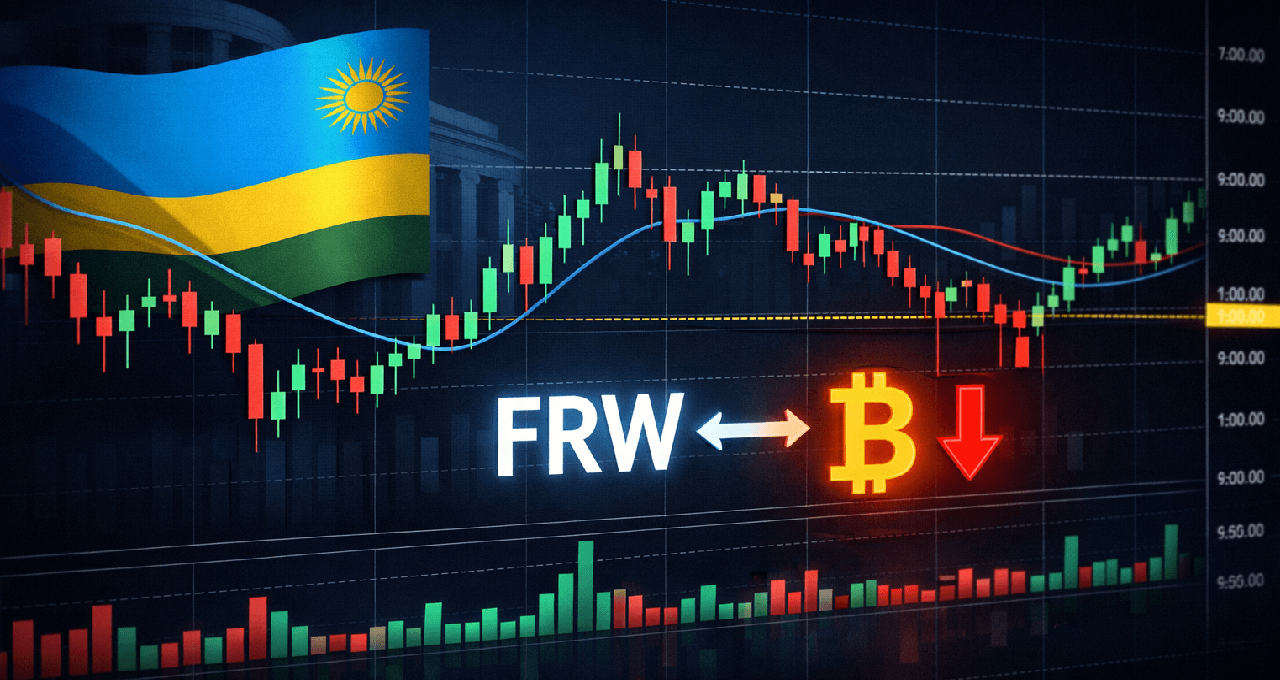
Central banks around the world regularly issue warnings about cryptocurrency. In early April 2026, Rwanda’s National Bank of Rwanda (NBR) reminded citizens that virtual assets are not authorized for payments, conversions involving the Rwandan franc (FRW), or peer-to-peer (P2P) trading under the current legal framework. The bank highlighted “serious financial risks” and stated there is “no recourse in case of loss.”
The statement came shortly after a major global exchange added FRW support to its P2P marketplace. Rwanda reaffirmed that the Rwandan franc remains the country’s only legal tender and that licensed financial institutions cannot facilitate FRW-crypto conversions.
What the Warning Actually Says
The NBR did not ban cryptocurrency ownership outright. Instead, it focused on protecting the local financial system. Key points from the statement:
Crypto-assets cannot be used for payments or exchanges involving FRW.
P2P trading that involves the local currency falls outside the regulatory framework.
Users face significant financial risks with no legal protection or reimbursement if funds are lost.
Only the Rwandan franc is legal tender.
This is a consumer-protection message. Without regulation, users have no government-backed insurance or dispute resolution if something goes wrong—unlike bank deposits in many countries.
Why Central Banks Issue Crypto Warnings
Central banks exist to maintain monetary stability and protect citizens from financial harm. Cryptocurrencies introduce several concerns from a regulator’s perspective:
Volatility: Crypto prices can swing dramatically in short periods.
Lack of recourse: No central authority steps in to reverse losses from hacks, scams, or exchange failures.
Financial stability: Large-scale adoption without rules could affect the banking system or enable illicit activity.
Consumer protection: Many users enter crypto without understanding the risks.
At the same time, Rwanda—like many countries—is exploring its own digital money. The NBR completed a proof-of-concept for a central bank digital currency (e-FRW) in February 2026 and is preparing a pilot phase. A draft law to regulate virtual asset service providers was approved by Cabinet in March 2026.
These steps show a common pattern: caution around unregulated private crypto while governments test controlled digital versions of their own currency.
Practical Steps for Beginners Facing Regulatory Warnings
A central-bank warning does not mean you must avoid crypto entirely. It means you must approach it with extra care and personal responsibility. Here is a clear plan:
Research your local rules
Every country has different laws. Check official government or central-bank websites before using crypto for payments or P2P trades. Never assume an exchange’s features are legal in your location.Separate custody from trading
Use non-custodial wallets where you control your private keys. Avoid leaving large amounts on exchanges, especially those offering unregulated P2P services in your currency.Diversify wisely
Spread holdings across different assets and, where practical, different jurisdictions or stable storage methods. This reduces the impact if one platform or regulation changes suddenly.Focus on fundamentals, not hype
Treat crypto as a long-term learning asset rather than a quick profit opportunity. Study how blockchains work, what problems they solve, and the technology behind major projects.Manage risk with position sizing
Only invest what you can afford to lose completely. Start with small test amounts to learn the process.Stay informed but skeptical
Follow official channels for regulatory updates. Ignore price predictions or promises of guaranteed returns.
These habits help beginners build confidence regardless of what any single government says.
Fiat Depreciation vs. Crypto Risk: A Balanced View
Fiat currencies managed by central banks experience steady inflation over time. For example, Rwanda reported 9.2% inflation in February 2026. This gradual loss of purchasing power is why many people explore alternative stores of value.
Cryptocurrency offers a different risk profile: extreme short-term volatility, potential for total loss from hacks or scams, and limited legal protections in many places. Both systems carry risk. The difference is that fiat usually comes with some government-backed safeguards, while crypto puts full responsibility on the individual.
Beginners should weigh both realities: fiat has predictable slow erosion through inflation, while crypto demands active education and strong security practices.
Moving Forward with Education-First Thinking
Rwanda’s statement is not unique. Similar warnings exist in many countries. They remind users that crypto remains a high-responsibility space. By focusing on self-custody, continuous learning, and realistic risk management, beginners can participate safely and separate lasting technological value from short-term noise.
The goal is not to avoid crypto because of one warning. It is to enter with eyes open, clear processes, and a long-term mindset.
FAQ
Q1: Does Rwanda’s warning ban all crypto ownership?
No. It specifically addresses payments, FRW conversions, and P2P trading involving the local currency. Ownership itself is not outlawed.
Q2: What does “no recourse” mean in practice?
If you lose money through a hack, scam, or exchange failure, you have no automatic right to compensation or legal reversal from the government or banks.
Q3: Is Rwanda developing its own digital currency?
Yes. The National Bank of Rwanda completed a CBDC proof-of-concept in February 2026 and is moving to a pilot phase for e-FRW.
Q4: Should I stop using global exchanges if I live in Rwanda?
Consult local legal advice. The warning targets FRW-linked activity. Many users hold crypto on regulated or non-custodial platforms while complying with local rules.
Q5: How do I check my country’s crypto regulations?
Visit the official central bank or financial regulator website. Search for “virtual assets” or “crypto framework.” Laws change, so verify the latest version.
Disclaimer: This content is for educational and informational purposes only and is not financial advice. Nothing here is a recommendation to buy or sell any asset or use any platform. Do your own research and manage your risk.
More Read
Free On-Chain Tools After March Regulatory News: DeFiLlama Basics for New Traders
10 Best Free Crypto News Sources in 2026 (No Signals, No Hype)