
Key Takeaways
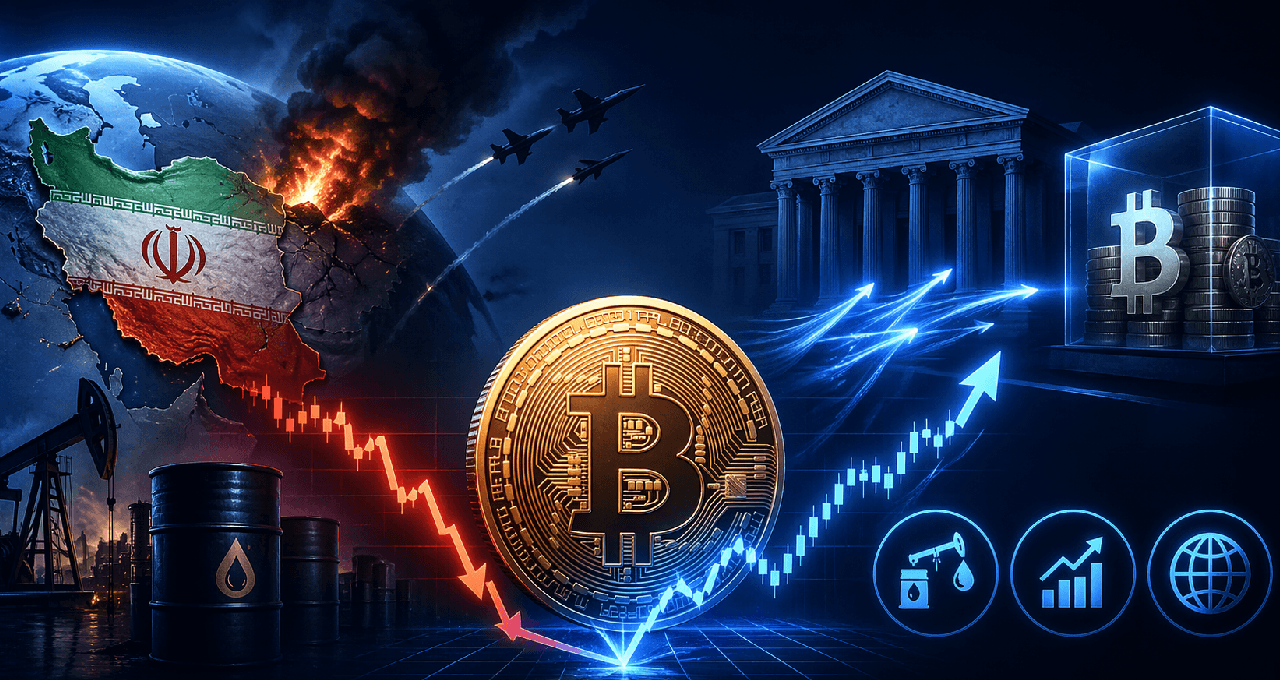
Geopolitical shocks like the Iran crisis make Bitcoin drop at first because of rising oil prices and inflation fears, but it often bounces back once things calm down.
Spot Bitcoin ETFs turned BTC into a “risk asset” that big institutions sell fast during panic, yet the same money flows back quickly when the dust settles.
You don’t need to predict wars — just watch oil prices, ETF flows, and the stage of the crisis to trade smarter.
Introduction: A Real-World Stress Test for Bitcoin
Between February and April 2026, rising tensions between the United States and Iran gave crypto markets something no textbook can teach: a live, real-money test of how Bitcoin behaves when the world gets tense.
Bitcoin dropped, then recovered. It fell on news of missile strikes, climbed on ceasefire rumors, and moved more in line with oil prices than with pure crypto news. For beginner traders trying to figure out what actually moves Bitcoin today, this Iran crisis is a perfect case study.
This article walks you through exactly what happened, why it happened, and gives you a simple, practical way to read future big-world events more clearly.
The Timeline: Key Events and How Bitcoin Reacted
Here’s a clear summary of the main moments during the early 2026 U.S.-Iran tensions and how Bitcoin responded (prices are widely reported market estimates):
Event | Period | Bitcoin Reaction | Key Note |
U.S.-Iran tensions escalate | Feb–April 2026 | Initial drops with some recoveries | BTC tracked oil prices closely |
Missile strikes | Early April (Apr 3) | Sharp sell-off | Traditional markets were closed |
Oil spikes above $106/barrel | Mid-April 2026 | Even bigger drop | Inflation fears delayed rate cuts |
Ceasefire rumors | April 2026 | Rally | Improved risk appetite |
Ceasefire announced | April 17, 2026 | Surged to ~$78,384 | Outperformed many traditional assets |
Spot ETF outflows | February 2026 | $3.8 billion outflows | Largest since ETFs launched |
Why Does Bitcoin React to Geopolitical Events?
In 2026, Bitcoin is no longer in its own little bubble. It’s connected to the traditional financial world. Here’s why the Iran crisis moved the price:
1. The Spot ETF Effect
Spot Bitcoin ETFs started in January 2024 and brought huge money from Wall Street. These big investors treat Bitcoin like a risky tech stock. When fear rises, they sell risky assets fast. As one trading expert put it, the oil price move actually matters more for crypto than the headlines themselves.
2. The Oil-to-Inflation-to-Rate-Cut Pipeline
The Iran conflict created a clear chain reaction. Here’s how it worked:
Step | What Happened | Effect on Bitcoin |
1 | Conflict threatens oil supply | Oil prices climb |
2 | Higher oil pushes inflation higher | Fed less likely to cut interest rates |
3 | Fewer rate cuts mean tighter money | Risk assets (including BTC) fall |
This is exactly why Bitcoin fell harder when oil crossed $106 than on the scariest headlines alone.
3. Bitcoin as a Partial Safe Haven
It’s not all bad news. On April 17 when ceasefire news broke, Bitcoin jumped to around $78,384 and beat many traditional assets. Traders rotated back into riskier plays once the immediate panic passed.
Each Iran-related dip got smaller in percentage terms, showing that long-term holders were buying the dips instead of panicking.
A Simple 3-Step Framework for Reading Macro Events
You don’t need to guess what will happen in the world. You just need a repeatable process. Here’s an easy 3-step framework any beginner can use:
Step | What to Do | Why It Helps |
1 | Identify the “transmission mechanism” (oil, inflation, rates) | Shows the real reason markets are moving |
2 | Check Bitcoin ETF flows | Reveals what big institutional money is doing |
3 | Figure out the crisis phase (shock → clarity → long-term) | Tells you if it’s time to be cautious or optimistic |
How Spot ETFs Changed the Geopolitical Playbook
Before 2024, Bitcoin mostly moved on retail trader emotions. ETFs changed that. In February 2026 we saw $3.8 billion flow out — the biggest exit since launch. That showed how quickly big money can leave during fear.
The good news? The same money came rushing back when the picture improved. The April 17 surge happened right after the ceasefire and some positive U.S. regulatory news.
Simple tip for you: Always watch ETF flow data together with the headlines. When outflows slow down or turn positive during a crisis, it’s often a stronger signal than the news itself.
What to Watch in Future Geopolitical Events
Next time tensions rise anywhere in the world, keep these four things on your screen:
What to Watch | Why It Matters for Bitcoin |
Oil prices | Main link between geopolitics and inflation |
Bitcoin ETF flows | Shows institutional buying or selling |
Crisis phase | Short-term fear vs medium-term recovery |
U.S. dollar strength | Strong dollar usually pressures risk assets |
Is Bitcoin a Safe Haven or a Risk Asset?
The honest 2026 answer is: it depends on the time frame.
Short term (first shock): Bitcoin usually sells off with other risky assets as institutions reduce exposure.
Medium term (once things clarify): It often recovers faster, especially if the dollar weakens or money printing increases.
Long term: If conflicts lead to more government spending and money creation, Bitcoin’s “hard asset” story gets stronger.
Knowing which phase you’re in is far more useful than picking one label forever.
Frequently Asked Questions
Q: Why did Bitcoin drop when the Iran conflict started in early 2026?
A: The conflict threatened higher oil prices, which raised inflation fears and made the Federal Reserve less likely to cut rates. Institutions also sold risk assets quickly through the new spot ETFs. The April 3 drop was extra sharp because traditional stock markets were closed, so crypto was the only place to express fear.
Q: Does a ceasefire always mean Bitcoin will rally?
A: Not automatically, but removing the immediate danger usually improves risk appetite. In April 2026 the rally was even stronger because of positive U.S. regulatory news and the reopening of the Strait of Hormuz at the same time.
Q: What is the Strait of Hormuz and why does it matter for crypto?
A: It’s a narrow waterway between Iran and Oman that carries a huge portion of the world’s oil. If it gets blocked, oil prices shoot up, inflation rises, rate cuts get delayed, and risk assets like Bitcoin usually fall.
Q: Should I try to trade around geopolitical events?
A: Geopolitical events create huge uncertainty. Most experienced traders actually reduce their position sizes and avoid big bets during these times rather than trying to guess what happens next. This is not financial advice — always size your trades carefully.
Q: Are spot Bitcoin ETFs making BTC more or less sensitive to geopolitical events?
A: In the short term they make Bitcoin more sensitive because big institutions treat it like other risk assets and sell fast during panic. In the medium term they can actually smooth out recoveries by bringing a large pool of patient capital back in once the situation clears up.
Disclaimer: This content is for educational and informational purposes only and is not financial advice. Nothing here is a recommendation to buy or sell any asset or use any platform. Do your own research and manage your risk.
More Read
Top 5 Charting Tools and Platforms for Crypto Beginners
How to Read Cryptocurrency Charts for Beginners
DeFiLlama for Beginners: Free Tool to Understand DeFi TVL and Protocols Safely