DeFi, or decentralized finance, lets users lend, borrow, and trade crypto without traditional banks. But with that freedom comes real security risks. In early April 2026, the largest DeFi exploit of the year showed exactly why beginners must treat every protocol with caution.
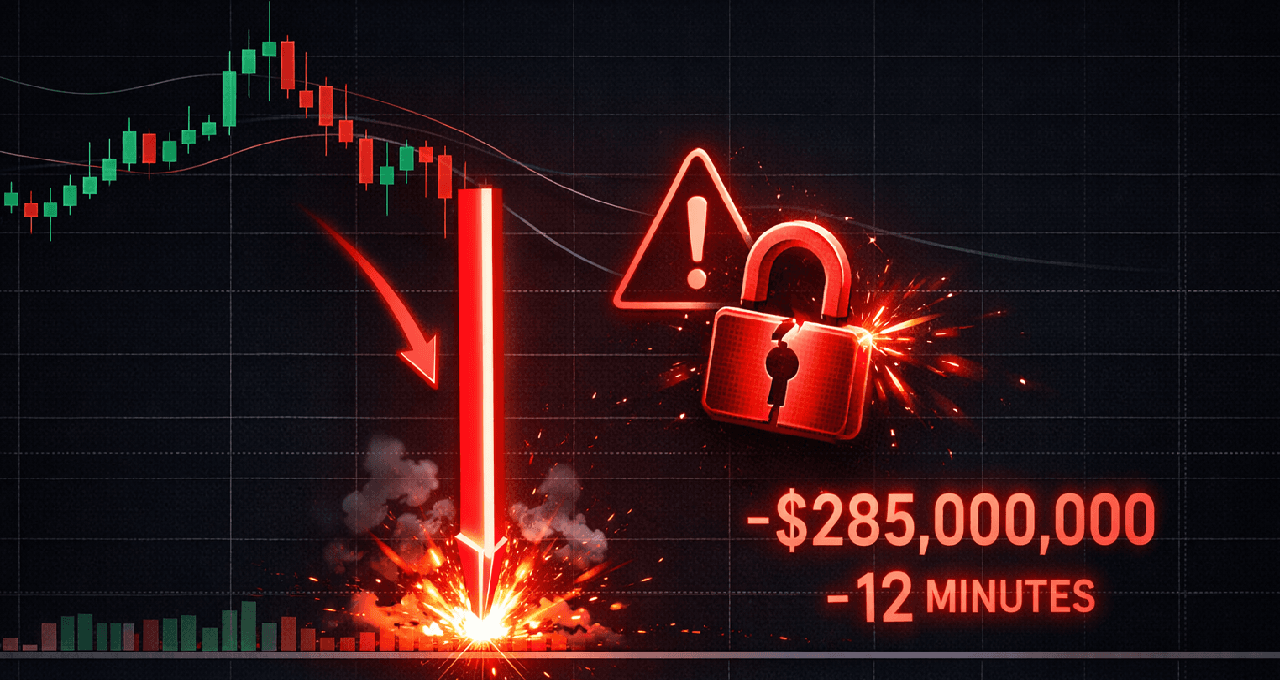
On April 1, 2026, Drift Protocol—a leading decentralized perpetual futures exchange on the Solana blockchain—lost approximately $285–286 million in user funds. The attack happened in under 12 minutes. Drift immediately suspended deposits and withdrawals to contain the damage. The team posted on X that the incident was “not an April Fool’s joke” and urged users to stop interacting with the protocol.
What Happened in the Drift Protocol Exploit
The attack was not a simple smart-contract bug. It combined social engineering, fake collateral, and careful timing of protocol changes.
Over several weeks in March 2026, the attacker:
Created a fake token called CarbonVote Token (CVT).
Seeded a small liquidity pool on Raydium and used wash trading to make the token appear worth roughly $1.
Socially engineered members of Drift’s Security Council to pre-sign certain transactions using a feature called durable nonces. These transactions looked routine at the time.
Waited for Drift to change its Security Council to a 2-of-5 signature setup and remove its timelock on March 27.
On April 1, the attacker activated the pre-signed transactions. This let them list the fake CVT as valid collateral, raise withdrawal limits, and drain real assets from the protocol’s vaults. The stolen funds included USDC, SOL, JLP tokens, and smaller amounts of wrapped Bitcoin and Ethereum. The attacker quickly swapped everything to USDC, bridged it to Ethereum, and converted much of it into ETH.
The exploit affected more than 20 other Solana-based protocols. Some paused deposits, withdrawals, or minting functions. A few teams with small exposure reimbursed users from their own treasuries. As of early April 2026, Drift had not announced a full reimbursement plan.
This incident is a clear case study in DeFi risk. Even protocols that appear decentralized often rely on multisignature councils or admin keys. When those controls are compromised—through human error or social engineering—the entire system can be drained.
Common DeFi Security Risks Beginners Should Know
DeFi protocols run on smart contracts—self-executing code on blockchains. Unlike bank accounts, there is usually no customer service to call if something goes wrong. Here are the main risks:
Smart-contract vulnerabilities: Bugs in the code can let attackers steal funds. Audits help, but they are not perfect.
Governance and admin key risks: Many protocols use multisig wallets or councils for upgrades. If keys are compromised or pre-signed transactions are misused, funds can disappear.
Oracle manipulation: Price feeds that tell the protocol what assets are worth can sometimes be tricked.
Wallet and user errors: Connecting a wallet to a fake site or approving malicious transactions can drain funds instantly.
Contagion across protocols: As seen with Drift, one hack can ripple through connected lending, borrowing, or liquidity pools.
DeFi’s “code is law” principle means losses are often permanent. There is no central authority to reverse transactions or reimburse users.
Why Beginners Should Start Small and Verify Everything
New users often hear about high yields or exciting features and move large amounts of capital right away. The Drift exploit shows why that approach is dangerous.
Practical first steps for safer DeFi use:
Use testnets or small amounts first
Most protocols offer testnet versions where you can practice with fake tokens. Start with $10–50 of real capital until you fully understand how the protocol works.Verify the protocol
Check the official website, recent audits, and team transparency. Read the documentation. Look for red flags such as unaudited contracts or anonymous teams.Practice wallet security
Use a hardware wallet for larger amounts. Never share seed phrases. Revoke approvals regularly using tools like Revoke.cash. Double-check every transaction before signing.Understand the risks in writing
Read the protocol’s risk disclosures. Many list smart-contract risk explicitly. If you cannot explain the risks to a friend, do not invest.Diversify and limit exposure
Do not put all your crypto in one protocol or on one blockchain. Spread across different chains and asset types.Monitor for updates
Follow official channels for announcements. Set alerts for large on-chain movements if you hold significant positions.
These habits reduce the chance of losing meaningful capital to exploits, scams, or simple mistakes.
Broader Lessons for the DeFi Ecosystem
The Drift incident highlights ongoing challenges in DeFi security. While code can be audited, human processes—such as key management and governance changes—remain weak points. Removing timelocks for speed can increase risk. Social engineering attacks are rising because they target people rather than code.
Protocols are responding with better multisig setups, timelocks, and insurance options. Users still carry the final responsibility. DeFi offers innovation and control, but it demands more education and caution than centralized exchanges.
Beginners who treat DeFi as a learning process—starting small, documenting what they learn, and reviewing every decision—build better long-term habits than those chasing quick yields.
FAQ
Q1: Was the Drift Protocol hack caused by a smart-contract bug?
No. The main issues were social engineering to obtain pre-signed transactions and the use of fake collateral. Technical changes (removing a timelock) also played a role.
Q2: Are my funds safe if I used Drift after April 1, 2026?
Deposits and withdrawals were suspended immediately. Check official Drift channels for the latest status. Avoid interacting until the protocol confirms it is secure.
Q3: How can I check if a DeFi protocol has been audited?
Look for audit reports on the official website or links from reputable firms such as Certik, PeckShield, or Trail of Bits. Read the full report, not just the summary.
Q4: What should I do if I connect my wallet to a suspicious site?
Disconnect immediately, revoke all approvals, and move remaining funds to a new wallet. Monitor the old wallet for unusual activity.
Q5: Does insurance cover DeFi exploits?
Some protocols offer optional insurance through partners, but coverage varies and often has limits. It is not guaranteed protection.
Disclaimer: This content is for educational and informational purposes only and is not financial advice. Nothing here is a recommendation to buy or sell any asset or use any platform. Do your own research and manage your risk.
More Read
Free On-Chain Tools After March Regulatory News: DeFiLlama Basics for New Traders
10 Best Free Crypto News Sources in 2026 (No Signals, No Hype)