
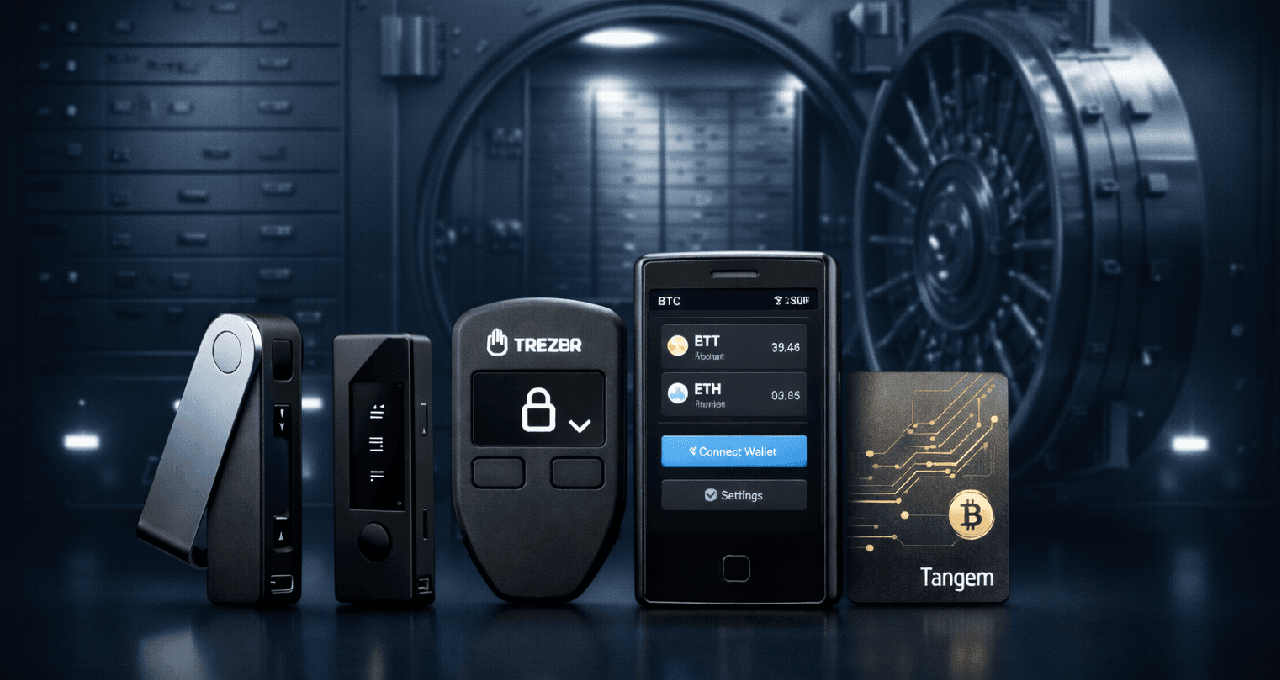
Hardware wallets are one of the smartest steps you can take as a new crypto trader. They might feel a little intimidating at first – a new gadget, a backup process, and a slightly different way of doing things. But that small extra effort is exactly what keeps your coins much safer.
A hardware wallet stores your private keys on a physical device that stays mostly offline. This protects you from malware, phishing attacks, fake apps, and other online threats that can hit regular phone or computer wallets. It is not 100% risk-free, but it gives beginners a huge security upgrade once their holdings start to grow.
In this simple guide, we look at five popular hardware wallets that new traders should know. We will cover what each one does best, who it suits, and the real-world trade-offs so you can choose with confidence.
Why Hardware Wallets Matter
Hardware wallets keep the signing process separate from your everyday internet-connected devices.
For beginners, this is a big deal because software wallets are convenient but sit right in the middle of risks like phishing, malware, fake apps, or a hacked phone. Once you own meaningful amounts of crypto, a hardware wallet adds a strong extra layer of protection.
What Beginners Should Compare
Feature | Why It Matters for You |
Ease of setup | You want to start fast without stress |
Backup flow | Clear instructions so you never lose access |
Asset support | Holds the coins you actually own |
Software companion | Makes daily use simple and smooth |
Reputation | You need to trust the brand long-term |
1. Ledger Nano X
The Ledger Nano X is one of the most popular and widely used hardware wallets.
Best for
Beginners who want a mainstream, well-known option
People holding many different cryptocurrencies
Users who like a guided, easy-to-follow experience
Pros
Supports a huge range of coins and tokens
Comes with a polished, beginner-friendly app (Ledger Live)
Bluetooth makes it convenient to use with your phone
Cons
Some advanced users prefer fully open-source devices
Slightly higher price than basic models
Beginner Rating: 5/5
2. Ledger Nano S Plus
The Ledger Nano S Plus is a great lower-cost way to enter the Ledger world.
Best for
Budget-conscious beginners
First-time hardware wallet buyers
Anyone who still wants full Ledger Live access
Pros
Affordable entry point into a trusted brand
Same reliable security as the Nano X
Simple setup that feels straightforward
Cons
No Bluetooth, so slightly less convenient than the Nano X
Smaller screen and storage compared to premium models
Beginner Rating: 4.5/5
3. Trezor Safe Series / Trezor Model Range
Trezor has built a rock-solid reputation over many years in the crypto space.
Best for
Beginners who value long-term trust and security
People who plan to hold crypto for years
Users comfortable learning careful wallet habits
Pros
Excellent reputation for security and self-custody
Strong focus on keeping things transparent and trustworthy
Clear backup and recovery process
Cons
The interface may feel a bit different from other wallets
Slightly fewer native ecosystem features than Ledger
Beginner Rating: 5/5
4. Keystone
Keystone is built for users who want maximum device separation and security.
Best for
Security-conscious beginners who want extra protection
Traders moving into serious self-custody
People who prefer less-connected signing methods
Pros
Strong focus on keeping your keys truly offline
Designed with advanced security in mind
Good for privacy-minded users
Cons
Can feel more technical than plug-and-play options
Less simple for absolute first-timers
Beginner Rating: 4/5
5. Tangem
Tangem does things differently – it uses a simple card-style format instead of the usual screen-and-buttons design.
Best for
Beginners who find traditional wallets intimidating
Users who want a modern, low-friction hardware feel
People who like super-easy physical handling
Pros
Very approachable and modern design
Simple tap-to-use experience
Less overwhelming for complete newbies
Cons
Different format – not everyone prefers the card style
Asset support is good but not the widest
Beginner Rating: 4.5/5
Comparison Table
Wallet | Best For | Ease of Use | Asset Support | Beginner Rating (0-5) |
Ledger Nano X | Broad everyday use | High | Broad | 5 |
Ledger Nano S Plus | Budget beginners | High | Broad | 4.5 |
Trezor | Long-term trusted security | High | Broad | 5 |
Keystone | Maximum security focus | Moderate | Broad | 4 |
Tangem | Simple modern experience | High | Moderate-Broad | 4.5 |
Which One Should a Beginner Buy?
Ledger Nano S Plus – Best balance of price and simplicity
Ledger Nano X – If you want the smoothest, most guided experience
Trezor – If trust and long-term reputation matter most to you
Tangem – If classic hardware wallets feel too complicated
Keystone – If you want the strongest offline security possible
Final Thoughts
A hardware wallet is not about making crypto feel exciting – it is about making sure your money stays safe for the long run. The best choice is the one that fits your habits: easy backups, simple daily use, and a workflow you will actually stick with.
Remember, the device only works if you use it properly and keep your seed phrase safe. Start small, practice the backup process, and you will sleep much better at night.
FAQ
What is a hardware wallet?
It is a small physical device that keeps your private keys offline and away from the internet so hackers have a much harder time reaching them.
Do beginners need one right away?
Not always, but it becomes really valuable as soon as your crypto holdings start to grow.
What is the easiest hardware wallet for beginners?
Ledger models and Tangem are usually the most beginner-friendly. Trezor is also excellent if you like a strong security reputation.
Are hardware wallets completely safe?
They greatly reduce risk, but you still need to protect your seed phrase and avoid phishing. No wallet is 100% risk-free.
What matters most when buying one?
Ease of use, clear recovery steps, how many coins it supports, and whether the device feels comfortable for your daily routine.
Disclaimer: This content is for educational and informational purposes only and is not financial advice. Nothing here is a recommendation to buy or sell any asset or use any platform. Do your own research and manage your risk.
Read More
Top 5 Cryptocurrency Payment Gateways for Beginners
Need deeper training?
Join our structured modules with live examples and expert checklists for effective implementation.
JOIN THE ACADEMY