Key Takeaways
Paul Atkins replaced Gary Gensler as SEC Chair and introduced “Project Crypto” — a framework designed to bring regulatory clarity rather than enforcement-first pressure to the digital asset industry.
The proposed token taxonomy attempts to categorise digital assets into clear classes (securities, commodities, utility tokens), giving projects and exchanges a clearer legal basis to operate in the US.
The “Innovation Exemption” concept offers qualifying early-stage crypto projects a conditional operating window while they work toward full compliance — a significant departure from the previous administration’s approach.
Introduction: A New Era at the SEC
For much of the period between 2021 and early 2025, the US Securities and Exchange Commission under Chair Gary Gensler took an aggressive approach to the crypto industry. Enforcement actions against major exchanges, ambiguous guidance on token classification, and the repeated assertion that most cryptocurrencies were unregistered securities created a challenging environment for US-based crypto businesses and retail investors alike.
That posture changed significantly when Paul Atkins was confirmed as SEC Chair in April 2025. A former SEC commissioner known for his market-oriented views, Atkins moved quickly to signal a shift in direction. His flagship initiative — informally referred to as “Project Crypto” — aims to replace enforcement-by-default with a structured, rules-based approach to digital asset regulation.
This article breaks down the key pillars of Project Crypto, explains what the proposed token taxonomy and Innovation Exemption mean in plain terms, and outlines the practical impact on token listings, exchange access, and trader activity in the US.
Who Is Paul Atkins and Why Does It Matter?
Paul Atkins served as an SEC commissioner from 2002 to 2008. During that time he was known as a sceptic of excessive financial regulation and a proponent of clear, predictable rules. After leaving the SEC he founded Patomak Global Partners, a financial regulatory consulting firm that has advised crypto-related clients.
His appointment was broadly welcomed by the crypto industry. Critics raised concerns about potential conflicts of interest given his consulting background, but his confirmation signalled a clear political shift following the 2024 US election results, which brought a more crypto-friendly administration to power.
The practical significance of the Chair role is significant. The SEC has broad authority over what qualifies as a security under US law. When the SEC decides a token is a security, the company behind it faces strict disclosure, registration, and trading requirements. Under Gensler, that determination was applied broadly and unpredictably. Under Atkins, the intention is to apply it more narrowly and transparently.
Context: The SEC does not regulate commodities. Bitcoin and Ethereum are broadly treated as commodities under CFTC jurisdiction. The SEC’s focus is on tokens that resemble investment contracts — a definition that has been fiercely contested in courts and Congress for years. |
What Is “Project Crypto”?
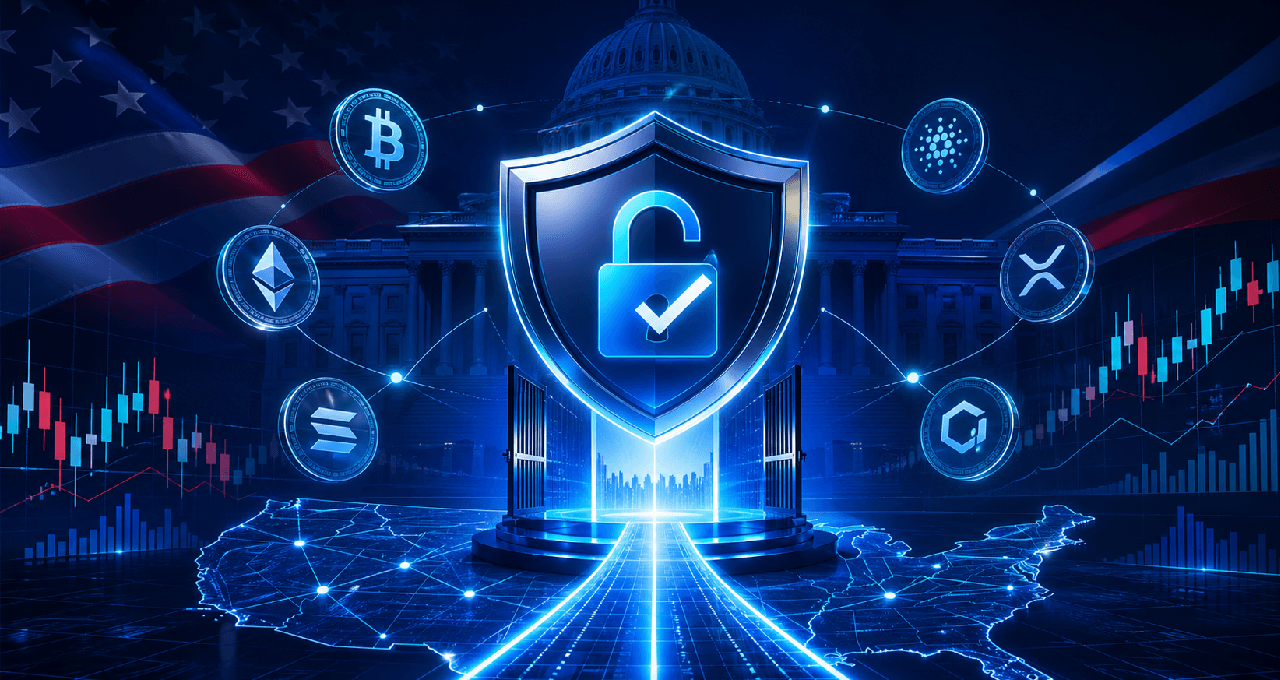
Project Crypto is the informal name for the SEC’s new strategic direction under Atkins regarding digital assets. It is not a single piece of legislation but rather an umbrella term for a set of policies, exemptions, and guidance frameworks being developed by the SEC to create clearer rules for crypto businesses operating in the US.
Based on widely reported information from SEC roundtables and public statements in 2025, Project Crypto is organised around three main pillars:
A formal token taxonomy to classify digital assets by type and regulatory status
An Innovation Exemption for early-stage projects that do not yet fit existing securities frameworks
Coordinated rulemaking with Congress to establish a lasting legislative foundation for crypto markets
The Proposed Token Taxonomy: Classifying Digital Assets
One of the most discussed elements of Project Crypto is the push for a formal token taxonomy — a structured classification system for different types of digital assets. The goal is to answer a question that has caused years of legal uncertainty: which tokens are securities, which are commodities, and which are something else entirely?
The proposed taxonomy, as outlined in SEC discussion documents and public statements, broadly suggests the following categories:
Token Category | Description | Regulatory Implication |
Security Token | Token that represents ownership or profit interest in a project or enterprise | Subject to full SEC registration and disclosure rules |
Commodity Token | Decentralised token with no central issuer and established networks (e.g. Bitcoin, Ether) | Regulated primarily by the CFTC, not the SEC |
Utility Token | Token that grants access to a platform or service, not investment returns | May qualify for lighter-touch SEC oversight if criteria are met |
Stablecoin | Token pegged to a fiat currency or asset basket | Under review — subject to separate payment and banking-related legislation |
Restricted Digital Asset | Token that was initially a security but may transition as network decentralises | Can qualify for reclassification via a formal process |
Note: These categories reflect widely reported proposals and public SEC statements. The final taxonomy may differ once formal rulemaking is completed. Traders and projects should monitor official SEC publications for confirmed rules.
The Innovation Exemption: What It Is and Who It Helps
Perhaps the most significant concept to emerge from Project Crypto is what has been called the “Innovation Exemption.” This is a proposed mechanism that would allow qualifying crypto projects — particularly early-stage startups — to operate, raise funds, and issue tokens within a defined compliance window without needing to fully register as securities issuers from day one.
The rationale is straightforward: many genuinely useful blockchain projects cannot easily comply with SEC securities registration requirements at launch because the requirements were designed for traditional companies with established revenue, audited financials, and stable governance structures. Forcing a small blockchain startup to meet the same bar as a major corporation before it can issue tokens effectively bars it from the US market.
Under the Innovation Exemption concept, a project would need to meet conditions such as:
Demonstrating that the token is intended to become genuinely functional on a live network
Committing to a compliance roadmap with specific milestones
Meeting disclosure minimums — including publishing code, roadmaps, and team information
Capping initial fundraising below a defined threshold during the exemption period
Transitioning to full registration or reclassification within a set timeframe
If approved, this would give compliant projects a structured path to operate in the US market without the legal uncertainty that drove many teams offshore in previous years.
Important: The Innovation Exemption is still a proposal as of this writing. It has not been formally enacted into law. Projects should not assume they qualify for any exemption without consulting legal counsel and monitoring official SEC guidance. |
How This Contrasts With the Gensler Era
The contrast between the Atkins and Gensler approaches to crypto is substantial. Understanding it helps traders and developers make sense of the current moment.
Dimension | Gensler Era (2021-2025) | Atkins Era (2025-Present) |
Primary approach | Regulation by enforcement | Structured rulemaking and exemptions |
Token classification | Most tokens assumed to be securities | Formal taxonomy to define categories clearly |
Exchange oversight | Aggressive action against major exchanges | Working toward clear exchange registration pathways |
Industry tone | Adversarial | Collaborative and rules-based |
Congressional work | Limited coordination | Active engagement on legislation |
Innovation posture | High barrier to entry for new token projects | Innovation Exemption designed to lower barriers |
Practical Impact for US Traders
The regulatory shift under Atkins has real implications for people who trade crypto in the US. The table below summarises the key areas of impact:
Area | Previous Challenge | Likely Change Under Project Crypto |
Token listings on US exchanges | Exchanges delisted many tokens fearing SEC enforcement | More tokens may return to US exchanges as classification rules become clearer |
Access to altcoins | Restricted — many projects blocked US users | Improved access if projects can qualify for exemptions or reclassification |
Exchange registration | Unclear pathway for compliant crypto exchanges to operate | New Digital Asset Exchange registration category in development |
DeFi protocols | Regulatory grey area, risk of enforcement | Exemption framework may clarify status for decentralised protocols |
Staking and yield products | Several products sued or shut down | New guidance expected — not yet finalised |
Tax reporting | Unchanged — IRS rules apply independently of SEC posture | No direct change from Project Crypto |
Key Terms Glossary
SEC (Securities and Exchange Commission): The US federal agency that regulates securities markets, including oversight of certain digital assets.
Security: A financial instrument representing ownership, debt, or a claim on profits. Under US law, determined by the Howey Test.
Howey Test: The legal standard used by US courts to determine whether an asset qualifies as an investment contract (a type of security). It asks whether there is an investment of money in a common enterprise with an expectation of profits from others’ efforts.
CFTC (Commodity Futures Trading Commission): The US regulator overseeing commodity markets. Bitcoin and Ether are generally treated as commodities under its remit.
Token Taxonomy: A proposed system for categorising digital assets into defined types, each with corresponding regulatory treatment.
Innovation Exemption: A proposed SEC mechanism allowing qualifying early-stage crypto projects to operate in a limited compliance window before full registration.
Regulation by Enforcement: A regulatory approach where the regulator defines the rules primarily through enforcement actions rather than proactive written guidance.
AML (Anti-Money Laundering): Rules requiring financial services firms to identify customers and monitor for suspicious activity linked to money laundering.
KYC (Know Your Customer): Identity verification processes that regulated platforms must apply when onboarding users.
Tools for Staying Informed as a Trader
As US crypto regulation evolves, traders who use professional-grade tools are better positioned to monitor market conditions and respond to policy changes. A few recommendations:
TradingView — Professional charting, real-time data, and technical analysis tools. Useful for monitoring how regulatory news impacts price action.
Bybit — A global exchange offering a wide range of tokens with strong compliance infrastructure. Check availability in your jurisdiction.
Ledger Hardware Wallet — As regulatory clarity improves, self-custody becomes more important. Keep assets you are not actively trading in cold storage.
FAQ
Is crypto regulated in the US right now?
Yes. Crypto has always been regulated in the US, but the rules have been unclear and contested. Bitcoin and Ether are broadly treated as commodities. Many other tokens have been treated as unregistered securities by the SEC. Project Crypto aims to provide a clearer classification system so businesses and traders know where they stand.
Does Project Crypto mean all tokens are now legal to trade in the US?
No. Project Crypto is a regulatory reform effort, not a general legalisation of all tokens. Tokens that are unregistered securities remain in a complicated legal position. The proposed taxonomy and Innovation Exemption aim to create clearer pathways, but they are still being developed and have not been fully enacted.
What is the Innovation Exemption and who qualifies?
The Innovation Exemption is a proposed mechanism allowing early-stage crypto projects to operate within a limited compliance window. Qualifying criteria are still being defined. As of this writing, no formal exemption has been enacted. Projects interested in this pathway should consult legal counsel and monitor official SEC guidance at sec.gov.
How is the CFTC different from the SEC in crypto?
The SEC regulates securities. The CFTC regulates commodities and commodity derivatives. Bitcoin and Ether are broadly treated as commodities, placing them under CFTC oversight. Many altcoins fall into a grey area. Project Crypto aims to reduce this ambiguity with a clearer taxonomy.
Should I change how I trade based on these regulatory changes?
This article is educational and does not constitute financial or legal advice. Regulatory changes can affect which tokens are available on which exchanges and what disclosures platforms must make. Stay informed, use registered platforms, and consult a qualified financial adviser for decisions specific to your situation.
Disclaimer: This content is for educational and informational purposes only and is not financial advice. Nothing here is a recommendation to buy or sell any asset or use any platform. Do your own research and manage your risk.
Read More
DEX Screener Basics: Free Tool for Spotting On-Chain Activity Without Getting Scammed
Spot Trading vs Futures Trading: Key Differences for Beginners
How to Spot a Crypto Scam in 2026: The Complete Red Flag Checklist
Need deeper training?
Join our structured modules with live examples and expert checklists for effective implementation.
JOIN THE ACADEMY