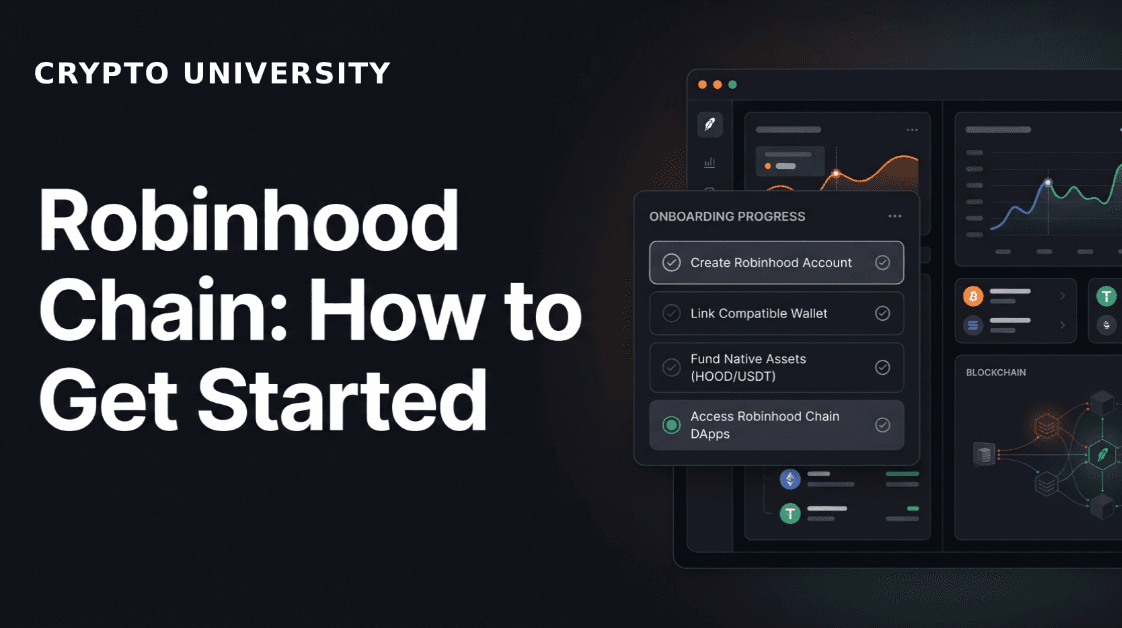
Key Takeaways
# | What to remember |
|---|---|
1 | Robinhood Chain is a fast, finance-focused Ethereum Layer 2 built with Arbitrum technology. The mainnet went live on July 1, 2026, and it lets you use tokenized assets and on-chain apps with an Ethereum-style wallet. |
2 | Safety comes first. Only use official sources for network details, always start with a tiny test amount, and never type your seed phrase into a faucet, bridge, or airdrop checker. |
3 | Treat any airdrop talk as a maybe, not a promise. Don't overtrade or overpay bridge fees chasing rewards that might never arrive. |
What This Guide Is About
Robinhood Chain is an Ethereum Layer 2 built with Arbitrum technology and designed around tokenized finance. In plain terms, it's a faster, cheaper blockchain that sits on top of Ethereum and focuses on financial products.
It started with a public testnet on February 10, 2026, and the public mainnet went live on July 1, 2026.
The idea behind it is simple: take Robinhood's huge base of everyday investors and connect them to tokenized assets, crypto trading, and on-chain apps, all in one financial network.
Here's the honest warning, though. A brand-new chain is exactly where things get risky. Rewards look tempting, the tools are still rough around the edges, fake links spread fast, and beginners make costly mistakes. So take it slow. Use small amounts until you actually understand how everything works.
What Robinhood Chain Actually Is
Robinhood Chain is EVM-compatible, which is a technical way of saying it works a lot like Ethereum. For you, that means:
It uses the same style of wallet addresses you may already know from Ethereum.
It works with familiar wallets like MetaMask.
Developers can build apps on it using the same tools they use for Ethereum.
It borrows part of its security from Arbitrum and Ethereum.
A few key facts worth knowing before you start:
Detail | Value |
|---|---|
Gas token (fees paid in) | ETH |
Data availability | Ethereum blobs |
Chain ID | 4663 |
Speed | Very fast block times |
Focus | Trading, tokenization, lending, wallets, and developer tools |
Don't confuse the two Robinhood Chain is not the same thing as the Robinhood brokerage app. When you do something on Robinhood Chain, it's an on-chain action. That means you are responsible for your wallet security, the addresses you send to, the approvals you grant, and any smart-contract risk. |
Before You Start: Your Checklist
Here's what you'll want to have ready before your first session:
Step | What you need |
|---|---|
1 | A self-custody EVM wallet (one where you hold the keys) |
2 | The official Robinhood Chain network details |
3 | Gas funds supported by the network |
4 | An official bridge or a supported exchange route |
5 | A block explorer |
6 | A small test amount of crypto |
Golden rule Never copy network details from random replies on X, Telegram DMs, or sponsored search ads. Always start from Robinhood's official Chain website and documentation. |
Step 1: Choose a Wallet
Because Robinhood Chain works like Ethereum, most common EVM wallets can connect to it, either through a custom network or a built-in option. Here are some popular choices and what each one is good for:
Wallet | Good to know |
|---|---|
MetaMask | The most widely used option and a solid starting point for beginners. |
Rabby | Handy transaction previews and risk warnings, which help you spot dangerous transactions before you sign. |
Coinbase Wallet | A familiar self-custody option for people already in the Coinbase world. |
Robinhood Wallet | Usable where it's supported. |
Hardware wallet | Adds strong protection against key theft for larger balances (but won't stop you from signing a bad transaction). |
Beginner tip Use a fresh wallet just for experimenting. Don't connect your main long-term wallet to every new app you try. |
Step 2: Add the Network
There are a few safe ways to add Robinhood Chain to your wallet. You can use the official "Add network" button, follow the verified documentation, or use a reputable network directory such as Chainlist while double-checking that the chain ID and RPC match the official sources.
You'll usually need these details:
Network name
RPC URL
Chain ID
Currency symbol
Block explorer URL
Always verify the chain ID yourself. A malicious RPC can mislead your wallet, block your requests, or track your activity. The good news is it cannot spend your funds without a valid signature from you.
Step 3: Understand Testnet vs Mainnet
Think of the testnet as a practice zone and the mainnet as the real thing.
Testnet | Mainnet | |
|---|---|---|
What it uses | Tokens with no real-world value | Real assets and real money |
Best for | Development, practice, and learning | Actual trading and investing |
Risk | Low, since nothing is real | Real financial risk |
Robinhood's official support material points developers to an official faucet for testnet tokens. Remember this: a faucet should never ask for your seed phrase. If any site asks you to import a wallet backup, it's a scam. Walk away.
The testnet is a great place to:
Deploy a sample contract
Test wallet connections
Try out an app
Learn how the explorer works
Get a feel for gas fees
Practise bridging without risking real money
One thing to keep in mind: using the testnet does not guarantee you an airdrop.
Step 4: Fund Your Wallet
On mainnet, you'll need the network's gas asset plus any tokens you actually want to use. There are a few ways to get funds in:
An official bridge
A third-party bridge listed by the official ecosystem
Direct withdrawals from an exchange that supports the chain
Transfers from another wallet already on Robinhood Chain
Before you bridge anything, run through this quick checklist:
Step | Check |
|---|---|
1 | Confirm the source and destination chain |
2 | Confirm the destination wallet address |
3 | Check the minimums and fees |
4 | Check whether the token is canonical or wrapped |
5 | Send a small test first |
6 | Wait for it to arrive before sending more |
Watch out A token can share the same symbol on two networks while actually being a completely different contract. Always verify the contract address. |
Step 5: Explore the Ecosystem
Robinhood keeps an ecosystem directory covering categories like trading, lending, infrastructure, wallets, tokenized assets, and developer tools. Just remember that being listed in the directory is not a guarantee that an app is safe.
Before you use any dApp, take a few minutes to check the following:
What to check | What to check |
|---|---|
Official domain | Time in production |
Contract audits | Total value locked |
Team identity | Admin-key powers |
Upgradeability | Withdrawal process |
Incident history | Token contract |
Social-account age and consistency |
Reality check on high yields New-chain yields are often sky-high because the risk is high too, or because the incentives are only temporary. If a return looks too good to be true, it usually is. |
Step 6: Use the Block Explorer
A block explorer is like a public record book for the chain. It lets you check wallet balances, transaction status, token contracts, contract verification, gas usage, internal calls, and token transfers.
Bookmark the official explorer so you always land on the real one. After every important transaction, verify it on the explorer instead of trusting only what the app's screen tells you.
Step 7: Manage Your Approvals
Many DeFi apps ask for permission to spend tokens from your wallet. Be careful here, and don't grant unlimited approvals on autopilot. These tools can help you stay in control:
Tool | What it does |
|---|---|
Rabby's approval warnings | Flags risky approvals as you go |
Revoke.cash | Lets you review and cancel approvals you've already given |
Chain explorer's approval checker | Shows active approvals on your wallet |
Tenderly (where supported) | Simulates a transaction so you can see what it will do first |
Important Revoke permissions you no longer need. A website you've closed can still have an active token approval. "Disconnect wallet" is not the same as "revoke contract permission." |
Your Safe First Transaction
If you want a sensible way to dip your toes in, here's a first session that keeps risk low:
Create a fresh wallet.
Add Robinhood Chain using the official documentation.
Fund it with a small amount.
Confirm the deposit on the explorer.
Swap a tiny amount on a well-known app.
Inspect the transaction.
Revoke any approval you don't need.
Record the token contract and the fees you paid.
Don't do this Don't start by bridging your entire portfolio into a farm promising triple-digit yields. That's how beginners lose money fast. |
A Word on Airdrop Speculation
Every new chain attracts airdrop farmers, and Robinhood Chain is no exception. As of publication, don't assume that ordinary activity will earn you a token reward. Robinhood can build a successful network without ever issuing a public token.
So treat any possible airdrop as a nice bonus, not as guaranteed income. And steer clear of these traps:
Overtrading purely to chase "points"
Paying large bridge fees for uncertain rewards
Sybil schemes (running many wallets to game a reward)
Fake eligibility checkers
Signing messages from unknown sites
Buying unofficial "Robinhood Chain" tokens
The Main Risks to Keep in Mind
Every new network comes with trade-offs. Here are the big ones, explained simply:
Risk | What it means for you |
|---|---|
Centralization | Layer 2 networks can rely on sequencers, upgrade keys, governance councils, and bridge contracts. "Built on Ethereum" does not automatically mean it's as secure as Ethereum itself, so read the security docs. |
Bridge risk | Bridges are one of the most frequently attacked parts of crypto. Handle them with care. |
Tokenized-asset limits | Tokenized stocks or financial products may come with geographic restrictions, transfer controls, issuer risk, and legal claims that differ from owning the real security. |
Smart-contract risk | A fast chain does not fix badly written code. |
Fake ecosystem links | Scammers clone new-chain websites almost immediately. |
Liquidity fragmentation | A token can be hard to sell out of, even when its displayed price looks attractive. |
The Real Opportunity Behind Robinhood Chain
Here's the interesting part: it isn't just "another Layer 2." The real story is distribution.
Robinhood already has millions of customers, regulatory infrastructure, recognizable products, and an interface that everyday investors actually understand. If it can connect those users to tokenized assets and on-chain apps without dragging them through the worst parts of crypto's clunky user experience, Robinhood Chain could become a big deal.
But reaching lots of people does not remove on-chain risk. It just brings more people into contact with it, which is exactly why learning the basics matters so much.
Frequently Asked Questions
Is Robinhood Chain the same as the Robinhood app?
No. The Robinhood app is a brokerage. Robinhood Chain is a separate blockchain (an Ethereum Layer 2) where you control your own wallet and are responsible for your own security.
When did Robinhood Chain launch?
The public testnet launched on February 10, 2026, and the public mainnet went live on July 1, 2026.
What wallet should a beginner use?
MetaMask is a great starting point because it's widely supported. Rabby is also popular thanks to its built-in risk warnings. Whichever you pick, use a fresh wallet for experimenting rather than your main one.
Do I need ETH to use Robinhood Chain?
Yes. Robinhood Chain uses ETH to pay for gas (transaction fees), so you'll need a small amount of ETH on the network before you can transact.
Will I get an airdrop for using Robinhood Chain?
There's no guarantee. Robinhood may never issue a public token. Treat any airdrop as a possible bonus, not as income, and don't spend real money chasing one.
What's the single most important safety rule?
Never enter your seed phrase into a faucet, bridge, explorer, support form, or airdrop checker. No legitimate service will ever ask for it.
Official Resources to Verify
When in doubt, always cross-check against the official sources below before acting:
Resource | Link |
|---|---|
Robinhood Chain documentation | |
Network connection details | |
Mainnet support page | https://robinhood.com/us/en/support/articles/robinhood-chain-mainnet/ |
Mainnet announcement (July 1, 2026) | |
Testnet announcement (Feb 10, 2026) | https://robinhood.com/us/en/newsroom/robinhood-chain-launches-public-testnet/ |
ArbitrumDAO mainnet factsheet | https://forum.arbitrum.foundation/t/arbitrumdao-factsheet-robinhood-chain-mainnet-launch/31041 |
Never forget this Never enter a seed phrase into a faucet, bridge, explorer, support form, or airdrop checker. |
Verified network facts at publication: Arbitrum-based Ethereum Layer 2, ETH gas, Ethereum blob data availability, and Chain ID 4663. Always recheck the official documentation before relying on any RPC details.
Disclaimer: This content is for educational and informational purposes only and is not financial advice. Nothing here is a recommendation to buy or sell any asset or use any platform. Do your own research and manage your risk.
What Are Bitcoin ETF Outflows? How They Work and Why They Matter
Need deeper training?
Join our structured modules with live examples and expert checklists for effective implementation.
JOIN THE ACADEMY