Key Takeaways
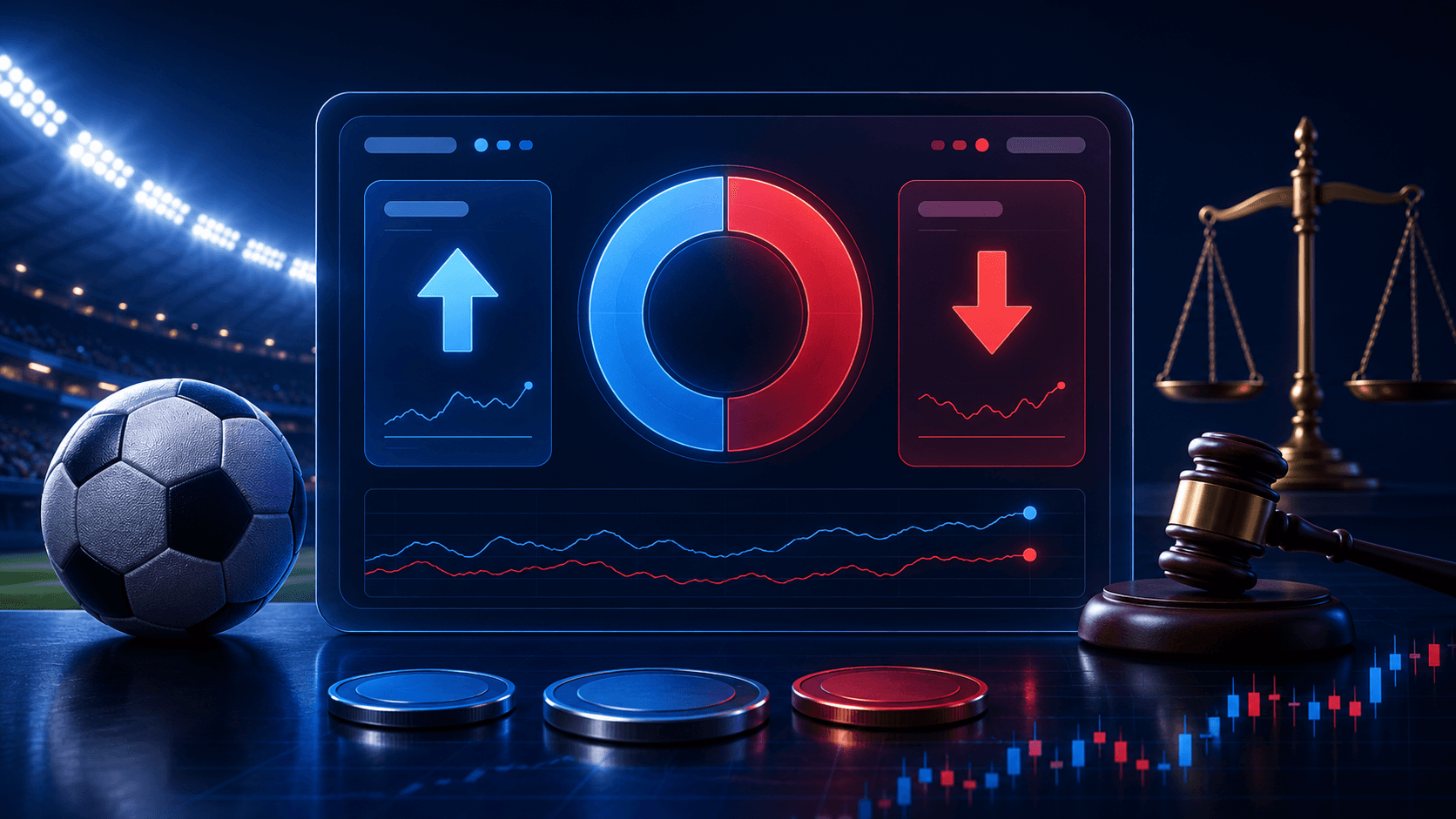
Prediction markets let you trade contracts on real-world events (sports, elections, crypto prices, etc.) like a stock market for outcomes.
They’re not exactly gambling and not exactly normal trading – they sit somewhere in between, which is why regulators and sports leagues are watching closely.
Beginners should always check the resolution rules, liquidity, and risks before putting money in – it can feel exciting but it’s still high-risk.
If you’re a beginner trader, you’ve probably heard the term “prediction markets” popping up more and more, especially around crypto and sports. Let’s break it down in plain, simple English – no complicated jargon.A prediction market is basically a place where people buy and sell contracts that pay out based on what happens in a future event. Think of it like the stock market, but instead of company shares, you’re trading on real-life outcomes.
What is an event contract?
An event contract is the actual thing you trade. Its value depends on a clear “yes or no” outcome.Simple example
“Will Team A win the match?”
“Will Bitcoin close above $100,000 by December 31?”
The most important part is the resolution rule – exactly how and who decides the final result.
Component | What it means |
Event | The real-world thing being predicted |
Contract | The tradable bet tied to that event |
Resolution rule | The clear rule that decides win or lose |
Settlement | How money is paid out or lost |
How prediction markets actually work
A market is created for a specific event.
People buy or sell positions based on what they think will happen.
The price moves up and down as new information comes in.
When the event ends, the market resolves according to the rules.
Winners get paid, losers don’t.
The current price is often seen as the market’s “probability” of the event happening. For example, if a contract is trading at 65 cents (on a $1 payout), the market thinks there’s roughly a 65% chance.
Why people love (and argue about) prediction markets
They appeal to regular users, researchers, and traders for different reasons:
Users like them because they turn opinions into tradable positions and feel more exciting than just guessing.
Researchers like them because they show real-time crowd wisdom.
Traders like them because they create event-driven opportunities that don’t always move with regular crypto or stocks.
Are they gambling, trading, or something else?
This is the big question everyone is fighting about.Similarities to gambling: You’re staking money on uncertain outcomes, often short-term, and sometimes on sports.
Similarities to trading: You can buy and sell the contract before the event ends, watch live prices, and use information to make decisions.Here’s a quick comparison table:
Feature | Prediction Markets | Gambling | Financial Trading |
Based on real events | Yes | Yes | Sometimes |
Can trade before result | Usually | Usually no | Yes |
Price shows probability | Often | Rarely | Sometimes |
Liquidity is very important | Yes | Less important | Yes |
Regulation | Still unclear | Usually clear | Usually clear |
Why sports and crypto are colliding right now
When prediction markets offer contracts on sports results, things get complicated fast. Sports leagues worry it could look like betting, create manipulation risks, or mess with the integrity of the game. Crypto platforms bring fast, global access – which regulators aren’t always comfortable with.
Why regulators are paying attention
Regulators worry about consumer protection, manipulation, and making sure platforms follow the right rules. When crypto, sports, and global access mix together, the questions get even bigger.Main regulatory concerns
Concern | Why it matters for beginners |
Product classification | Decides which laws apply |
Consumer risk | Easy to lose money if you don’t understand it |
Manipulation risk | Low-liquidity markets can be pushed around |
Cross-border access | Rules change depending on where you live |
Resolution disputes | Unclear rules can lead to arguments and lost funds |
Liquidity – why it matters more than you think
A market might look exciting, but if almost nobody is trading it, prices can be misleading and you might struggle to get your money out.
Low Liquidity Problem | What it means for you |
Wide spreads | You pay more to enter or exit |
Easy price swings | One big trade can move the price a lot |
Hard to exit | You could get stuck in a losing position |
What every beginner should check before using a prediction market
Resolution rule – Exactly how is the winner decided?
Liquidity – Is there enough trading volume?
Early exit option – Can you sell before the event ends?
Platform & legal risk – Could the site get blocked or change rules suddenly?
Risk level – Treat it as high-risk speculation, not “easy money.”
Quick user checklist
Question | Why it matters |
How is the event clearly defined? | Prevents nasty surprises |
Who decides the final result? | Trust depends on this |
Is the market liquid enough? | Affects how easily you can trade |
Can I exit early? | Gives you more flexibility |
What legal or platform risks? | Rules can change fast |
Final thought
Prediction markets are growing because they mix information, finance, and excitement in a new way. They can be interesting to watch or trade, but they are not simple. Take time to understand how they work before you jump in.
FAQ
What is a prediction market?
It’s a market where people trade contracts on the outcome of future events.
What is an event contract?
A tradable contract that pays out if a specific event happens or doesn’t happen.
Are prediction markets the same as gambling?
Not exactly. They share some features with gambling but also work more like trading because you can often buy and sell before the event ends.
Why are regulators interested?
They raise questions about consumer protection, manipulation risk, licensing, and who should oversee these platforms.
Why do sports prediction markets cause extra drama?
Sports already have betting rules and integrity programs, so adding market-style contracts creates overlapping concerns.
What’s the biggest risk for beginners?
Jumping in without understanding the resolution rules, liquidity, or platform risks – you can lose money quickly.
Disclaimer: This content is for educational and informational purposes only and is not financial advice. Nothing here is a recommendation to buy or sell any asset or use any platform. Do your own research and manage your risk.
Read More
Privacy Tools for Everyday Crypto Transactions in 2026: ZK Options and Compliance-Friendly Methods
Beginners Guide to Hardware Wallets Ledger vs Trezor vs Coldcard
Gas Fees Explained How Ethereum, Solana, and L2s Handle Transaction Costs
What Is a DAO? Governance Models, Voting Mechanisms, and Their Real-World Limitations
Need deeper training?
Join our structured modules with live examples and expert checklists for effective implementation.
JOIN THE ACADEMY