Key Takeaways
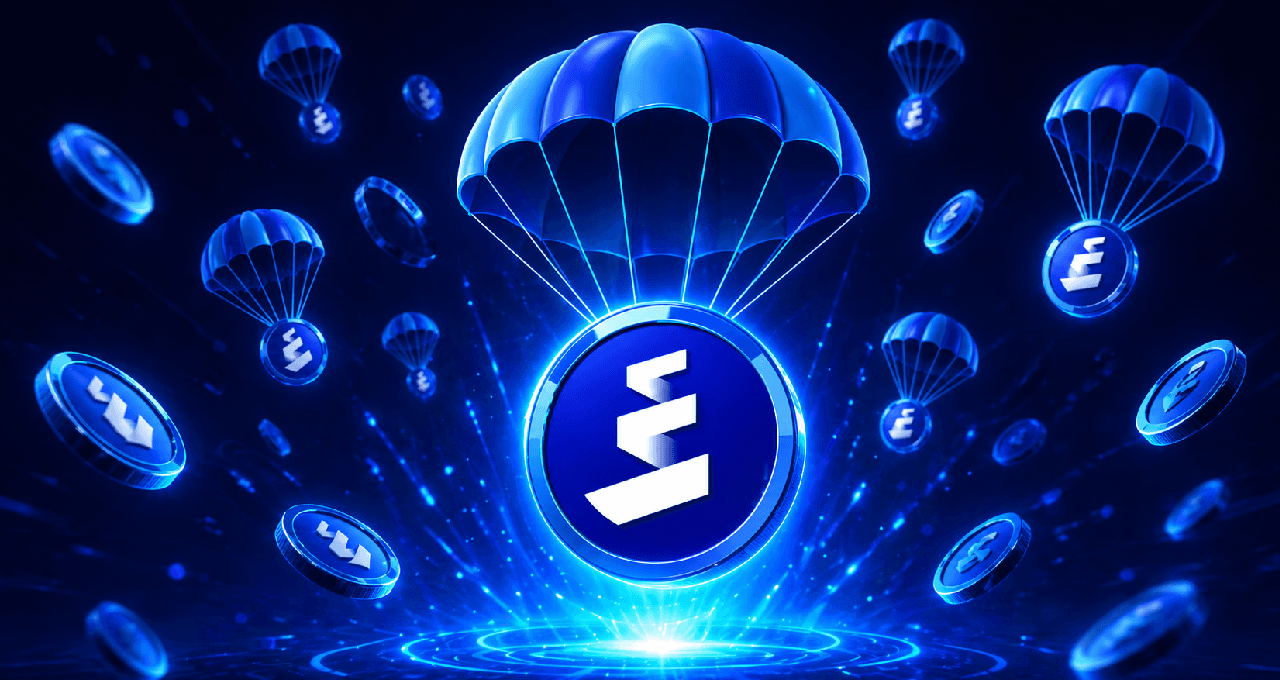
Lockup = more tokens. Pharos offers four claim strategies. Choose to wait 30, 60, or 90 days and receive up to 1.20x your base allocation in PROS. Instant claims receive no multiplier.
Only 6% of PROS supply is earmarked for the community airdrop, with just 1% unlocked at the Token Generation Event (TGE). This tight early supply has implications for price dynamics post-launch.
Evaluating an airdrop before claiming is critical. Lockup periods, vesting schedules, token supply concentration, and exchange listings all affect whether an airdrop is worth holding or selling at first opportunity.
Introduction: Why This Airdrop Is Worth Studying
Airdrops are one of the most widely misunderstood events in crypto. The excitement of receiving free tokens frequently leads to poor decisions: claiming and dumping immediately without understanding what you hold, or locking up tokens in a project that was not worth holding in the first place.
The Pharos (PROS) airdrop, which opened its claiming window on April 28, 2026, is a useful real-world case study because it features a structured lockup incentive system, a documented tokenomics breakdown, and a 180-day claiming window. These components give us a clear framework to explain how airdrop mechanics actually work.
This guide explains the Pharos airdrop in full, compares lockup tier trade-offs, and then zooms out to teach you how to evaluate any airdrop before making a claiming decision.
What Is Pharos Network?
Pharos is a Layer 1 blockchain built to support real-world asset (RWA) tokenization, meaning it is designed to bring financial instruments like bonds, equities, and credit products onto the blockchain in a compliant way.
The project was founded by alumni of Ant Group (the fintech arm of Alibaba), a team with deep roots in large-scale financial infrastructure. As of April 2026, Pharos has raised a reported $52 million in total funding, including a $44 million Series A.
Key technical claims from the project include 30,000 transactions per second (TPS), 0.5-second block times, and EVM compatibility, meaning it can run the same code as Ethereum. The network launched its Pacific Ocean mainnet in April 2026 and its PROS token listing on Coinbase has been announced.
Whether these technical claims hold at scale is something the mainnet phase will reveal over time. For now, the project's institutional backing and founding team credentials place it in a higher-credibility tier than most anonymous airdrop farms.
PROS Tokenomics: What the Numbers Tell You
Understanding how a token's supply is distributed is the single most important step before deciding whether to hold or sell an airdrop. Here is the official allocation for PROS, which has a total supply of 1 billion tokens:
Allocation Category | % of Supply | Vesting / Lockup |
Team | 20% | 12-month cliff + 36-month linear vesting |
Investors (Private) | 20% | 12-month cliff + 36-month linear vesting |
Foundation / Treasury | 16% | 48 to 60 months |
Lab Co. | 9% | Not publicly detailed at time of writing |
Ecosystem and Community | 21% | Includes 6% airdrop (1% at TGE, 5% future) |
Node and Liquidity Incentives | 14% | 48 to 60 months |
The key figure here: only 1% of total supply (10 million PROS) is unlocked at TGE for the community airdrop. The remaining 5% of the airdrop allocation is reserved for future incentive programs.
Team and investor tokens are locked for 12 months and then vest over a further 36 months. This is a relatively standard institutional vesting schedule. It means the largest holders cannot sell immediately, which removes one common source of early selling pressure. However, it does not eliminate it entirely because node incentives and ecosystem funds have separate schedules.
Staking inflation note: PROS inflation is set at 0% for the first six months after mainnet launch. From month seven onward, annual inflation increases to 5%, adjusted dynamically by the foundation based on network conditions.
Who Was Eligible for the PROS Airdrop?
Pharos confirmed four eligibility categories for the initial airdrop:
Testnet participants: Users who completed on-chain actions during the Pharos testnet phases, including swaps, liquidity provision, and daily check-ins.
Stake Before the Stake contributors: Users who deposited USDC during the Genesis and public rounds (April 13 to 20, 2026) via the OKX Wallet interface. These funds then migrated to the mainnet phase for a 3-month lockup, with a reported 14% APY during that period.
Pharos Discord role holders: Active members of the verified Pharos community Discord.
OKX Wallet campaign users: Users who completed Boost Giveaway quests through the official OKX Wallet partner campaign.
Important note: The airdrop generated community controversy. Many long-term testnet participants reported being marked as ineligible, with criticism directed at criteria that appeared to weight OKX Wallet campaign activity heavily. The Pharos team acknowledged the feedback and stated that a Season 2 is in development, focused on governance and broader ecosystem participation.
If you participated in testnet activity and were told you are ineligible, it is worth monitoring official channels for Season 2 announcements before assuming you will receive nothing.
Lockup Tiers Explained: The 30 / 60 / 90-Day Strategy
Once registered, eligible users were given the opportunity to select a claiming strategy before the April 25 registration deadline. If no strategy was selected, the system defaulted to Instant Claim.
The four available options are:
Claim Strategy | Wait Time | Reward Multiplier | Tokens Released | Trade-off |
Instant Claim | None | 1.00x (no bonus) | April 28, 2026 | Full liquidity, no bonus tokens |
30-Day Lockup | 30 days | 1.05x | ~Late May 2026 | 5% bonus; short commitment |
60-Day Lockup | 60 days | 1.12x | ~Late June 2026 | 12% bonus; moderate wait |
90-Day Lockup | 90 days | 1.20x | ~Late July 2026 | 20% bonus; longest commitment |
The math is straightforward. If your base allocation is 1,000 PROS, a 90-day lockup gives you 1,200 PROS. But this calculation only makes sense in the context of one important question: what is the token likely to be worth during and after the lockup period?
This is not financial advice, and no one can tell you what a token's price will be 90 days after launch. What we can do is lay out the factors that influence this decision:
Factors that may support holding: Low initial circulating supply, institutional backing, Coinbase listing, 0% staking inflation for 6 months, strong team credentials. |
Factors that may work against holding: Community backlash over eligibility, airdrop recipients who take Instant Claim creating sell pressure at TGE, future season 2 dilution, and the general volatility of new token launches. |
The 20% bonus from a 90-day lockup is meaningful. But if the token loses more than 20% of its launch value in the first 90 days, the lockup will have cost you. Both outcomes are plausible for a new token with limited price history.
Claiming Window: Key Dates
Event | Date / Time |
Airdrop Registration Closes | April 25, 2026 at 12:00 UTC |
Claiming Opens | April 28, 2026 at 11:00 UTC |
Lockup Strategy Deadline | Must be selected before April 25 registration close |
Claiming Window Closes | October 25, 2026 at 11:00 UTC (180 days) |
Unclaimed Token Fate | Returned to the Pharos Foundation |
If you are eligible and have not yet claimed, you have until October 25, 2026. However, note that your lockup strategy was locked in at the April 25 registration deadline. If you did not select a strategy by then, you are defaulted to Instant Claim.
5-Step Airdrop Safety Checklist
Before claiming any crypto airdrop, run through this checklist. It applies to Pharos and to every future airdrop you encounter.
Verify the official claim URL. Go only to the URL announced on the project's verified Twitter / X account and official website. Do not click links from Discord DMs, Telegram messages, or third-party sites. Airdrop phishing is one of the most common wallet drains in crypto.
Connect with a secondary wallet when possible. If your primary wallet holds significant funds, consider using a separate wallet for claiming. If you are using your main wallet, a hardware wallet like a Ledger adds a confirmation layer before any transaction is signed.
Read what you are signing. Your wallet will prompt you to sign a transaction. Before approving, check whether it is a simple claim or whether it requests approval to spend tokens from your wallet. A legitimate airdrop claim should only interact with the project's own contract.
Check the token contract address. Cross-reference the PROS token contract address against the official Pharos documentation or a reliable explorer like Etherscan or the Pharos block explorer. Fake token contracts are commonly deployed alongside real launches.
Understand your lockup terms before confirming. Once a lockup strategy is confirmed, it is typically final. Make sure you understand whether you can access your tokens early, and what happens if you need liquidity before the lockup expires.
Tools to Track Airdrop Eligibility and Claiming Windows
These tools are useful for checking your eligibility across multiple projects, tracking airdrop timelines, and staying informed about new opportunities:
Tool | What It Does | URL |
Pharos Official Portal | Check your PROS eligibility and claim via OKX Wallet | pharos.network (official) |
CryptoRank Drophunting | Step-by-step airdrop task tracking across projects | |
Aggregated airdrop listings with eligibility notes | ||
AirdropAlert | Vetted airdrop listings since 2017 | |
Etherscan / Block Explorers | Verify token contract addresses before interacting | |
TradingView | Monitor token price charts after listing |
For active traders who want to track PROS price movement after listing,TradingView is the standard platform for charting crypto assets with indicators. Once PROS is trading on a supported exchange, you can set price alerts and monitor volume trends around the lockup expiry dates.
How Airdrop Lockups Affect Token Supply and Price
This section explains the mechanics that beginners often miss entirely: lockup design is a token supply management tool as much as it is a user incentive.
When a large portion of airdrop recipients choose to lock their tokens for 30, 60, or 90 days, it reduces the amount of PROS entering circulation at TGE. This matters because early circulating supply directly influences price stability in the initial trading days.
Here is a simplified illustration:
If 1% of total supply (10M PROS) is unlocked at TGE, and 70% of recipients choose to lock up for 30 to 90 days, the effective circulating supply at launch could be significantly lower than 10M PROS. This tight float can create early price support, but it also creates a series of future selling events as each lockup tier expires. |
This pattern is sometimes called a 'cliff unlock' risk. Traders often watch lockup expiry dates the same way they watch insider vesting dates. When a large batch of tokens unlocks simultaneously, some holders will sell, and that selling pressure can be visible in price charts.
The Pharos lockup expiry dates to be aware of are roughly:
30-day lock recipients: approximately late May 2026
60-day lock recipients: approximately late June 2026
90-day lock recipients: approximately late July 2026
These are not guarantees of price movement in either direction. They are simply dates when additional supply will enter the market and should be factored into any longer-term holding decision.
The Broader Lesson: How to Evaluate Any Airdrop
Pharos is a useful teaching example precisely because it includes most of the variables you will encounter across airdrops. Here is a general framework:
Evaluation Factor | What to Look For | Pharos Example |
Team credibility | Doxxed founders, verifiable work history | Former Ant Group engineers; publicly named team |
Funding | Reputable VCs, total raised, round history | $52M total; Hack VC, Lightspeed Faction |
Token supply | Total supply, airdrop %, circulating at TGE | 1B total; 1% circulating at TGE for airdrop |
Vesting schedule | When do insiders get their tokens? | 12-month cliff + 36-month vesting for team/investors |
Exchange listing | Where will it trade? Volume matters. | Coinbase listing announced |
Community sentiment | Is the community happy or angry? | Mixed; testnet eligibility controversy |
Lockup incentives | Are multipliers worth the wait? | Up to 1.20x for 90-day lockup |
Claim window length | How long do you have? | 180 days; closes October 25, 2026 |
No single factor determines whether an airdrop is worth holding. The combination of all these signals shapes a reasonable assessment. A project with an anonymous team, no exchange listing, and 40% of supply unlocked at TGE presents a very different risk profile than one with verifiable founders, institutional backing, and a tight initial float.
Where to Trade PROS After Launch
Once PROS is live on exchanges, you will be able to trade it on several major platforms. For active traders evaluating their options, OKX is the official launch partner for this airdrop and is likely to list PROS early. Other platforms worth considering include Bybit and BTCC. Always compare trading fees and liquidity before choosing a platform.
For those new to on-chain trading or considering self-custody of their PROS tokens, a hardware wallet provides the most secure storage option. Ledger is one of the most widely used hardware wallet brands and supports EVM-compatible tokens.
Frequently Asked Questions
Is the Pharos PROS airdrop free to claim?
Claiming itself is free in terms of the airdrop tokens. You may incur a small gas fee to interact with the contract on the Pharos mainnet. Gas fees on new L1 networks are typically low at launch.
What if I missed the April 25 registration deadline?
If you did not register before April 25, 2026 at 12:00 UTC, you are likely not eligible for this initial airdrop round. The Pharos team has confirmed a Season 2 is in development for users who missed this round or were ruled ineligible.
Can I change my lockup strategy after selecting it?
Based on publicly available information, the strategy selected during registration appears to be final. The claim window runs until October 25, 2026, but the lockup period begins from the April 28 claiming date.
What happens to unclaimed PROS tokens?
Any tokens not claimed before October 25, 2026 at 11:00 UTC will be returned to the Pharos Foundation. They will not be accessible after the portal closes.
Is a 90-day lockup always the best choice for airdrop multipliers?
Not necessarily. A 20% bonus in tokens is only valuable if the token retains or grows its value during the lockup period. If the token loses more than 20% of its value in the first 90 days after launch, the instant claim would have been more valuable. The right choice depends on your own research, risk tolerance, and view of the project's fundamentals. This article does not constitute financial advice.
How do I safely check if I am eligible?
Use only the official Pharos claim portal, accessed via links posted on the verified @PharosNetwork account on X (formerly Twitter) or the official website. Do not trust eligibility checker tools posted in Discord servers or Telegram groups, as these are common phishing vectors.
Disclaimer: This content is for educational and informational purposes only and is not financial advice. Nothing here is a recommendation to buy or sell any asset or use any platform. Do your own research and manage your risk.
Read more
Need deeper training?
Join our structured modules with live examples and expert checklists for effective implementation.
JOIN THE ACADEMY