Choosing your first crypto wallet is one of the first real decisions you will make as a new trader. It can feel confusing with so many choices like mobile apps, hardware devices, exchange accounts, and browser extensions.
The good news is you do not need the fanciest wallet right away. You need one that is easy to use, matches what you want to do, and helps you stay safe. This guide breaks everything down simply so you can decide with confidence.
WHAT IS A CRYPTO WALLET?
A crypto wallet is a tool that helps you manage your digital assets on the blockchain. It does not store your coins like a regular wallet stores cash. Instead, it handles the secret keys that let you access, send, and receive your crypto.
With a wallet you can:
Check your balances
Send and receive payments
Approve transactions
Connect to different blockchain apps
Backup your access so you can recover it later
Some wallets let you control everything yourself. Others let a company manage it for you.
THE FIRST BIG DECISION: CUSTODIAL OR NON-CUSTODIAL
One of the most important choices is whether you want a custodial or non-custodial wallet.
Read More: Custodial vs Non-Custodial Wallets Explained: Complete Guide for Crypto Beginners in 2026
Wallet Type | Who Controls the Keys | Typical Example | Main Trade-off |
Custodial | A company controls them | Exchange wallet | Easier but less control |
Non-Custodial | You control the keys and recovery phrase | Mobile or hardware wallet | More control but more responsibility |
Custodial Wallets
These are usually offered by crypto exchanges. You log in with email and password, and the platform takes care of the technical side.
Pros:
Super easy to start using
Feels like normal online banking
Great for quick buying and selling
Cons:
You do not fully own the keys
If the platform has problems, your access could be affected
Less private
Non-Custodial Wallets
Here you control your own keys and recovery phrase.
Pros:
Full control over your money
Matches the idea of self-custody
Can connect directly to apps
Cons:
You are responsible for keeping backups safe
Mistakes can mean losing access forever
No customer service can rescue you
For many beginners, starting custodial and moving to non-custodial later works well.
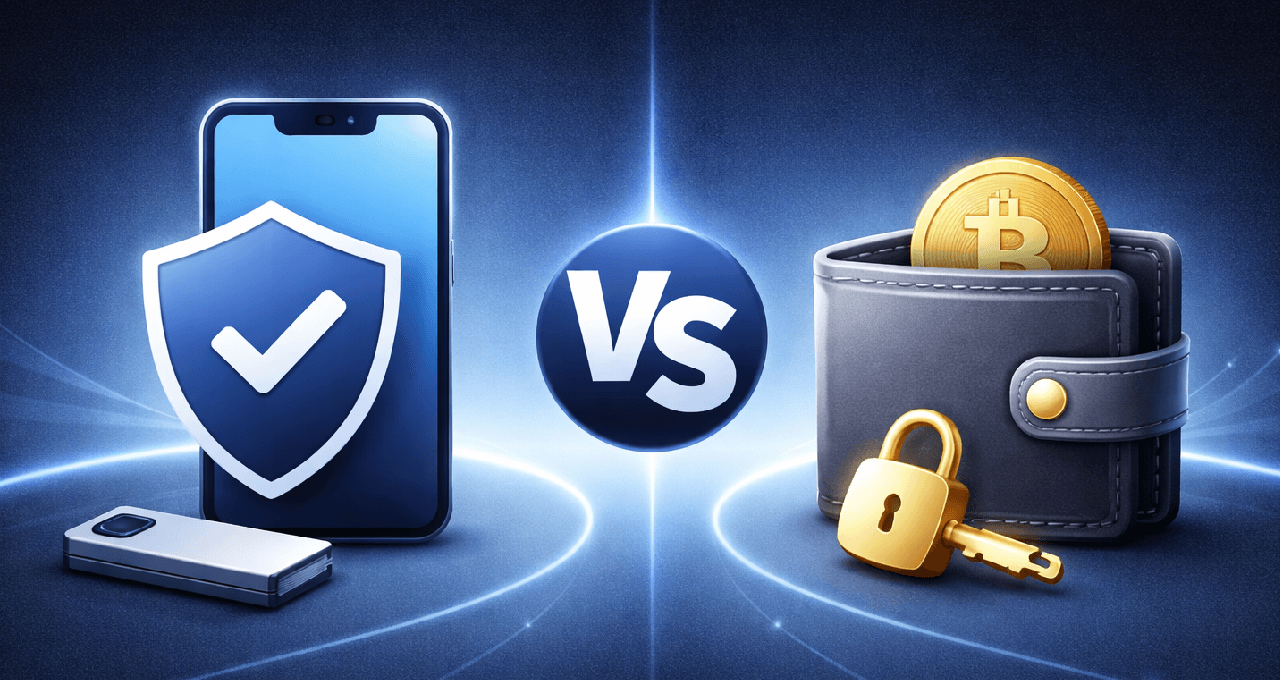
HOT WALLETS VS COLD WALLETS
Another key difference is hot wallets versus cold wallets.
Wallet Type | Internet Connection | Convenience | Security Level | Best For |
Hot Wallet | Yes | Very high | Moderate | Daily use and smaller amounts |
Cold Wallet | No (or limited) | Lower | High | Long-term storage and bigger amounts |
Hot wallets are connected to the internet. They are convenient for regular use but slightly less secure.
Cold wallets keep your keys offline for better protection. They are ideal once you have larger amounts or plan to hold long term.
Read More: Crypto Wallets for Beginners: Hot vs Cold. What's the Real Difference?
MAIN TYPES OF CRYPTO WALLETS
Here are the four types you will most likely consider as a beginner. Each one is rated 0-5 for usability, security, and beginner friendliness.
EXCHANGE WALLETS
These come built into platforms where you buy and sell crypto.
Usability: 5/5
Security: 3/5
Beginner Friendliness: 5/5
Pros:
Extremely easy for complete beginners
Fast to buy and sell
No need to manage seed phrases at first
Cons:
You do not control the keys
Platform could freeze funds or have issues
Not ideal for long-term holding
MOBILE WALLETS
Apps you install on your phone for self-custody.
Usability: 4/5
Security: 4/5
Beginner Friendliness: 4/5
Pros:
Simple and convenient to use daily
Good balance of control and ease
Many support multiple cryptocurrencies
Cons:
Phone can be lost or hacked
Requires careful backup of recovery phrase
Vulnerable to phone malware
BROWSER WALLETS
Extensions for your web browser, popular for Ethereum and DeFi.
Usability: 3/5
Security: 3/5
Beginner Friendliness: 3/5
Pros:
Excellent for using decentralized apps and DeFi
Quick to connect to websites
Good for managing different tokens
Cons:
Higher risk of phishing and fake websites
Browser vulnerabilities
Easy to make approval mistakes
HARDWARE WALLETS
Physical devices that keep keys offline.
Usability: 3/5
Security: 5/5
Beginner Friendliness: 3/5
Pros:
Very high security for larger amounts
Great for long-term holding
Protects against online threats
Cons:
More expensive
Less convenient for frequent use
Setup can feel technical for absolute beginners
KEY FACTORS TO CONSIDER WHEN CHOOSING A WALLET
Your experience level – start simple
What coins or tokens you want to hold
Whether you need to connect to apps
Security features like biometric protection
How clear the backup and recovery process is
SIMPLE WALLET COMPARISON TABLE
Wallet Category | Easy for Beginners | Self-Custody | Good for Apps | Best Use Case |
Exchange Wallet | Very Easy | No | Limited | |
Mobile Wallet | Easy | Yes | Moderate | Daily self-custody |
Browser Wallet | Moderate | Yes | Excellent | DeFi and Web3, OKX |
Hardware Wallet | Moderate | Yes | Good | Long-term secure storage,Ledger |
A PRACTICAL WAY FOR BEGINNERS TO START
If you are just starting:
Use an exchange wallet for your very first purchases
Move to a mobile wallet once you want more control
Consider a browser wallet when you explore DeFi
Get a hardware wallet as your holdings grow
COMMON MISTAKES TO AVOID
Picking a wallet just because it is popular
Not understanding the backup process
Putting everything in one wallet
Downloading apps from wrong sources
Holding too much in an insecure setup
A SIMPLE BEGINNER SETUP
Need | Suggested Approach |
First purchase | Reputable exchange wallet |
Learning self-custody | Trusted mobile wallet |
Using DeFi | Browser wallet with caution |
Long-term holding | Hardware wallet with safe backups |
FINAL THOUGHTS
Picking a crypto wallet is about finding the right balance between ease of use, control, and security. As a beginner, focus on starting simple and learning as you go. Understanding custody and backups is more important than choosing the coolest brand.
You can always upgrade your setup later as you become more comfortable.
FAQ
What is the best crypto wallet for beginners?
There is no single best wallet. It depends on your needs – convenience, control, or security.
Is a hardware wallet necessary for beginners?
Not right away. Many start with mobile or exchange wallets and add hardware later.
Can I use multiple crypto wallets?
Yes, most people do. Different wallets for different purposes works very well.
Are exchange wallets safe?
They are convenient but custodial. This means you trust the platform with your assets.
What should I check before downloading a wallet?
Always use official app stores or websites, verify the developer, and avoid suspicious links.
Disclaimer: This content is for educational and informational purposes only and is not financial advice. Nothing here is a recommendation to buy or sell any asset or use any platform. Do your own research and manage your risk.
Read More
Need deeper training?
Join our structured modules with live examples and expert checklists for effective implementation.
JOIN THE ACADEMY