
Key Takeaways
The safest route is a licensed exchange. Sell your crypto on a platform registered with the Securities Commission Malaysia (SC), then withdraw ringgit to your bank. Luno, Hata and MX Global are three of the SC-registered options available in 2026.
Peer-to-peer markets carry real risk. Binance P2P and OKX P2P support ringgit trades, but both platforms sit outside SC oversight. That brings legal, tax and fraud exposure, including the risk of a frozen bank account.
Tax depends on how you use crypto. Malaysia has no general capital gains tax, so long-term investors usually pay nothing on a disposal. Frequent, business-like trading can be taxed as income, so keep clear records.
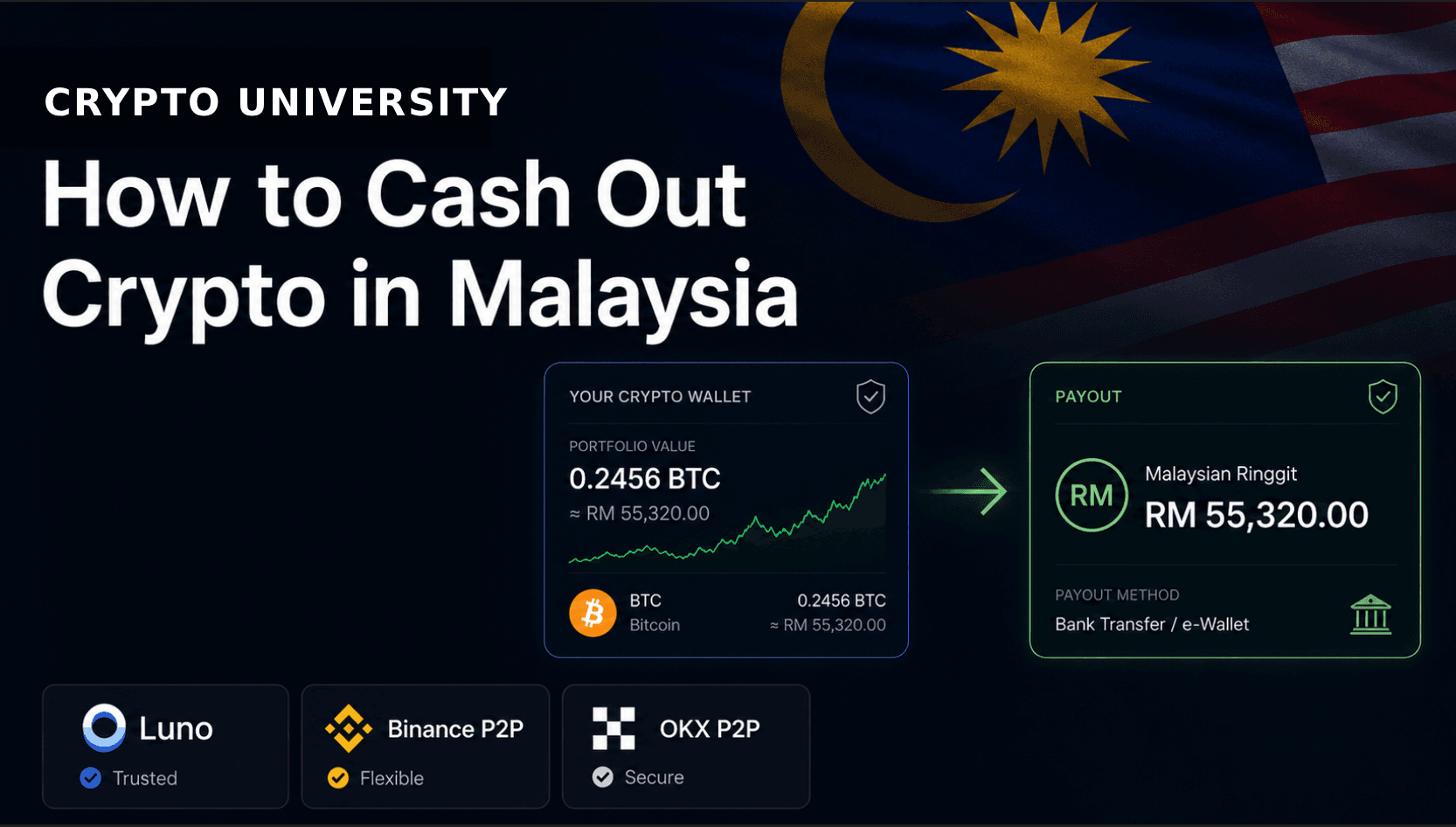
Cashing out crypto simply means turning a digital asset such as Bitcoin, Ethereum or a stablecoin back into Malaysian ringgit that you can spend or keep in your bank account. In 2026 the process in Malaysia is more straightforward than it used to be, mostly because the Securities Commission Malaysia now regulates a clear list of licensed exchanges. This guide walks through the basic steps, compares your main options, explains the trade-offs of peer-to-peer trading, and covers tax and large withdrawals. None of this is financial or tax advice. It is educational information to help you understand how the process works.
The Basic Process, Step by Step
Almost every cash-out follows the same two-part idea. First you sell your crypto for ringgit. Then you move that ringgit to your bank. Here is the full flow on a typical licensed exchange.
Verify your identity (KYC). Upload your MyKad and take a selfie. Verification usually takes a few minutes and is required before you can withdraw.
Get your crypto onto the platform. If your coins are in a personal wallet, send them to your exchange deposit address. If you already bought on the exchange, they are ready.
Sell for ringgit. Use the simple Instant Sell button for convenience, or the Exchange order book for lower fees. Both give you an MYR balance.
Check the rate and fee. Confirm how much ringgit you will receive after fees before you commit.
Link your bank account. Add and verify a Malaysian bank account in the same name as your exchange account. Names must match for the transfer to clear.
Request the withdrawal. Enter the amount, confirm with your PIN or biometrics, and submit.
Wait for the bank transfer. Licensed exchanges process ringgit withdrawals on business days. Money often lands the same day if you request it during banking hours.
Stage | What happens | Typical time |
|---|---|---|
KYC | Identity check with MyKad and selfie | A few minutes |
Sell crypto | Convert your coin to an MYR balance | Seconds |
Bank withdrawal | Exchange sends ringgit to your bank | Minutes to same business day |
Weekend request | Processed on the next business day | 1 to 2 days |
Comparing Your Main Options
If your priority is getting ringgit into a Malaysian bank with proper regulatory recourse, start with an SC-registered Digital Asset Exchange. As of the SC list updated on 20 July 2026, the registered exchanges are Luno, Hata, MX Global, SINEGY and Kinetic DAX. Below are three of the most widely used for cashing out. Always confirm the current list on the SC website, because registrations can change.
Option 1: Luno
Luno is one of the longest-running licensed exchanges in Malaysia and is popular with beginners for its clean app. Ringgit withdrawals to a Malaysian bank are free, with a low minimum of around RM10. Selling is where the cost sits: the Instant Sell option charges a flat fee of about 2 percent, while selling through the Luno Exchange order book costs roughly 0.25 to 0.50 percent depending on your 30-day volume. Withdrawals are processed manually on business days, and money often reaches your bank the same day if you request before the daily cut-off.
Option 2: Hata
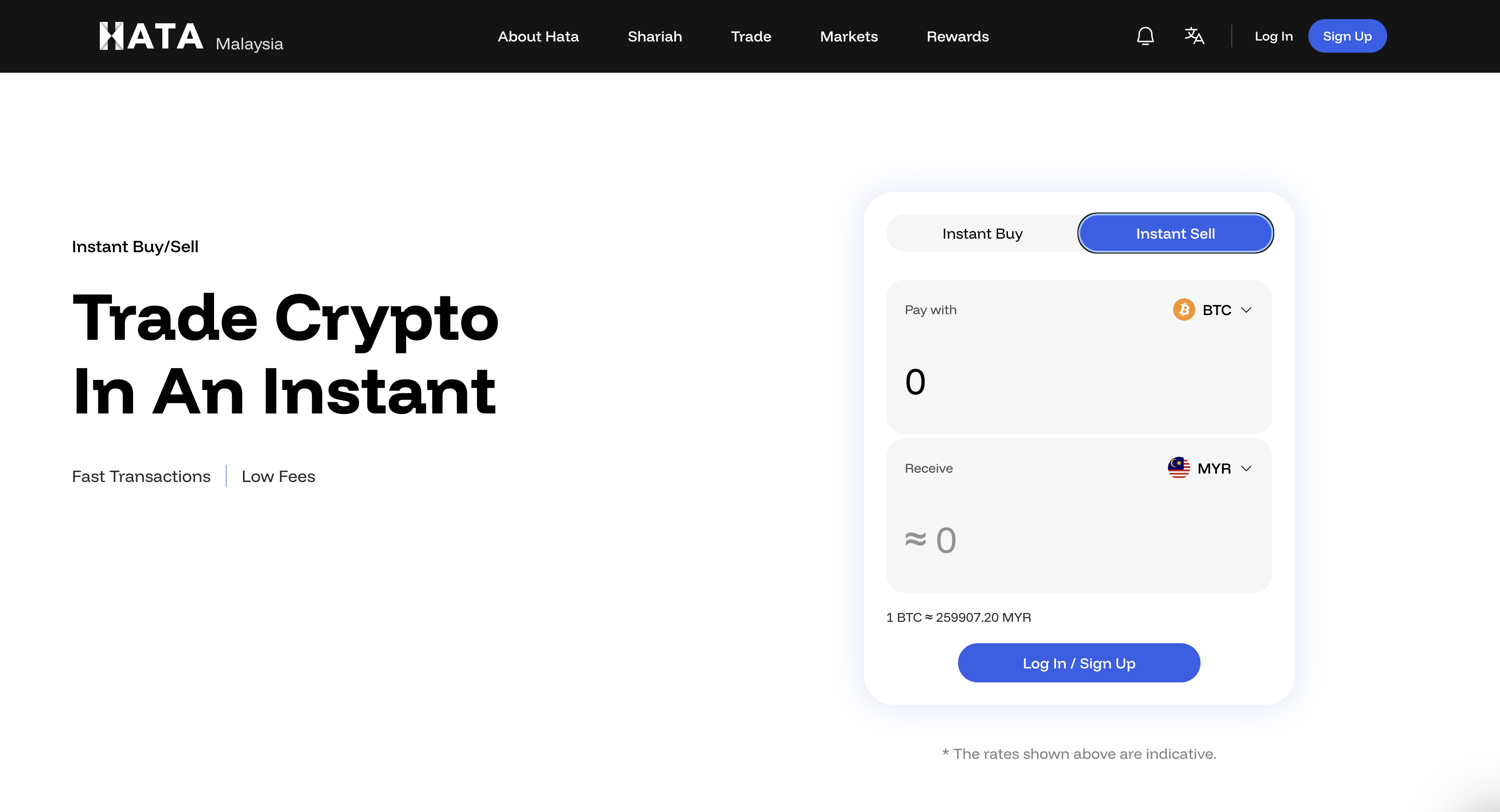
Hata is a newer SC-registered exchange founded by a former Luno regional manager. It is often described as having the lowest trading fees among licensed Malaysian venues, with 0 percent maker fees and taker fees between roughly 0.1 and 0.4 percent, plus a simple Instant Buy or Sell option at about 1 percent. Hata supports instant bank deposits and withdrawals and has generous MYR limits. Ringgit withdrawals are low-cost rather than always free, so check the in-app fee before you confirm.
Option 3: MX Global
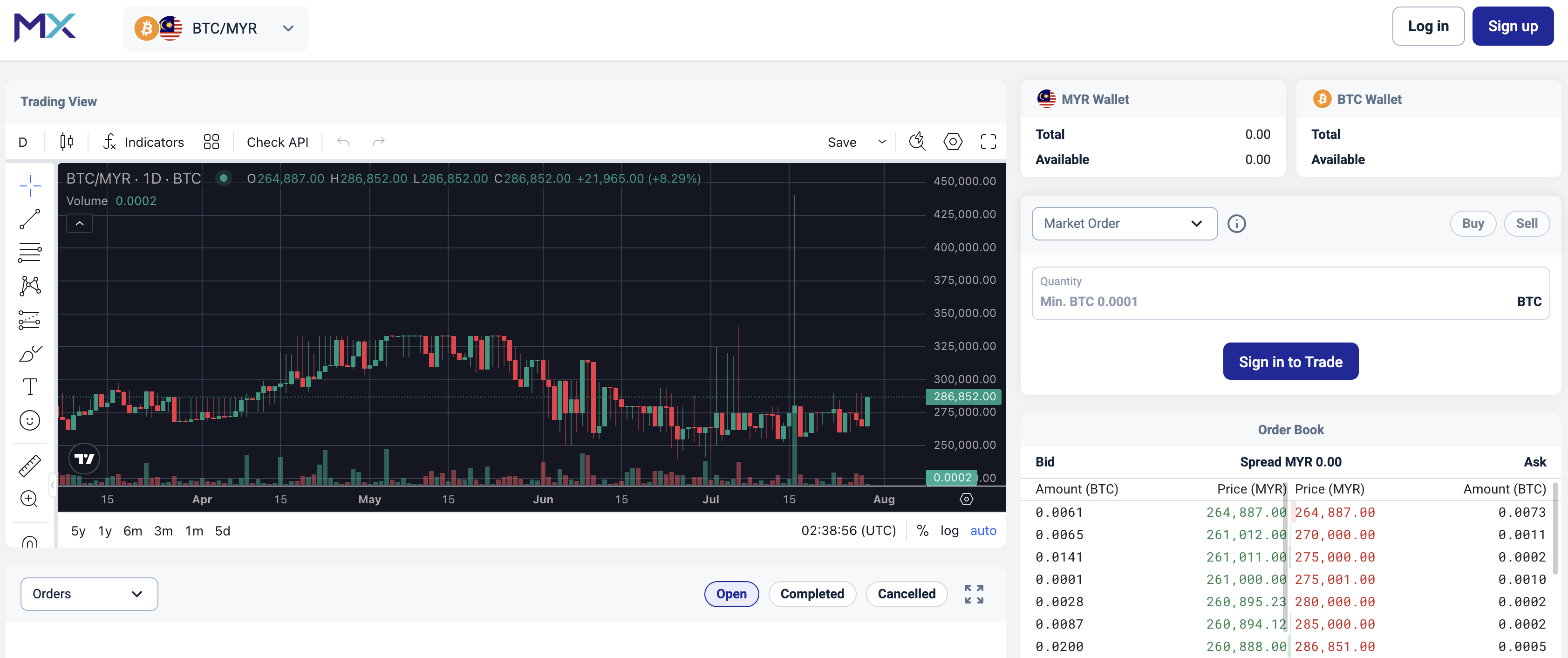
MX Global is another SC-registered exchange, known partly because Binance took an equity stake in it in 2022. It leans toward competitive, low trading fees and a stablecoin-friendly line-up. For users who hold stablecoins such as USDT or USDC and want to sell into ringgit at tight spreads, it is a practical choice. As always, verify current fees and supported coins on the official platform before you cash out.
Platform | License status | Sell / trade fee | MYR withdrawal | Best for |
|---|---|---|---|---|
Luno | SC-registered DAX | Instant Sell ~2%; Exchange ~0.25 to 0.50% | Free, min ~RM10, business-day processing | Beginners who value a simple app |
Hata | SC-registered DAX | 0% maker; 0.1 to 0.4% taker; ~1% Instant | Low-cost, high limits, fast transfers | Cost-focused and active users |
MX Global | SC-registered DAX | Low, competitive fee schedule | Bank transfer, check current terms | Stablecoin sellers wanting tight spreads |
Comparing Your P2P Options
Peer-to-peer (P2P) trading lets you sell crypto directly to another person. You post or accept an offer, the platform holds your crypto in escrow, the buyer pays ringgit to your bank, and once you confirm the payment the escrow releases the crypto. Two global platforms run active ringgit P2P markets: Binance P2P and OKX P2P. Both are worth understanding, and both come with an important caveat.
Neither Binance nor OKX is licensed by the Securities Commission Malaysia. Binance appears on the SC Investor Alert List for operating a recognised market without authorisation, and OKX is not authorised to serve Malaysian users. That does not make the technology fake, but it means you are dealing outside Malaysia's regulated framework, with no local investor protection if something goes wrong.
Platform | SC status | Ringgit support | Key risks |
|---|---|---|---|
Binance P2P | On SC Investor Alert List; unlicensed | MYR pairs via P2P; MYR trading pairs removed in the past | Terms may restrict Malaysian residents; account and fund access can change |
OKX P2P | Not authorised for Malaysian users | Active MYR P2P pairs | Restricted access; no local recourse; counterparty and payment disputes |
A Word on P2P and OTC Desks
P2P can offer good rates and flexible payment methods, but the risks are practical, not just theoretical. The most serious one in Malaysia is the frozen bank account. If a P2P buyer pays you with funds that were linked to a scam, your account can be flagged as a suspected mule account and frozen while the case is investigated, even if you did nothing wrong. Other risks include reversed or disputed payments, fake proof-of-payment screenshots, and pressure to release escrow early.
If you decide to use P2P anyway, some habits reduce exposure:
Only release crypto after the ringgit has actually cleared in your account, not on a screenshot.
Trade with high-volume counterparties who have strong completion rates and reviews.
Keep the full trade record, chat history and bank reference in case you ever need to explain a transfer.
Avoid off-platform deals that skip escrow entirely.
Over-the-counter (OTC) desks are a different tool aimed at larger amounts. An OTC desk quotes you a single price for a big block of crypto and settles directly, which avoids moving a large order through a public order book. Some licensed exchanges and dedicated brokers offer OTC services. For sizeable sums, an OTC desk run by a regulated entity is generally safer and cleaner than a string of P2P trades.
Which Crypto Should You Send?
The coin you move to the exchange affects both speed and cost, so a little planning helps.
Match the platform. Only send coins and networks the exchange actually supports. Sending an unsupported token, or the right token on the wrong network, can mean lost funds.
Mind network fees. Moving Bitcoin or Ethereum on their main networks can carry higher transfer fees at busy times. Stablecoins on lower-fee networks are often cheaper to move.
Consider stablecoins for the final step. Many people convert volatile coins into a stablecoin such as USDT or USDC first, then sell the stablecoin into ringgit. This locks in a value while you complete the withdrawal and can reduce price movement during the process.
Double-check the address. Copy and paste deposit addresses, confirm the network, and send a small test amount first if you are moving a large sum.
Note that in Malaysia, crypto-to-crypto conversions are generally not the taxable event for casual investors, so converting a coin into a stablecoin before selling is common. The tax question usually turns on your overall activity, which is covered below.
Cashing Out Large Amounts
Large withdrawals need more care, mostly because banks and exchanges apply anti-money-laundering (AML) checks. A sudden, unusually large transfer can trigger a review or a request to explain the source of funds. This is normal compliance, not an accusation, but it can delay access to your money if you are not prepared. Here is a quick overview of deeper detail on How to Cash Out Crypto.
Practical steps for larger cash-outs:
Use an SC-registered exchange or a regulated OTC desk, where large transfers are expected and documented.
Keep a clear paper trail: purchase records, exchange statements and wallet history that show where the crypto came from.
Consider spreading the cash-out across a planned schedule rather than one very large transfer, while keeping records consistent.
Be ready to answer source-of-funds questions from your bank calmly and with documents.
Avoid using P2P for very large sums. The frozen-account risk scales with the amount, and untangling a large frozen balance can take weeks or longer.
What About Taxes?
Malaysia does not have a general capital gains tax, and crypto is treated as a digital asset rather than legal tender. How you are taxed depends on what you actually do, not on what you call yourself. The Inland Revenue Board (LHDN) issued guidance on digital currency transactions in 2022 and released a second edition in December 2025, and it uses the long-standing badges of trade to decide whether your activity looks like investing or trading.
Your situation | Likely tax treatment |
|---|---|
Long-term, passive holding sold occasionally | Generally treated as investment; gains usually not taxed |
Frequent, systematic trading for profit | May be treated as business income and taxed at income tax rates |
Mining, staking or crypto services as income | Generally taxable income, reported at fair value in MYR |
Crypto-to-crypto swaps by a casual investor | Generally not the taxable point on its own |
The badges of trade look at things like how often you buy and sell, how long you hold, whether there is a clear profit motive, and how organised the activity is. There is no fixed number of trades that automatically makes you a trader. Individual income tax rates in Malaysia are progressive and reach up to about 30 percent at the highest brackets, so active traders can face a meaningful bill if their gains are classed as business income.
Two habits matter for everyone: report taxable crypto income in your annual return, and keep records of your buys, sells and disposal values in ringgit. LHDN has run enforcement operations on crypto activity, so accurate records protect you. This section is general information, not tax advice. For your own situation, check the LHDN website or speak to a qualified Malaysian tax professional.
The Bottom Line
For most people in Malaysia, the cleanest way to cash out crypto in 2026 is to sell on an SC-registered exchange such as Luno, Hata or MX Global, then withdraw ringgit to a bank account in your own name. It is legal, traceable and gives you local recourse if there is a problem. P2P markets on Binance or OKX can offer good rates, but they sit outside SC oversight and carry real risks, with a frozen bank account being the one to respect most. Keep good records, understand whether your activity looks like investing or trading for tax, and take extra care with large amounts. Do that, and cashing out becomes a routine, low-drama step rather than a stressful one.
Frequently Asked Questions
Is it legal to cash out crypto in Malaysia?
Yes. Buying, selling and cashing out crypto through an SC-registered exchange is legal. Crypto is regulated as a digital asset, though it is not legal tender. Using unlicensed platforms is where legal and practical risk increases.
How long does it take to get the ringgit in my bank?
On a licensed exchange, ringgit withdrawals are usually processed on business days and often arrive the same day if requested during banking hours. Requests on weekends or public holidays are processed on the next business day.
Is Luno free to withdraw ringgit?
Luno's MYR withdrawals to Malaysian banks are free, with a low minimum of around RM10. The main cost is the sell fee, which is about 2 percent for Instant Sell and lower on the Exchange order book.
Can I use Binance or OKX to cash out?
Their P2P markets do support ringgit, but neither is licensed by the SC. Binance is on the SC Investor Alert List and OKX is not authorised for Malaysian users. You trade there without local investor protection.
Will I be taxed when I cash out?
Not automatically. Malaysia has no general capital gains tax, so long-term investors usually are not taxed on a disposal. If your activity looks like a trading business, gains can be taxed as income. Keep records and report taxable income.
Why do people get their bank accounts frozen from P2P?
If a P2P buyer pays you with funds tied to a scam, your account can be flagged as a possible mule account and frozen during investigation. Using licensed exchanges instead of P2P greatly reduces this risk.
Should I convert to a stablecoin before cashing out?
Many users do. Converting a volatile coin into a stablecoin such as USDT or USDC before selling into ringgit can reduce price movement during the process. Only use networks your exchange supports.
Sources
The following public sources informed this article. Details such as fees, limits and registration status change over time, so verify current information directly before you act.
Securities Commission Malaysia, List of Registered Digital Asset Exchanges (updated 20 July 2026), sc.com.my
Securities Commission Malaysia, revised Guidelines on Recognized Markets (effective 20 May 2026)
Luno Malaysia Help Centre, fees, limits and withdrawal processing pages, guide.luno.com
Inland Revenue Board of Malaysia (LHDN), guidance on digital currency transactions (2022; second edition December 2025), hasil.gov.my
RinggitPlus, coverage of Malaysian crypto tax and the badges of trade
The Edge Malaysia and Baker McKenzie, reporting on 2026 SC digital asset rule updates and digital-asset broking clarification
Fintech News Malaysia, regulated crypto exchanges, custodians and IEO operators in Malaysia (2026)
Disclaimer: This content is for educational and informational purposes only and is not financial advice. Nothing here is a recommendation to buy or sell any asset or use any platform. Do your own research and manage your risk.
Crypto University: How to Cash Out Crypto
Best Crypto Trading Competitions in 2026: OKX vs Bybit
How RugCheck Works: A Beginner's Guide to Checking Solana Tokens
Best Crypto Off-Ramps in the UAE: OKX, BitOasis and Fasset Compared
Need deeper training?
Join our structured modules with live examples and expert checklists for effective implementation.
JOIN THE ACADEMY