
Key Takeaways
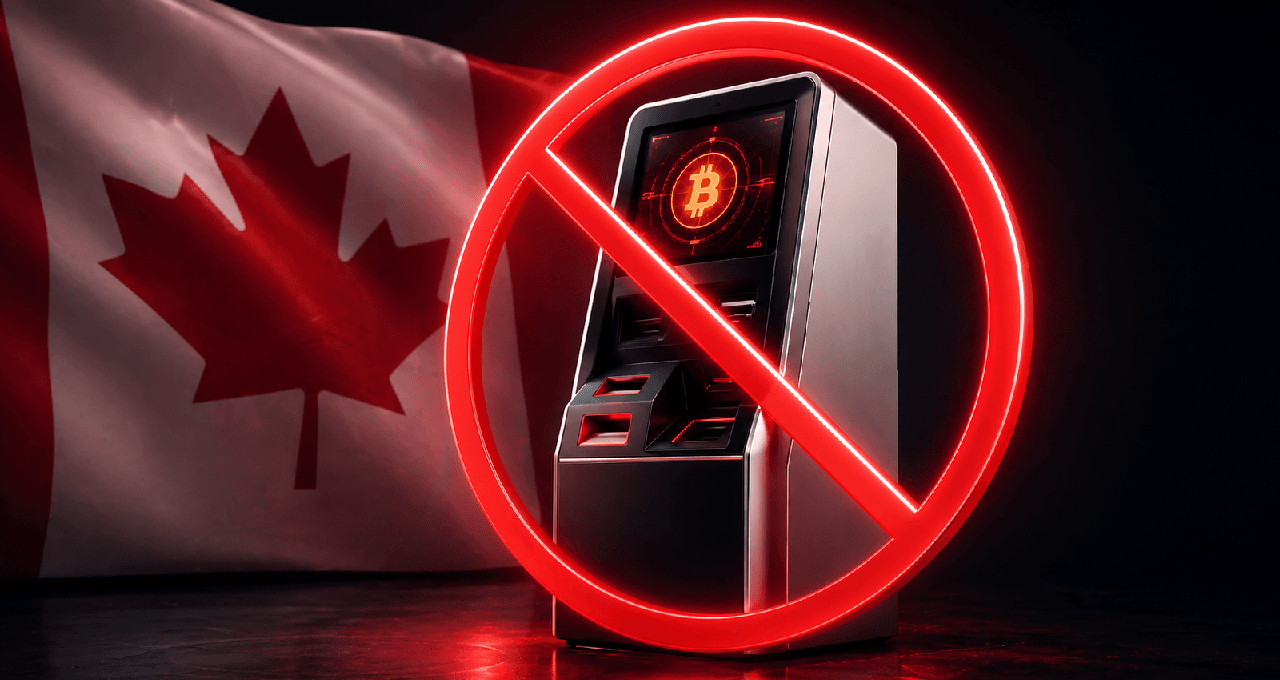
1 | Canada's spring 2026 federal budget proposed a national ban on crypto ATMs, citing their documented role as a primary tool in fraud schemes targeting elderly Canadians — with estimated losses in the hundreds of millions of dollars annually. |
2 | Crypto ATMs charge significantly higher fees than regulated exchanges, typically ranging from 5% to over 20% per transaction, and their anonymous cash-in design makes them the preferred tool for scammers running 'emergency', 'government impersonation', and 'investment fraud' typologies. |
3 | Regulated exchange apps and peer-to-peer platforms offer safer, cheaper, and more traceable alternatives to crypto ATMs for buying Bitcoin or other digital assets — and most are accessible within minutes of creating a verified account. |
Canada's Spring 2026 Proposal
In its spring 2026 federal budget update, the Canadian government proposed legislation that would prohibit the operation of cryptocurrency ATMs across the country. This was not a sudden move. Canadian regulators, led by FINTRAC (the Financial Transactions and Reports Analysis Centre of Canada), have been raising alarms about crypto ATM fraud for several years. What changed in 2026 is the scale of documented losses — and the political will to act decisively.
The proposal is not yet law. It requires parliamentary approval and a formal rulemaking process. But the direction is clear: Canada is moving toward a total prohibition, not merely tighter regulation, of crypto ATM operators.
This article explains the mechanics of crypto ATMs, why they have become a fraud hotspot, what the global regulatory picture looks like, and — critically — how to use them safely if you still have access to one, along with the alternatives available if they are restricted in your jurisdiction.
How Crypto ATMs Work Mechanically
A crypto ATM is a physical kiosk that allows users to buy (and sometimes sell) cryptocurrency using cash or a bank card. Despite the name, they operate differently from traditional bank ATMs.
Here is the basic process for a standard cash-in crypto ATM transaction:
Locate the machine. Users find a kiosk, typically at a convenience store, pharmacy, or shopping centre.
Verify identity (if required). Most regulated machines require a phone number and some form of ID verification — typically a government ID scan or SMS OTP. Many older machines require minimal or no verification for smaller transactions.
Enter the destination wallet address. The user either types in a Bitcoin wallet address or scans a QR code. This is where scams occur — the scammer provides the wallet address.
Insert cash. The machine accepts bills and converts them to the equivalent amount in Bitcoin or another supported crypto, minus fees.
Transaction is broadcast. The machine sends the crypto to the destination address on the blockchain. This transaction is irreversible.
The irreversibility is the key risk factor. Unlike a bank transfer that can sometimes be recalled, a crypto transaction sent to the wrong address — or a scammer's address — cannot be undone.
Why Regulators Are Targeting Crypto ATMs: The Fraud Problem
Crypto ATMs have become the preferred cash-out tool for several categories of fraud. The design features that make them convenient for legitimate users — cash acceptance, minimal ID requirements, instant settlement — are the same features that make them ideal for scammers.
Common Fraud Typologies Involving Crypto ATMs
Regulators in Canada, the US, the UK, and Australia have documented the following fraud patterns:
Fraud Type | How It Works | Who Is Targeted |
Government Impersonation | Scammer calls victim posing as the CRA, RCMP, or immigration authority. Claims the victim owes money and must pay via Bitcoin ATM to avoid arrest. | Older adults, recent immigrants |
Emergency Scam (Grandparent Scam) | Scammer poses as a grandchild or lawyer claiming the grandchild is in legal trouble. Instructs the victim to withdraw cash and feed it into a Bitcoin ATM to pay bail. | Elderly users aged 65+ |
Romance / Investment Fraud | Victim is lured into a fake investment scheme by an online relationship. Instructed to 'invest' via a Bitcoin ATM to load funds onto a fraudulent platform. | Adults of all ages, higher-income targets |
Utility / Account Threat Fraud | Victim receives a fake notice claiming their utility service will be disconnected unless payment is made via Bitcoin ATM within the hour. | General population, especially seniors |
According to the Canadian Anti-Fraud Centre, losses linked to crypto ATM fraud have grown year over year since 2020. FINTRAC noted that the irreversibility of crypto transactions, combined with the ease of using physical cash, makes ATMs significantly harder to police than equivalent fraud through banking channels.
The Global Regulatory Trend: A Move Toward Restriction
Canada is not alone in rethinking crypto ATM access. Several jurisdictions have already moved ahead with restrictions:
United Kingdom: The Financial Conduct Authority (FCA) has declared all UK crypto ATM operators to be operating illegally since 2023, as none have received the required registration. The FCA has actively worked with local councils to remove machines from public premises.
United States: The FTC and state regulators have cracked down on individual operators. Several states have introduced transaction limits and mandatory fraud warning screens. New York state has among the strictest requirements for ATM operators.
Australia: AUSTRAC has imposed strict AML/CTF obligations on crypto ATM operators, resulting in significant machine shutdowns by operators unable to meet compliance costs.
Germany: BaFin began requiring full authorization for crypto ATM operation, dramatically reducing the number of legal machines in the country.
The trend across developed regulatory environments is clear: crypto ATMs face increasing compliance costs, liability for fraud facilitation, and in some cases outright prohibition. Canada's proposed ban represents the most aggressive position yet taken by a G7 country.
How to Use a Crypto ATM Safely
If you are in a jurisdiction where crypto ATMs remain legal and you choose to use one, there are clear risk-reduction steps you should follow:
Before You Insert Any Cash
Never use a crypto ATM at someone else's instruction. If any person — by phone, email, text, or online — tells you to visit a Bitcoin ATM and send crypto to a specific address, this is a scam. No legitimate business, government agency, or bank uses crypto ATMs for payment collection.
Confirm the operator is registered. In Canada, crypto ATM operators are required to register with FINTRAC as money services businesses. Check the FINTRAC public registry before using an unfamiliar machine.
Check the fee display before proceeding. All regulated machines are required to disclose fees before a transaction is completed. If the fee is not clearly stated or is above 10%, consider using a regulated exchange instead.
During the Transaction
Generate your own wallet address. Use a reputable wallet app — such as Trust Wallet or a hardware wallet like a Ledger device — to generate the destination address yourself. Never use an address given to you by someone else.
Start with the minimum amount. For a first-time transaction at a new machine, use the smallest amount available to confirm the process works correctly before committing larger sums.
Screenshot the confirmation screen. Keep a record of the transaction reference number and the destination address in case you need to report an issue.
Red Flags: Walk Away If You See These
The machine does not require any phone verification for transactions over $250
You were directed to this specific ATM by someone you met online or spoke to by phone
The machine displays unusually high fees but says 'no other fees apply'
The destination wallet address was pre-filled or given to you on a printed note
Safer Alternatives: Comparing Your Crypto On-Ramp Options
If crypto ATMs are banned or restricted in your jurisdiction, or if you simply want a safer and cheaper way to buy crypto, here are the main alternatives:
Method | Typical Fee | Speed | Reversibility | Best For |
Crypto ATM | 5% to 20%+ | Immediate | None | Cash users without bank access |
Centralised Exchange (CEX) | 0.1% to 1.5% | Minutes to hours | Support disputes available | Most users — best cost/safety ratio |
P2P Platform | 0% to 3% | Minutes to hours | Platform escrow available | Privacy-focused users, underbanked |
Bank/Card on Exchange | 1% to 3% | Instant to 1 day | Chargeback possible (card) | Beginners, convenience seekers |
Recommended Regulated Exchanges for Buying Crypto
The following regulated exchanges support Canadian users and offer significantly lower fees and stronger consumer protection than crypto ATMs:
BTCC — One of the longest-running crypto exchanges, with strong compliance standards and support for bank card purchases.
Bybit — A globally regulated exchange offering straightforward fiat on-ramp options with competitive fees.
OKX — Supports multiple fiat currencies including CAD, with a P2P marketplace and regulated spot exchange.
Weex — An accessible exchange with beginner-friendly onboarding and transparent fee disclosures.
For those who want to store their crypto securely after purchasing, a hardware wallet is the recommended approach. The Ledger hardware wallet allows you to hold your assets offline — removing them from exchange risk entirely.
Frequently Asked Questions
Has Canada officially banned crypto ATMs?
As of the spring 2026 federal budget update, a ban has been proposed but not yet enacted into law. The proposal requires parliamentary approval. Monitor announcements from FINTRAC and the Department of Finance for the timeline on formal legislation.
Why are crypto ATMs more expensive than exchanges?
Crypto ATMs have high physical infrastructure costs — machine purchase, maintenance, cash management, and location fees — which are passed on as transaction fees. Exchanges operate digitally at much lower marginal cost per transaction. A typical exchange charges 0.1% to 1.5% per trade; most crypto ATMs charge 8% to 20%.
Can I get a refund if I send crypto to a scammer via an ATM?
In almost all cases, no. Blockchain transactions are irreversible once confirmed. The crypto ATM operator is not able to reverse the transaction after the fact. Some jurisdictions are exploring liability frameworks for ATM operators in verified fraud cases, but this is not yet standard practice.
Are there any crypto ATMs that are safe to use?
Regulated machines operated by licensed money services businesses — with clear fee disclosure, ID verification, and fraud warning screens — are the safest version of crypto ATMs. Machines that require no verification and accept any wallet address without confirmation screens carry the highest fraud risk.
What is the safest way for a beginner to buy Bitcoin in Canada?
Opening a verified account on a regulated Canadian crypto exchange is currently the safest and cheapest method. These platforms offer bank account linking, transparent fee structures, and some level of dispute resolution that ATMs cannot provide.
Disclaimer: This content is for educational and informational purposes only and is not financial advice. Nothing here is a recommendation to buy or sell any asset or use any platform. Do your own research and manage your risk.
Read More
Strategy Holds 815,061 BTC: What Corporate Bitcoin Treasury Strategy Means for Traders
UK FCA P2P Crypto Crackdown 2026: What Compliance-Minded Traders Need to Know
Need deeper training?
Join our structured modules with live examples and expert checklists for effective implementation.
JOIN THE ACADEMY