KEY TAKEAWAYS
Crypto cards let you spend digital assets at regular merchants by converting crypto to fiat at the point of sale. Most run on Visa or Mastercard networks.
Cashback rates vary from 1% to 10%, but top rates usually require staking the platform's native token, which adds financial risk.
Not all cards are available worldwide. Country restrictions, KYC requirements, and platform shutdowns are real factors to consider before applying.
What Is a Crypto Card?
A crypto card is a payment card, usually issued as a Visa or Mastercard, that lets you spend cryptocurrency at regular merchants. When you make a purchase, the card provider converts the required amount of crypto into local currency at the point of sale. You pay in fiat, but the funds come from your crypto balance.
This is different from simply selling crypto and depositing the proceeds into a bank account. With a crypto card, the conversion happens instantly and automatically. Most cards are prepaid or debit-style, meaning you load the card with crypto from an exchange wallet. Some, like the Nexo Card, also offer a credit function backed by crypto collateral.
The appeal is clear: if you hold crypto and want to use it for everyday spending without manually converting it first, a crypto card bridges that gap.
How Crypto Cards Work
When you tap or swipe a crypto card at a merchant, the following steps happen in seconds:
Your provider checks your card balance
The required fiat amount is calculated using the current crypto-to-fiat exchange rate
The crypto is sold from your account to cover the purchase
The merchant receives the fiat payment through the standard Visa or Mastercard network
Because the merchant sees a normal card payment, crypto cards work anywhere that accepts Visa or Mastercard. The crypto conversion and settlement happen entirely on the provider's side.
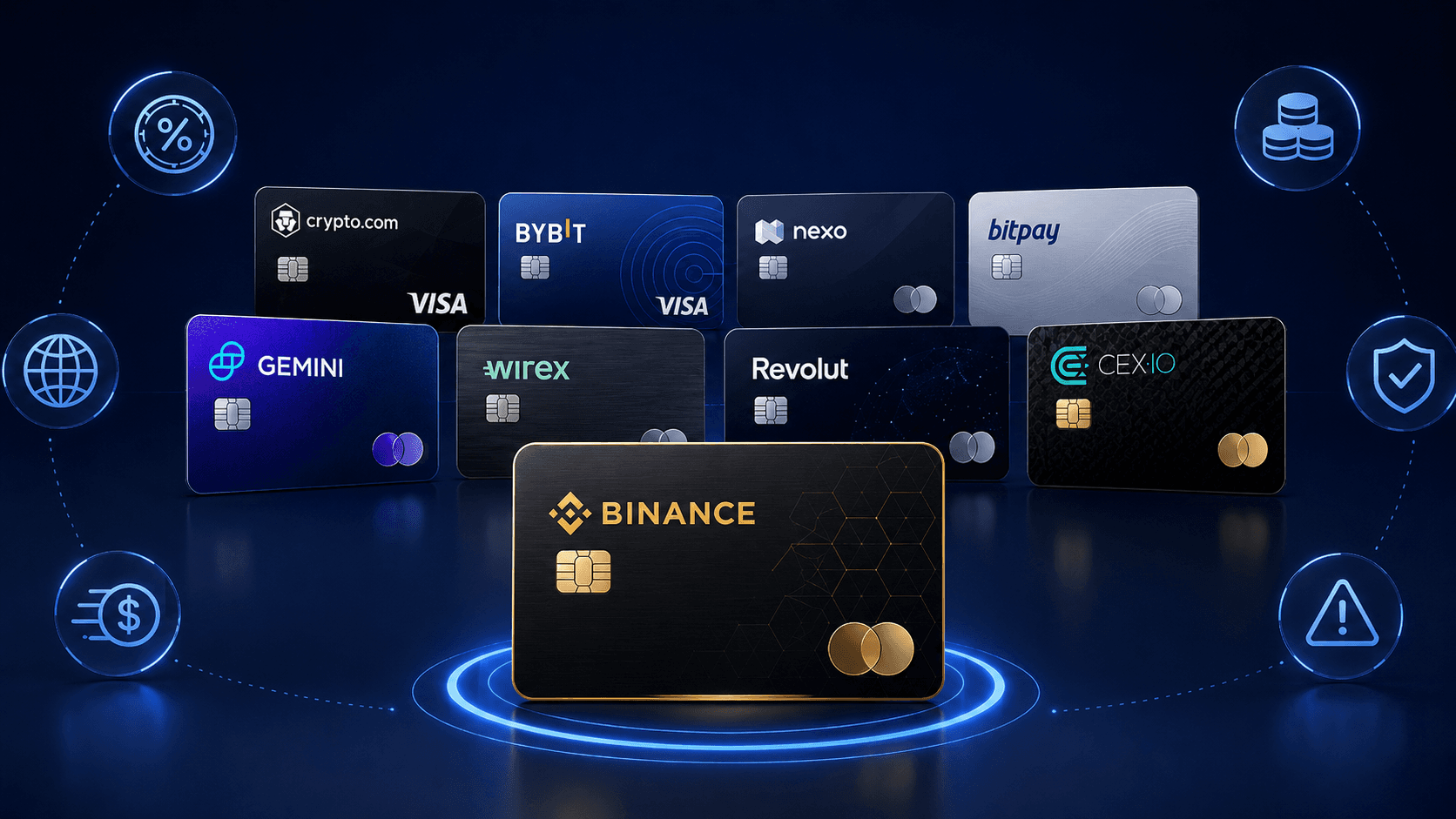
Quick Comparison: Top 10 Crypto Cards in 2025
The table below summarises the key features of the ten most widely discussed crypto cards in 2025. Fees, cashback rates, and availability can change. Always verify current terms directly with the provider before applying.
Card | Network | Cashback | Annual Fee | Regions | Key Feature |
Crypto.com Visa | Visa | 1% - 5% | Free (entry tier) | US, UK, EU, AU, more | Tiered perks + streaming rebates |
Bybit Card | Mastercard | 2% - 10% | Free | EEA, AU, LATAM | High cashback for VIP spenders |
Coinbase Card | Visa | 1% - 4% | Free | US, UK, select EU | Rotating crypto reward options |
Nexo Card | Mastercard | Up to 2% | Free | EEA, UK | Credit + debit in one card |
BitPay Card | Mastercard | Merchant deals | Free | US primarily | 100+ cryptos supported |
Gemini Credit Card | Mastercard | Up to 4% | Free | US only | No staking needed; strong rewards |
Wirex Card | Visa/MC | 0.5% - 3% | Free (basic) | UK, EEA | DeFi & staking integration |
Revolut Card | Visa | Varies | Free - £45/mo | UK, EU, US, more | All-in-one finance app |
CEX.IO Card | Mastercard | BTC/ETH cashback | Free | EEA, UK, US (select) | No issuance fee; exchange-linked |
Binance Card | Mastercard | ~2% | Free | Brazil only (2025) | Relaunched; very limited reach |
Note: Binance Card was suspended in the European Economic Area in mid-2023. It relaunched in Brazil in late 2025. Availability in other regions remains restricted.
Top 10 Crypto Cards Reviewed
1. Crypto.com Visa Card
Crypto.com is one of the most recognised names in crypto payments. Its Visa card runs on a tier system, from a free entry-level card (Midnight Blue) up to premium metal cards that require staking significant amounts of CRO, the platform's native token.
Cashback: 1% to 5% in CRO, depending on tier and staking level
Annual fee: Free at entry level; higher tiers require CRO stake (no cash fee, but staked tokens carry market risk)
Countries: US, UK, EU, Australia, Canada, Singapore, and more. One of the widest footprints in this category.
Pros: Wide availability, lifestyle perks (Spotify/Netflix rebates, airport lounge access at higher tiers), no FX fees on most tiers, strong app
Cons: Cashback paid in CRO which can fall in value; top tier rewards require large CRO stakes; monthly cashback caps on mid-tier cards
2. Bybit Card
Bybit's crypto card targets active traders already using the Bybit exchange. It offers some of the highest cashback rates in this space, with VIP users able to earn up to 10%. The card runs on Mastercard and supports a small but widely used set of cryptocurrencies.
Cashback: 2% to 10% (VIP-level dependent); includes 100% rebates on Netflix, Spotify, and similar services
Annual fee: Free
Countries: EEA (European Economic Area), Australia, LATAM (select countries). Not available in the US.
Pros: High cashback ceiling, no annual fee, free card delivery, Google Pay compatible
Cons: Restricted geographic availability, 0.9% crypto conversion fee if fiat balance is insufficient, high cashback requires VIP status
3. Coinbase Card
The Coinbase Card is a Visa debit card linked directly to a Coinbase account. It is beginner-friendly and one of the more straightforward options in this list. Users can choose which cryptocurrency earns their cashback rewards.
Cashback: 1% to 4% on rotating crypto categories (e.g., 4% in Stellar Lumens, 1% in Bitcoin)
Annual fee: Free; a paid Coinbase One subscription unlocks higher tiers
Countries: US, UK, and select EU countries
Pros: Simple setup, no staking required for base rewards, rotating category rewards give flexibility, strong brand trust
Cons: 2.49% conversion fee on debit transactions, rewards in less-liquid tokens may be harder to use, credit card option requires paid subscription
4. Nexo Card
The Nexo Card is unusual in that it combines debit and credit functionality. In credit mode, you can spend without selling your crypto by using it as collateral. In debit mode, crypto is sold at the point of purchase. This makes it more flexible than most options on this list.
Cashback: Up to 2% in Bitcoin or NEXO tokens
Annual fee: Free
Countries: EEA and UK. Physical card may have limited availability in some countries.
Pros: Credit + debit in one card, up to 2,000 EUR free ATM withdrawals monthly, no annual or inactivity fees, virtual card available instantly
Cons: Lower cashback ceiling than competitors, limited geographic availability, credit mode requires crypto collateral and carries liquidation risk
5. BitPay Card
BitPay is one of the older names in crypto payments. Its Mastercard prepaid card supports over 100 cryptocurrencies and is primarily aimed at US users. Rather than ongoing percentage cashback, rewards come via merchant-specific deals.
Cashback: Merchant deals rather than universal cashback
Annual fee: Free; a $29.99 physical card fee applies for non-VIP users
Countries: Primarily the United States
Pros: Wide cryptocurrency support (100+), familiar Mastercard acceptance, simple prepaid model with manual top-ups
Cons: No consistent cashback programme, 3% conversion fee for international users, card is funded manually via the BitPay wallet
6. Gemini Credit Card
The Gemini Credit Card is one of the few true credit cards on this list. It operates as a Mastercard World Elite card and is issued in partnership with a US bank. Notably, it does not require any staking to earn competitive rewards.
Cashback: 3% on dining, 2% on groceries, 1% on all other purchases; paid in crypto
Annual fee: Free
Countries: United States only
Pros: No staking requirement, rewards paid in 50+ cryptocurrencies, instant payouts, metal card, $200 sign-up bonus (widely reported)
Cons: US-only, requires a credit check, cashback in crypto means rewards carry market price risk
7. Wirex Card
Wirex has been operating since 2015 and positions itself as a multi-currency payment account with crypto features. Its card supports both crypto and traditional currencies and includes some DeFi features for more advanced users.
Cashback: 0.5% on basic plan; up to 3% in WXT tokens on premium plans
Annual fee: Free for basic card; premium plans have monthly fees
Countries: UK and EEA primarily
Pros: Long-established provider, multi-currency account, DeFi integration, supports traditional and crypto balances in one place
Cons: Relatively modest cashback, rewards in WXT token carry token-specific risk, limited availability outside UK and Europe
8. Revolut Card
Revolut is primarily a digital banking app that has added crypto features, including the ability to buy, hold, and spend crypto through its card. It is not a crypto-native product like others on this list, but it serves users who want crypto access within a broader financial tool.
Cashback: Varies by plan; crypto-specific rewards are limited compared to dedicated crypto cards
Annual fee: Free basic plan; premium plans range from around 3 GBP to 45 GBP per month
Countries: UK, EU, US, Australia, and a growing number of markets
Pros: Broad country availability, all-in-one finance app, good for users who want crypto and traditional banking in one place
Cons: Crypto rewards are not the main product, crypto held on Revolut is custodial with limited withdrawal options depending on your plan
9. CEX.IO Card
CEX.IO is a regulated exchange that offers a Mastercard debit card linked to exchange balances. The card has no issuance fee and pays cashback in BTC, ETH, or DOGE. It appeals to users who want a straightforward exchange-linked card with transparent fees.
Cashback: BTC, ETH, or DOGE cashback; rate varies by tier
Annual fee: Free
Countries: EEA, UK, and select US states
Pros: No issuance fee, major crypto cashback options, instant conversion, integrated with CEX.IO exchange
Cons: Smaller user base than competitors, limited geographic reach, cashback rates and terms updated periodically
10. Binance Card
The Binance Card was once one of the most widely available crypto cards in Europe, serving over 30 countries. It was suspended in the EEA in mid-2023 following compliance changes. Binance relaunched a card in Brazil in late 2025, but its reach remains significantly reduced compared to its earlier availability.
Cashback: Approximately 2% in Brazil (post-relaunch)
Annual fee: Free; 0.9% crypto conversion fee
Countries: Brazil only as of 2025. Not available in the US, UK, EU, or most of Asia.
Pros: Backed by one of the largest exchanges, 14+ crypto support in the Brazil version, zero BRL payment fees
Cons: History of suspension creates trust concerns, extremely limited geographic availability, uncertain programme longevity
Key Risks to Understand Before Applying
Crypto cards offer real convenience but come with risks that are important to understand. Below is a summary of the most common issues.
Risk Type | What It Means for You |
Custodial risk | Your funds sit on the provider's platform. If the exchange freezes, gets hacked, or collapses, access to your funds may be delayed or lost. |
Reward volatility | Cashback paid in native tokens (CRO, NEXO, BNB) can drop sharply in value. A 5% cashback rate in a token that loses 60% of its value is no longer a good deal. |
Staking lockups | Top-tier rewards often require locking up tokens. Those locked tokens are exposed to price swings and are not freely accessible during the lock period. |
Platform shutdowns | Some card programs have been suspended or restricted with little warning. Binance Card in Europe is a notable example from 2023. |
KYC and data exposure | All regulated crypto cards require identity verification. Your personal data is held by the provider, which carries data breach risk like any financial platform. |
Tax obligations | Spending crypto via a card may be treated as a taxable disposal in many jurisdictions, including the US and UK. Each transaction could be a taxable event. |
What to Look For When Choosing a Crypto Card
Before applying for a crypto card, consider the following:
Country availability: Many cards are restricted by region. Always confirm the card is available in your country before submitting personal information.
Cashback in what asset: Rewards paid in volatile native tokens can lose value quickly. Some users prefer cards that pay cashback in Bitcoin or stablecoins.
Staking requirements: Higher rewards often require locking up tokens. Understand what that means for your liquidity and market risk.
Fee structure: Look for conversion fees, ATM withdrawal fees, FX fees, and inactivity fees. Entry-level cards that look free can carry hidden costs.
Custodial model: All of the cards on this list store your funds with the provider's platform. Your crypto is not in your own wallet while it sits on the exchange.
Tax treatment: In many jurisdictions, using a crypto card to make purchases is treated as disposing of an asset and may trigger a taxable event.
Do Your Own Research Before Creating an Account
The crypto card landscape changes frequently. Platforms update their fee structures, cashback rates, and country availability, sometimes with short notice. A few things to verify before signing up:
Check the provider's current fee schedule on their official website
Confirm the card is available in your country or jurisdiction
Read the terms and conditions related to KYC, data handling, and fund custody
Understand your local tax obligations when spending crypto through a card
Research the provider's regulatory status and any recent news about platform reliability
This article is for educational purposes only. It is not financial advice. Always do your own research before creating an account or moving funds to any platform.
Frequently Asked Questions
What is a crypto debit card?
A crypto debit card is a payment card linked to a cryptocurrency balance. When you spend, the provider converts your crypto to fiat at the current rate and processes the payment through the Visa or Mastercard network. The merchant receives a standard payment.
Are crypto cards safe to use?
Most regulated crypto cards come with standard fraud protections from Visa or Mastercard. The main risk is not the card itself but the custody model. Your funds are held on the provider's platform, which means exchange hacks, insolvencies, or policy changes can affect your balance. Always use a reputable, regulated provider.
Do I need to pay taxes when using a crypto card?
In many countries, including the US and UK, spending crypto is treated as disposing of a taxable asset. Each transaction could create a taxable gain or loss. Consult a tax professional familiar with crypto regulations in your country.
Which crypto card has the best cashback?
Bybit and Crypto.com offer some of the highest stated cashback rates (up to 10% and 5% respectively), but these rates usually require staking significant amounts of the platform's native token. For users who prefer no staking requirements, the Gemini Credit Card and Coinbase Card offer competitive rewards without lockups.
Can I use a crypto card anywhere in the world?
The card networks (Visa and Mastercard) are accepted at over 100 million locations globally. However, the cards themselves are not available in every country. Providers have regional restrictions based on licensing, regulation, and local law. Check availability in your country before applying.
What happens if the crypto card provider shuts down?
If a provider suspends or closes its card programme, your ability to spend through the card will stop. Access to funds held on the associated exchange will depend on the platform's terms and regulatory status. This is an important reason not to store large amounts on any exchange you are using only for card spending.
Is the Binance Card still available?
As of late 2025, the Binance Card is only available in Brazil following its suspension in Europe. Users in the US, UK, EU, and most of Asia cannot access it. Binance directs users in restricted markets to Binance Pay as an alternative.
Read More
Need deeper training?
Join our structured modules with live examples and expert checklists for effective implementation.
JOIN THE ACADEMY