Key Takeaways
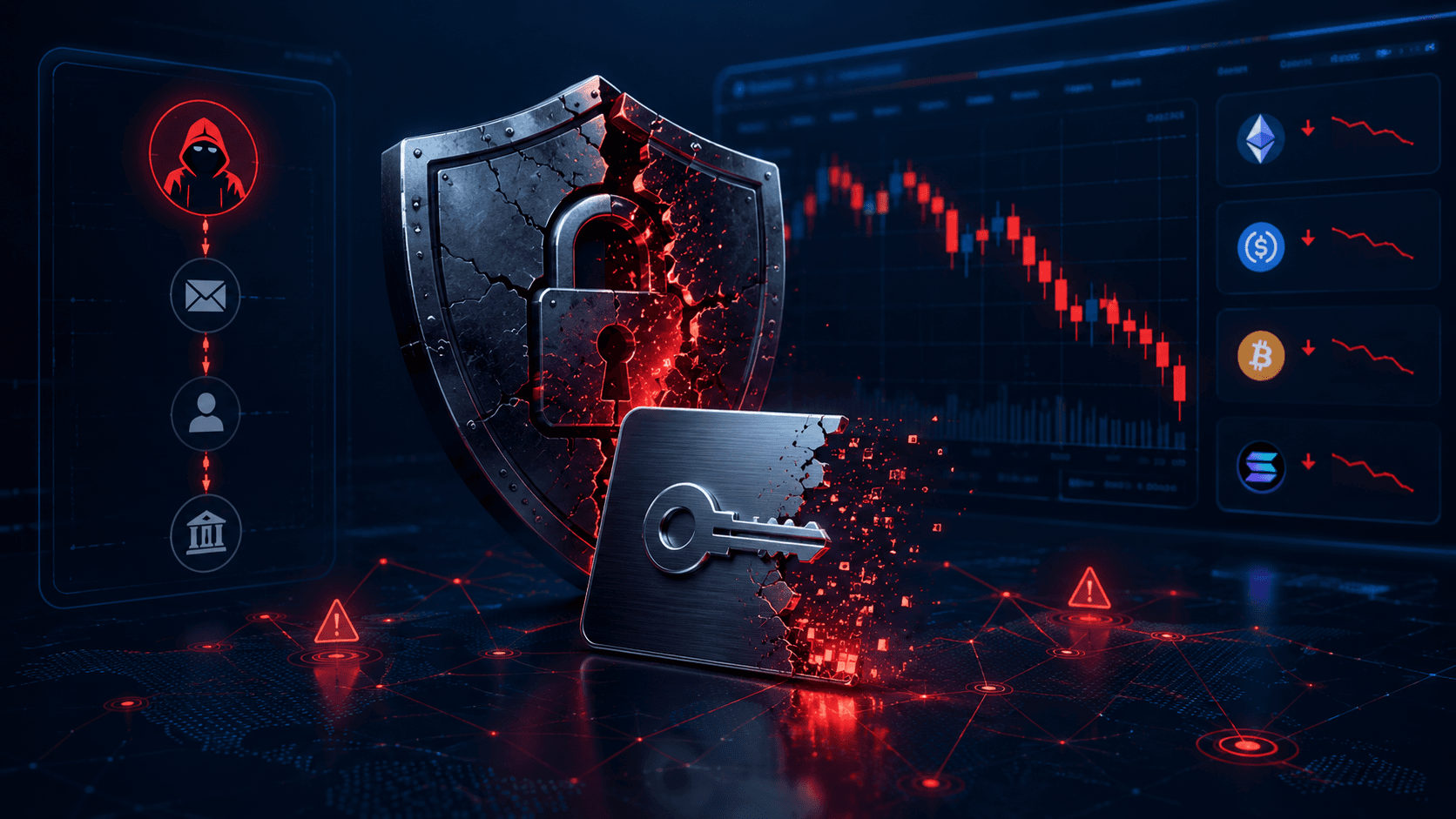
A single weak verification point in a bridge can allow large-scale unbacked token minting — the Kelp DAO exploit showed exactly how fast that can happen.
The real danger was not just the initial hack, but how unbacked rsETH then travelled into DeFi lending markets like Aave, creating contagion risk across the ecosystem.
You do not need to be a developer to protect yourself. Watching bridge architecture, collateral backing, liquidity conditions, and how fast a team responds during a crisis all help you make smarter decisions.
Kelp DAO's $292M LayerZero Bridge Hack Explained: Lessons for Every DeFi User
Cross-chain bridges are one of the most useful parts of crypto. They let you move assets between blockchains, access new ecosystems, and use DeFi products that would otherwise stay locked in one place. But bridges are also one of the most fragile parts of the whole system.
The Kelp DAO bridge exploit in 2026 was another hard reminder of that. Reports described a roughly $292 million incident tied to a LayerZero-connected bridge, where around 116,500 rsETH was allegedly minted without any real backing behind it. That immediately raised a bigger question: if a bridged asset can be created without real collateral, what happens when it gets deposited into lending protocols and treated as if it were perfectly valid?
This article walks through what the exploit reportedly involved, why it mattered beyond Kelp DAO alone, and what you should take away from it as a DeFi user — no technical background needed.
What Happened in the Kelp DAO Hack?
At its core, the exploit was a bridge verification failure. The system responsible for checking whether a cross-chain message was legitimate appears to have accepted a false or manipulated message. Once that happened, the attacker was allegedly able to mint rsETH that had no real assets backing it.
That is the heart of the danger with bridge design.
When a bridge works correctly, a token on one chain is locked, validated, and then represented on another chain. If the validation step breaks down, the system can essentially create wrapped or synthetic value from nothing. In this case, the reported figure was around 116,500 rsETH, which translated to a total market impact estimated at roughly $292 million, depending on token pricing at the time.
The exploit did not only threaten Kelp DAO users. It created risk for every protocol that accepted rsETH as collateral, liquidity, or reserve inventory. That is where the story moved from a bridge failure to a wider DeFi risk event.
What Is rsETH and Why Did It Matter Here?
rsETH is connected to restaking infrastructure. In simple terms, users deposit supported assets and receive a tokenized representation they can use across DeFi. That token only holds its value if the underlying assets backing it are real, verifiable, and redeemable.
If rsETH gets minted without proper backing, the token can still look completely normal on-chain at first. It can trade, move, and be deposited just like usual. But economically, something is broken: part of the supply is no longer tied to real collateral.
That creates two immediate problems:
Redemption risk — If too many holders try to exit at once, the system may not have enough real assets to honour everyone's claims.
Collateral contamination — If unbacked tokens end up inside other DeFi protocols, those protocols start treating bad collateral as good collateral.
That is exactly why this event mattered well beyond the original exploit.
The Single-Verifier Flaw in the Bridge
Reports pointed to a single-verifier weakness in the bridge path. The details can vary between protocols, but the broader lesson is simple: if one verifier, relayer, oracle, or message-validation path becomes a single point of failure, the bridge may be far less decentralised than it appears.
A secure bridge should not rely too heavily on one trust assumption. If it does, the bridge may technically be cross-chain, but operationally it is centralised around one checkpoint.
How Bridge Components Work and Why Each One Matters
Bridge Component | What It Does | Why It Matters |
Message verification | Confirms a cross-chain action really happened | If this fails, fake deposits or withdrawals may be accepted |
Token minting logic | Creates the bridged asset on the destination chain | If triggered by bad data, unbacked tokens can appear |
Collateral tracking | Ensures minted supply matches locked value | If records drift, peg integrity breaks |
Emergency pause controls | Stops further damage after detection | A slow response can multiply losses |
DeFi integrations | Lets bridged tokens be used elsewhere | This spreads risk into lending and liquidity markets |
The biggest takeaway here is that not all bridge trust models are equal. Some are more distributed, more transparent, and more resilient than others. Most users focus on APY, convenience, or token access — but the bridge architecture underneath matters just as much.
How 116,500 rsETH Was Allegedly Minted Without Backing
The reported exploit followed a clear five-step sequence:
Step 1: The Attacker Targeted the Message Verification Layer
Rather than attacking users directly, the attacker went after the mechanism that tells the destination chain whether an asset movement is legitimate.
Step 2: A False Cross-Chain Message Was Accepted
This was the critical failure point. Once the system accepted a message it should have rejected, everything downstream treated that message as real.
Step 3: The Protocol Minted rsETH on the Destination Side
Because the contract believed the message was valid, it minted rsETH as if real assets had been locked or deposited on the other side.
Step 4: The Newly Minted rsETH Entered DeFi Markets
This is where exploits become systemically dangerous. A fake asset does not stay in one wallet. It can be swapped, used as collateral, or moved through multiple protocols very quickly.
Step 5: Secondary Protocols Faced Contamination Risk
Once lending markets, money markets, or liquidity pools started treating that rsETH as normal, the exploit risk spread outward. This is a recurring DeFi lesson: bad collateral travels fast.
Why Aave Contagion Risk Became a Key Concern
When an exploited or unbacked asset reaches a lending protocol like Aave, the problem compounds quickly.
Lending markets depend on collateral having real value that can be liquidated if needed. If a token is later found to be unbacked or sharply impaired, liquidators may not be able to sell it at expected prices. That leaves the protocol holding bad debt.
How Contagion Can Spread Through a Lending Protocol
Stage | What Happens | Risk Created |
Unbacked rsETH is minted | Token supply expands without real collateral | Token integrity breaks |
Attacker deposits rsETH into a lending market | Protocol accepts it as collateral | Borrowing power is created from fake value |
Attacker borrows stronger assets | Real ETH, stablecoins, or other assets are withdrawn | Real protocol liquidity leaves the system |
rsETH price confidence falls | Collateral value weakens or collapses | Liquidations may fail or be incomplete |
Protocol absorbs losses | Bad debt can remain on the platform | Other users may be indirectly affected |
This is why you should never think of hacks as isolated incidents. In composable finance, one protocol's weakness can quickly become another protocol's balance-sheet problem.
Five Key Lessons From This Hack
1. Bridge Risk Is Consistently Underestimated
Many people think of bridges as simple transfer tools. In reality, they are high-value trust machines. If verification fails, the entire wrapped asset model can fail with it.
2. Market Cap Is Not the Same as Safety
An asset can be popular, liquid, and integrated across major protocols while still carrying hidden technical risk below the surface.
3. Composability Increases Blast Radius
DeFi's strength is that protocols connect to each other. That same strength becomes a weakness during failures, because risk spreads faster across interconnected systems.
4. Emergency Response Matters Almost as Much as Prevention
Fast pauses, transparent communication, and clear collateral accounting can reduce panic and limit damage significantly.
5. You Need a Security Filter, Not Just a Yield Filter
Before using a DeFi asset, ask yourself how it is minted, how it is verified, how it is bridged, and how it can be redeemed. Those four questions will protect you better than chasing APY alone.
5-Step Protection Checklist for DeFi Users
Most users cannot inspect smart contract code directly. But you can still make better decisions with the right approach.
Step 1: Check How the Bridge Verifies Messages
Find out whether a bridge relies on a small number of verifiers, relayers, or trusted parties. The more concentrated the trust model, the more carefully you should size your exposure.
Step 2: Understand What Backs the Token
Before holding or depositing a bridged or restaked asset, learn what collateral supports it, where that collateral actually sits, and how redemptions are supposed to work.
Step 3: Watch Where the Asset Is Used as Collateral
If a token is heavily integrated into lending markets, the yield may look attractive — but the contagion risk is also higher. Know what you are accepting.
Step 4: Follow Incident Response Speed
During security events, strong teams usually do three things quickly: acknowledge the issue, pause vulnerable functions if needed, and publish clear guidance for users. Silence or vague messaging during a crisis is itself a warning sign.
Step 5: Limit Concentration in Complex Yield Products
The more layers a token has — restaking plus bridging plus lending — the more assumptions you are depending on holding true simultaneously. Spreading funds across simpler setups reduces your exposure to any single failure.
Quick Reference Summary
Area | What to Do | Why It Helps |
Bridge selection | Check the verifier model and trust assumptions | Fewer single points of failure means lower exploit risk |
Token due diligence | Confirm real collateral backing exists | Unbacked tokens can lose value instantly |
Collateral exposure | Know which lending markets accept the token | Contagion risk is higher in integrated assets |
Crisis monitoring | Track team response speed and transparency | Slow or unclear responses often signal deeper problems |
Position sizing | Avoid heavy concentration in layered products | Limits damage if one assumption fails |
Practical Tools That Can Help
Security starts with custody and visibility.
For long-term storage, many users prefer hardware wallets such as Ledger to reduce hot wallet risk.
For charting market reactions and tracking support levels after major incidents, TradingView can help you monitor volatility and liquidity shifts. That does not prevent protocol risk, but it supports better situational awareness.
The bigger point is simple: tools help, but they do not replace understanding how the product you are using actually works.
Final Thought
The reported Kelp DAO exploit is another case study in why bridge architecture matters more than most users realise. People often focus on token brand, APY, or ecosystem growth. But in DeFi, the deeper question is usually this: what assumptions must remain true for this asset to be worth what it claims?
When a single verification failure can lead to unbacked minting at scale, the issue is not just one hack. It is a reminder that DeFi security is only as strong as its weakest trust layer.
For everyday users, the best response is not panic. It is better process. Learn how assets are backed, how bridges verify state, and how risk spreads when tokens become collateral elsewhere. That kind of discipline will outlast any single exploit cycle.
Frequently Asked Questions
What Was the Kelp DAO Hack?
It was a reported 2026 exploit involving a bridge verification failure that allegedly allowed around 116,500 rsETH to be minted without proper backing behind it.
What Is rsETH?
rsETH is a token tied to restaking infrastructure. Its value depends on the credibility and availability of the real assets backing it.
Why Was LayerZero Mentioned in Reports?
Reports linked the exploit to a LayerZero-connected bridge path and highlighted a verification weakness or single-verifier trust issue within that path.
Why Did Aave Contagion Risk Matter?
If unbacked rsETH was used as collateral in lending markets, it could allow borrowing against invalid value and create bad debt that other users end up absorbing.
Are All Cross-Chain Bridges Unsafe?
No. But bridges are historically one of the highest-risk parts of crypto infrastructure. Each bridge's trust model should be evaluated carefully before you commit significant funds.
How Can Users Reduce Bridge Risk?
Use smaller position sizes, diversify your exposure, study bridge verification design, understand collateral backing, and pay attention to how quickly and clearly a team responds during security events.
Disclaimer: This content is for educational and informational purposes only and is not financial advice. Nothing here is a recommendation to buy or sell any asset or use any platform. Do your own research and manage your risk.
Read more