
India’s Temporary Telegram Restriction 2026: Impact on TON Blockchain and Telegram Crypto Projects
Key Takeaways
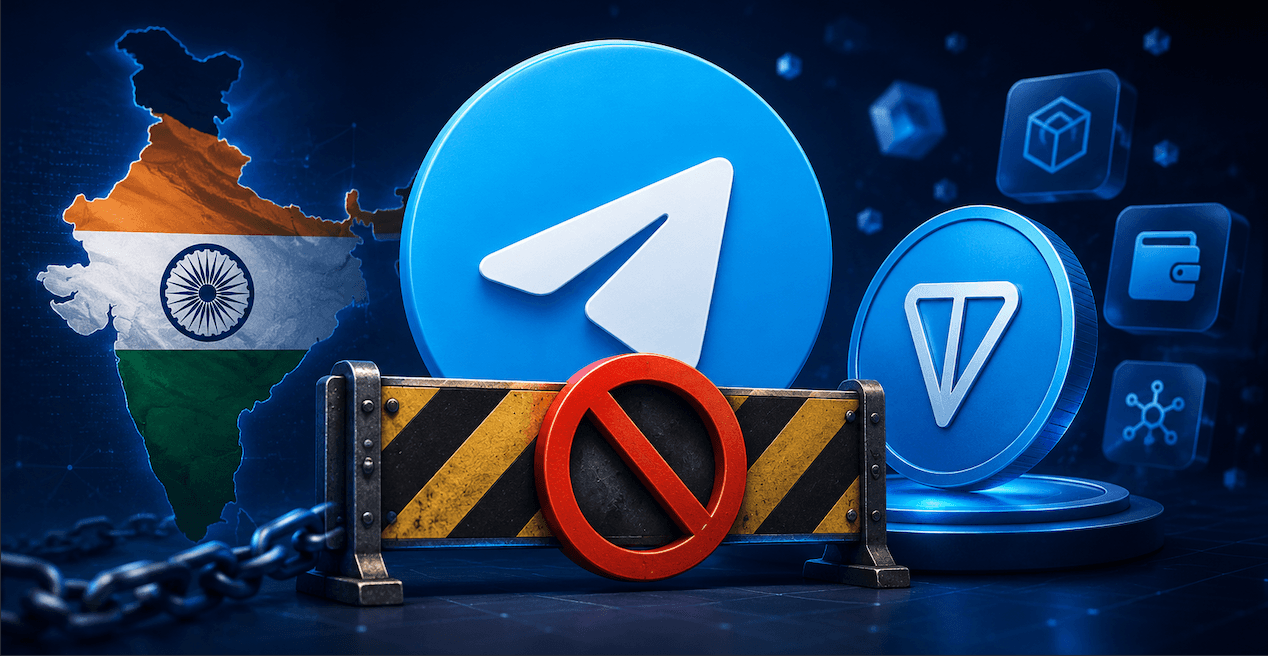
India imposed a temporary nationwide restriction on Telegram access from around June 16 until June 22, 2026, primarily to curb its alleged use by cheating networks ahead of the NEET-UG re-examination.
The move also required Telegram to disable its message-editing feature for Indian users until June 30, 2026, due to concerns that it was being misused to fabricate evidence of exam leaks.
TON blockchain, which powers many Telegram Mini Apps and tap-to-earn games, saw short-term market volatility following the announcement because of its close integration with the Telegram platform and India’s large user base.
On June 16, 2026, India’s National Testing Agency (NTA) announced that the Ministry of Electronics and Information Technology (MeitY) had directed a temporary restriction on Telegram access across the country. The restriction was scheduled to last until June 22, 2026 — one day after the scheduled NEET-UG 2026 re-examination on June 21.
Authorities also ordered Telegram to disable the app’s message-editing feature for users in India until June 30, 2026. The editing feature allows users to change messages after they are sent while keeping the original timestamp. Officials stated this feature had been used to create false evidence of exam paper leaks.
The restriction was issued under Section 69A of India’s Information Technology Act, which deals with blocking access in the interest of public order. It followed earlier cancellation of the original NEET-UG exam held on May 3, 2026, due to allegations of paper leaks and irregularities.
Background: The NEET Exam Context
NEET-UG is India’s major medical entrance examination taken by over 2 million students annually for admission to undergraduate medical courses. After the May 2026 exam faced widespread allegations of leaks and irregularities, results were affected and the exam was canceled. A re-examination was later scheduled for June 21, 2026, with enhanced security measures.Officials claimed that certain Telegram channels and groups were being used by organized networks to:
Sell fake or leaked exam papers
Spread misinformation about the exam
Defraud students by charging fees for nonexistent “leaks”
The message-editing feature was specifically cited because it could be used to alter old messages to make them appear as if they contained real leaked content before the exam.
Why Target Telegram?
Telegram is popular in India, with estimates of 150 million or more users. It offers large public channels, groups, and easy sharing features that make it attractive for both legitimate study communities and fraudulent activity.Critics, including digital rights groups, argued the restriction was disproportionate because it affected millions of ordinary users who rely on Telegram for education, communication, and business. Telegram’s founder Pavel Durov publicly stated that the move punished ordinary users rather than the individuals behind the leaks and that fraudulent activity had simply shifted to other platforms.
Telegram reported that it had already removed hundreds of channels linked to scams and leaks and made the “edited” label on messages more prominent.
Connection Between Telegram and TON Blockchain
The Open Network (TON) blockchain has deep technical integration with Telegram. Many Telegram Mini Apps — lightweight applications that run inside the Telegram app — are built on TON. These include popular tap-to-earn games where users perform simple actions (like tapping) to earn points that can convert to tokens.Historically, TON originated from Telegram’s early plans to launch its own cryptocurrency called Gram. After regulatory challenges, Telegram stepped back from direct involvement, and the blockchain continued independently under the TON Foundation. However, strong integration remains: users can manage TON-based assets directly within Telegram wallets, and many Web3 features in Telegram run on the TON network.
India represents one of Telegram’s largest markets. A sudden reduction in accessible users there can affect activity levels in Telegram Mini Apps and related projects.
Observed Short-Term Impact on TON and Related Projects
Following the announcement of the restriction, TON experienced noticeable short-term price volatility. Reports indicated an intraday drop of more than 10% in some trading sessions around June 16, 2026, with the token moving from approximately $1.80 to around $1.625 before partial recovery.
Tap-to-earn games and other Telegram-integrated crypto projects also faced potential short-term disruption in user engagement from the Indian market. Reduced activity on the platform can lead to lower daily active users, slower growth in new participants, and temporary pressure on token ecosystems tied to these apps.It is important to note that these were observed market reactions to the news. Broader crypto market conditions and other factors also influence prices.
Broader Implications for Crypto Projects
This event highlights several educational points for anyone interested in crypto:
Platform dependency risk: Projects built on or deeply integrated with a single messaging or social app face risks when that platform encounters regulatory or access issues in major markets.
Regulatory environment: Governments can and do restrict access to apps for reasons such as public order, consumer protection, or exam integrity. These actions can have spillover effects on related technologies.
User base concentration: Large user bases in specific countries create both opportunity and vulnerability for app-integrated blockchains.
Transparency challenges: Features like message editing, while useful for normal communication, can be misused, leading to platform-level responses.
Crypto projects that rely heavily on Telegram Mini Apps or similar integrations should monitor regulatory developments in key markets and consider diversification of user acquisition channels where possible.
Timeline of Key Events
Date | Event |
May 3, 2026 | Original NEET-UG exam held; later canceled amid leak allegations |
June 16, 2026 | NTA announces temporary Telegram access restriction until June 22 |
June 16, 2026 | Message-editing feature ordered disabled until June 30 |
June 21, 2026 | Scheduled NEET-UG re-examination |
June 22, 2026 | Expected end of Telegram access restriction |
June 30, 2026 | Expected end of message-editing restriction |
FAQ
Is Telegram permanently banned in India?
No. The restriction on access was temporary and scheduled to end on June 22, 2026. The message-editing restriction was set to last until June 30, 2026.
How does this affect TON specifically?
TON powers many Telegram Mini Apps. Reduced access to Telegram in a large market like India can lead to short-term drops in user activity for these apps, which was reflected in observed market reactions to the TON token around the announcement.
What are Telegram Mini Apps?
They are lightweight applications that run directly inside Telegram chats. Many crypto-related ones, especially tap-to-earn games, operate on the TON blockchain for fast, low-cost transactions and rewards.
Can Indian users still access crypto during the restriction?
Some users reported continued or partial access through workarounds, but the restriction aimed to limit normal app functionality. Legitimate users should follow local laws and platform guidelines.
What does this teach beginners about crypto?
It shows that even educational or utility-focused crypto projects can be indirectly affected by events in the platforms they integrate with. Always research a project’s dependencies, user base concentration, and regulatory exposure before engaging.This situation remains fluid. For the most current official information, refer to statements from the NTA, MeitY, or Telegram. Crypto University focuses on clear explanations of how these systems work and the real-world factors that influence them.
Disclaimer: This content is for educational and informational purposes only and is not financial advice. Nothing here is a recommendation to buy or sell any asset or use any platform. Do your own research and manage your risk.
Read More
Stop-Loss Orders in Crypto: When They Help, When They Hurt, and How to Set Them Properly
How to Evaluate a Crypto Whitepaper: A 7-Point Framework for Spotting Vapor from Value
Layer 1 vs Layer 2: Understanding Blockchain Scalability from First Principles
How to Evaluate a Web3 Protocol: An On-Chain Due Diligence Framework
Share Transmission
Broadcast this signal to your network
More News
What Are Bitcoin ETF Outflows? How They Work and Why They Matter
Learn what Bitcoin ETF outflows are, how they affect Bitcoin's price, and what drove the record outflow streak in May-June 2026. A clear, jargon-free explainer.
ETHConf 2026 Spotlight: Key Technical Discussions on Ethereum’s Roadmap and Scaling
ETHConf 2026 Spotlight: Key Technical Discussions on Ethereum’s Roadmap and Scaling Neutral summary of the major themes at this week’s ETHConf (June 8–10 in New York), focusing on developer talks around upgrades, Layer-2 developments, and core protocol improvements — with explanations of what these conversations reveal about Ethereum’s technical direction.
The GENIUS Act Explained: What Stablecoin Rules Mean for You
The GENIUS Act sets stablecoin rules in the US. Learn what 1:1 reserves, issuer licensing, and the ban on algorithmic stablecoins mean in plain language.