Key Takeaways
The KelpDAO hack was not a smart contract bug. It was a bridge verification failure that exposed how DeFi depends on fragile off-chain infrastructure.
Because rsETH was used as collateral across many lending platforms, the damage spread far beyond KelpDAO and hit major protocols like Aave, SparkLend, and Fluid.
Before depositing into any DeFi protocol, you should ask who controls it, how upgrades happen, where the asset is reused, and what assumptions need to stay true for your money to be safe.
What Actually Happened
On April 18, 2026, attackers drained around $292 million worth of rsETH from KelpDAO's cross-chain bridge. That is roughly 116,500 rsETH tokens, or about 18% of the supply.
But here is the part that surprised everyone: no smart contract was broken. The code worked exactly as it was written. The attackers, reportedly linked to North Korea's Lazarus Group, did something different. They tricked the system that verifies messages between blockchains.
If you are new to crypto, think of it this way. A bridge moves tokens from one blockchain to another by passing a message: "Lock these tokens here, release those tokens there." Someone has to check that the message is real. In KelpDAO's case, only one verifier was responsible for that check. Attackers compromised the data feeds it relied on, then knocked the healthy data sources offline with a DDoS attack. With the verifier blind, the bridge believed a fake message and released real money.
This is why the aftermath matters so much. It forced DeFi to admit that audited code is not the same thing as a safe protocol.
Why This Hit So Many Other Protocols
The hack did not stay inside KelpDAO. Because rsETH was used as collateral on many lending platforms, problems with rsETH became problems for everyone who accepted it.
Here is how the contagion spread:
Stage | What Happened | Why It Mattered |
1. Bridge drained | 116,500 rsETH released to attacker | The reserve backing wrapped rsETH on 20+ chains was suddenly missing |
2. Borrowing against rsETH | Attacker used some rsETH as collateral to borrow ETH on Aave | Aave was left holding collateral with no real backing |
3. Lending markets froze | Aave, SparkLend, Fluid, Euler, and Compound paused rsETH activity | Users could not move or liquidate positions normally |
4. Confidence shock | Estimated $10 to $13 billion exited DeFi within 48 hours | Even healthy protocols saw withdrawals as users panicked |
This is what people mean by "composability risk." When everything in DeFi connects to everything else, one weak link can shake the whole chain.
Smart Contract Risk vs Infrastructure Risk
A lot of new traders use the phrase "smart contract risk" to cover every danger in DeFi. That is a mistake. There are different kinds of risk, and the KelpDAO incident is mostly about the second kind.
Type of Risk | What It Means | Example |
Smart contract risk | A bug in the code itself, such as a reentrancy flaw or broken math | A buggy lending pool that lets someone borrow without collateral |
Infrastructure risk | Weakness in the systems around the code, like bridges, oracles, or verifiers | The KelpDAO bridge releasing funds based on a forged message |
Operational risk | Weakness in human processes, like signer management, upgrades, or incident response | A team holding too few keys, or being slow to pause a contract |
Audits usually catch the first one. The other two are harder to see, and they are increasingly where the real losses happen.
The Rise of "Boring DeFi"
After enough painful failures, both builders and users start looking for protocols that prioritise discipline over flashy features. People are calling this "boring DeFi." It does not mean innovation stops. It means trust is earned through caution.
Principle | What It Looks Like in Practice |
Simple product design | You can explain the protocol in one sentence |
Fewer dependencies | The protocol does not rely on five other systems to function |
Conservative collateral rules | New assets are added slowly and with caution |
Slower upgrades | A timelock gives users time to react before changes go live |
Clear emergency controls | The team can pause the system without confusion or chaos |
If "boring" sounds dull, remember this: the KelpDAO bridge was using a 1-of-1 verifier setup, which is fast and cheap but creates a single point of failure. Boring would have meant a multi-verifier setup, even if it cost a little more.
Multisigs and Timelocks Explained Simply
These two terms come up a lot when discussing DeFi safety. Here is what they actually mean.
A multisig is a wallet that needs multiple people to approve a transaction. Instead of one person holding the keys to millions of dollars, you might need 5 out of 8 signers to agree. This protects against a single person being hacked, bribed, or going rogue.
A timelock is a delay between when a change is approved and when it takes effect. If a protocol's developers want to upgrade a contract, the timelock might force a 48-hour wait. This gives users time to leave if they do not like the change.
Control | Healthy Setup | Warning Signs |
Multisig | Several independent signers with proper security, clear roles | Few signers, all from the same team, rushed approvals |
Timelock | Meaningful delay on upgrades and parameter changes | No delay, or "emergency" overrides used casually |
Admin powers | Limited, public, monitored | Broad, undocumented, or hidden |
Before you trust a protocol with real money, look up these details. Most teams publish them. If they do not, that itself is information.
5 Questions to Ask Before You Deposit
This is the practical part. Make these questions a habit before clicking "deposit" anywhere.
# | Question | Why It Matters |
1 | What exactly am I depositing into? | If you cannot describe it in one sentence, you do not understand the risk |
2 | Who controls upgrades and emergency actions? | Concentrated control means concentrated risk |
3 | Is this asset used as collateral elsewhere? | If yes, a problem in one place can spread to your position |
4 | What assumptions have to stay true? | A bridge staying secure, a peg holding, a verifier behaving correctly |
5 | How does the team respond under pressure? | Clear, technical, calm communication is a good sign. Silence or spin is not |
If you cannot answer all five for a protocol, you are taking on more risk than you realise.
What Beginners Should Take From the Aave and Compound Reaction
A common mistake among new traders is to assume that if a major protocol like Aave or Compound accepts an asset, that asset must be safe. The KelpDAO situation proved that wrong.
Large lending platforms can still be exposed to:
Governance that reacts slower than the market moves
Imperfect collateral listings that looked safe in calmer times
Integration delays where a frozen asset still appears in your account balance
Market shocks that move faster than any vote can respond
Being listed by a blue-chip protocol is a sign of credibility, but it is not insurance. Do your own check anyway.
Practical Habits That Reduce Your Risk
Good DeFi habits are simple and repeatable. A few worth building:
Keep long-term holdings in self-custody hardware wallets, not stuck in every yield strategy you can find
Limit how much of your portfolio touches any single protocol
Track which protocols share collateral with each other, because that is where contagion travels
Pay attention to team communication during incidents, not just when things are calm
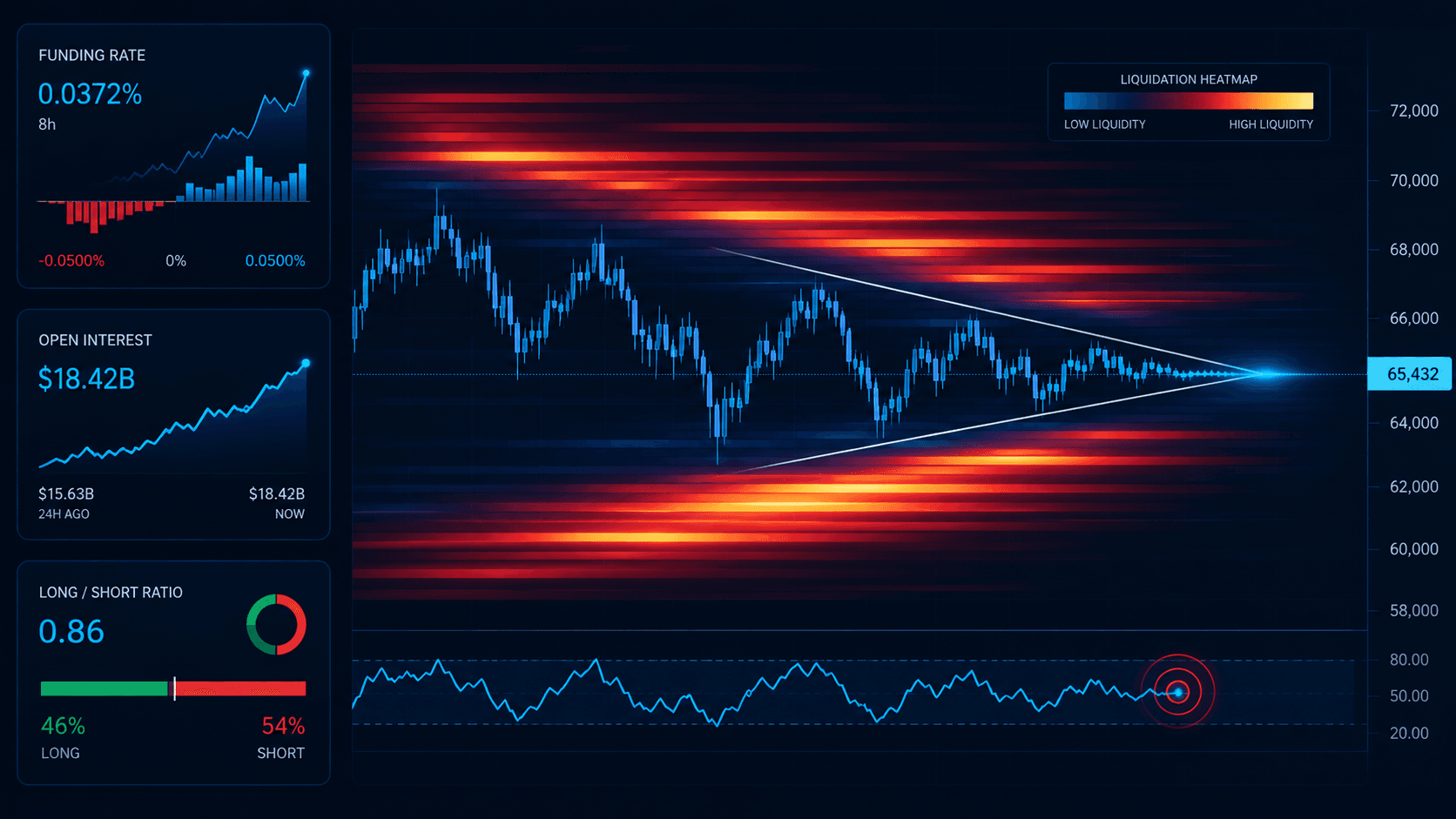
Use charting and market structure tools to monitor liquidity and price action around assets you hold
The goal is not to react faster than everyone else. It is to understand the structure better than most people bother to.
Final Thought
The KelpDAO aftermath broke a lazy habit in DeFi thinking. For years, many users treated "audited" as a synonym for "safe." It never was. Audits look at code. They do not look at the bridges, verifiers, signer setups, or operational discipline that actually keep your money where it is supposed to be.
A grown-up DeFi industry needs all of those things, not just clean code. That is less exciting than launching the next high-yield vault, but it is the difference between a market that lasts and one that keeps blowing up the same way.
FAQ
Because it raised concerns about more than one exploit path. It exposed weaknesses in cross-chain verification, raised doubts about rsETH backing across 20+ chains, and triggered freezes at multiple major lending platforms.
It is the risk that problems with rsETH's backing spread into other protocols that accepted rsETH as collateral. When the backing was drained, lending platforms suddenly had collateral with nothing real behind it.
A more conservative approach that values simple products, strong controls, slower upgrades, and fewer hidden dependencies over flashy yields and complex strategies.
Multisigs prevent a single person from controlling user funds. Timelocks give users time to react before major changes happen. Together, they make protocols more resistant to both attacks and bad decisions.
No. Smart contract risk is about bugs in code. Infrastructure risk covers the systems around the code, like bridges, verifiers, and oracles. The KelpDAO hack was an infrastructure failure, not a contract bug.
Understand the product, check who controls it, review where the asset is used elsewhere, identify the assumptions that need to hold true, and look at how the team has handled past incidents.
Disclaimer: This content is for educational and informational purposes only and is not financial advice. Nothing here is a recommendation to buy or sell any asset or use any platform. Do your own research and manage your risk.
Read More